The View From the Hill July-Aug 2026
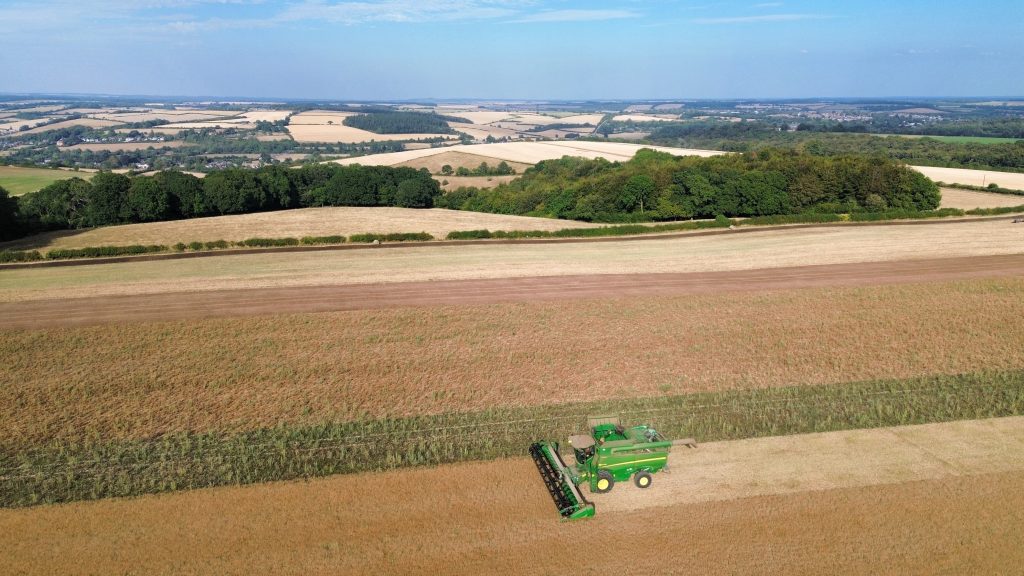
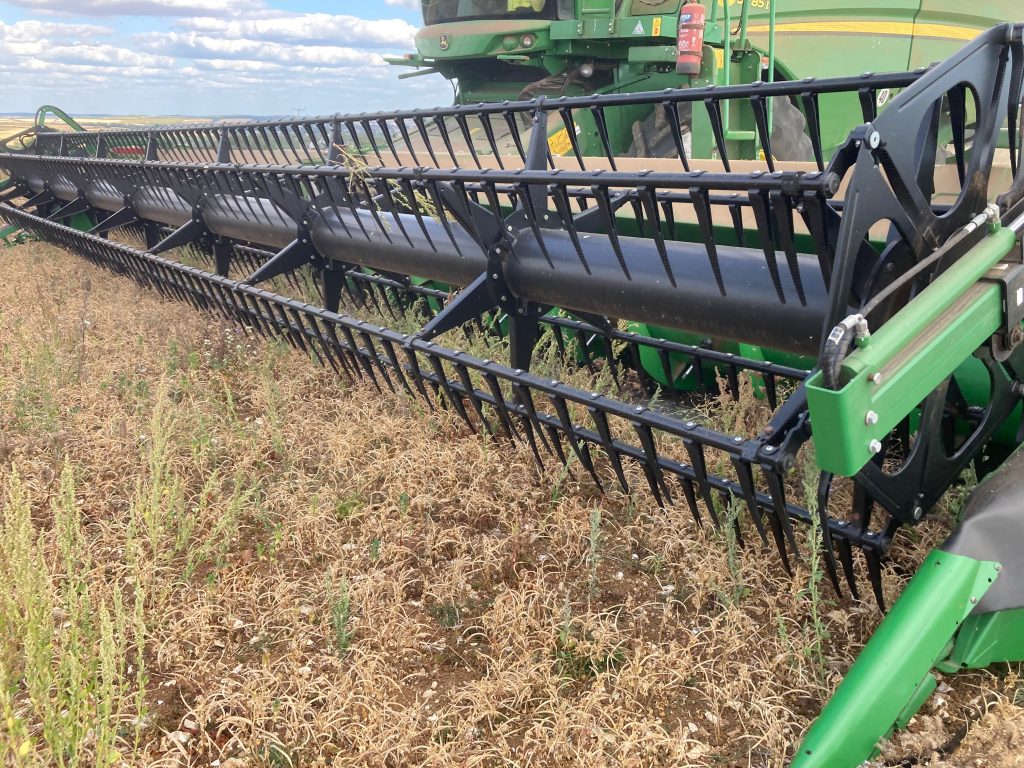
We finished our main harvest in the first week of August, the earliest finish for many years. Just a few cover crop seed plots, as seen above, and the millet left to cut. Two months without rain following a very dry early spring, has had a pretty devastating effect on all our crops, with low yields, and super dry. Too dry. So dry that not only do we lose weight, and weight is cash, but we risk rejection. Oilseed rape for example gets deductions if the moisture is below 6%, and not only that, we get penalised if we load seed into lorries at above 25 degrees temp. How we are supposed to cool it down within a week of harvest, when night time temperatures were as high as they were in early July?
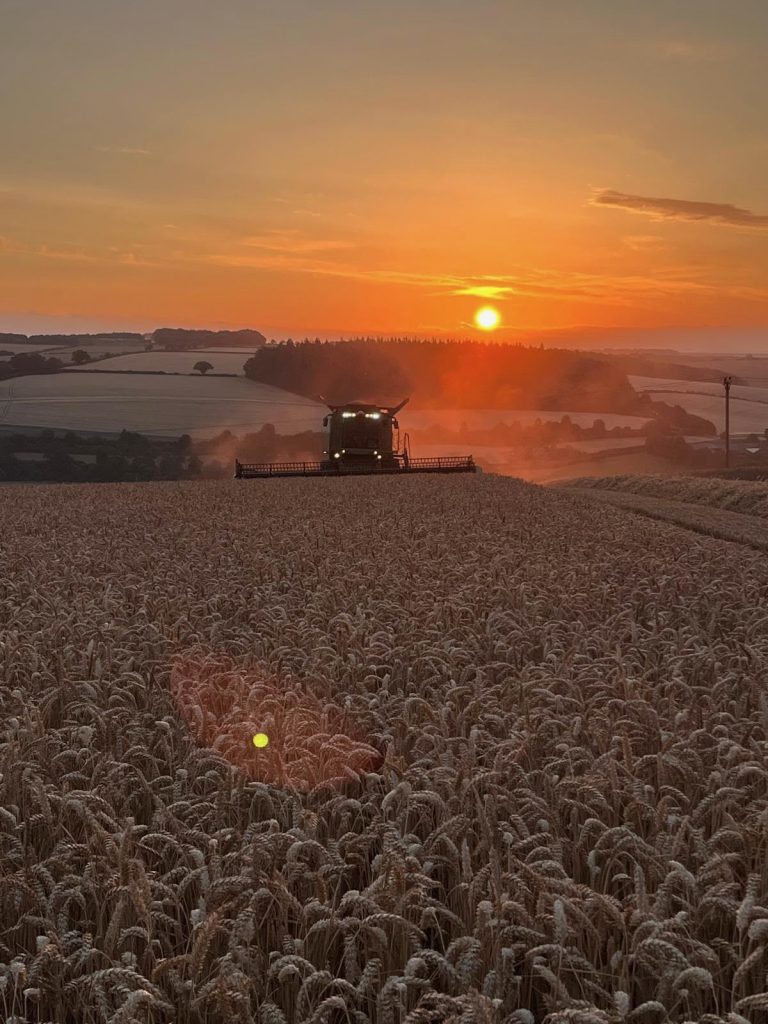
The acute dryness meant that we had to stop harvesting in the heat of the day, moistures being lower than we have ever recorded. (Spring barley down to 9% at times). Will and Brendan packed up around 4pm, and started again at 4am, for many days on the trot, to try and benefit from the dew adding moisture, which worked for much of the time. The moisture decreased as the day advanced and the sun grew hotter.
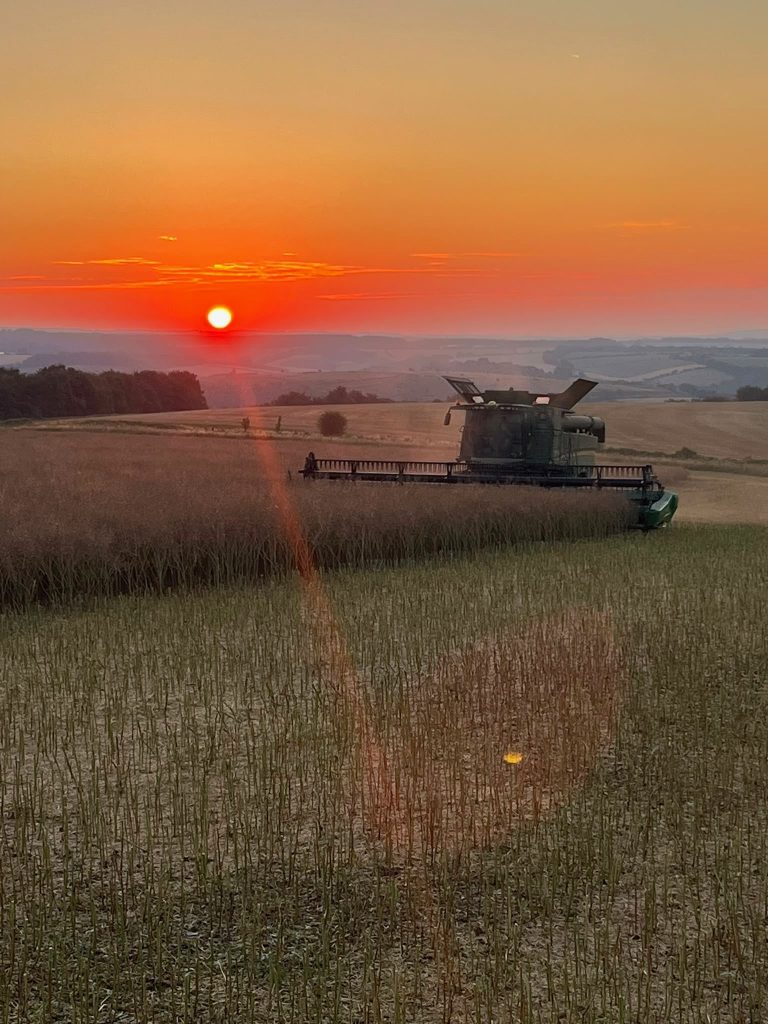
Brendan’s pictures say it all in the early mornings. Wheat on the Knoll above, and OSR on Shillingstone Hill with Hod Hill below the rising sun.
The hot dry weather, 16th June to 19th August without measurable rain, followed by a welcome but wholly inadequate 8mm last week, is unprecedented, and has left the farming community facing a difficult winter. No grass for animals for many weeks on many farms, where animals are eating into precious winter rations, one farmer friend has already fed a whole 500 ton clamp of silage to his cows. Arable farmers, who would normally have been sowing cover crops right behind the combine, have not dared risk putting expensive seed into the ground with the risk that it might germinate after a short burst of rain, only to perish in the continuing drought. Here we are at the end of August, having sown barely an acre, wondering what we will feed our cattle on in winter, the growth window for cover crops is shrinking rapidly as the days get shorter, and what of oilseed rape, which we usually sow now? The advice is to hold off until we have had enough moisture to sustain germination and early growth, which is estimated to need at least 15-20mm of rain.
STOP PRESS: Since writing that paragraph last week, on Aug 28th, (today is the 4th Sept) the team have been flat out after a fabulous 26mm of rain, and have sown all the OSR and all the cover crops in double quick time.
Grain markets have been all over the place, due more to the Ukrainians and Russians blowing each other’s export facilities to pieces than it is to the US Iran war, which has stuffed up the input side of everyone’s businesses, with fuel and fertiliser supply and prices up and down like the proverbial.
If the Ukrainians and Russians ever find a form of peace, I am told that £25 will come off the world price of a ton of wheat in an instant, as they have huge stocks, unlike much of the rest of the world. We should be careful what we wish for………
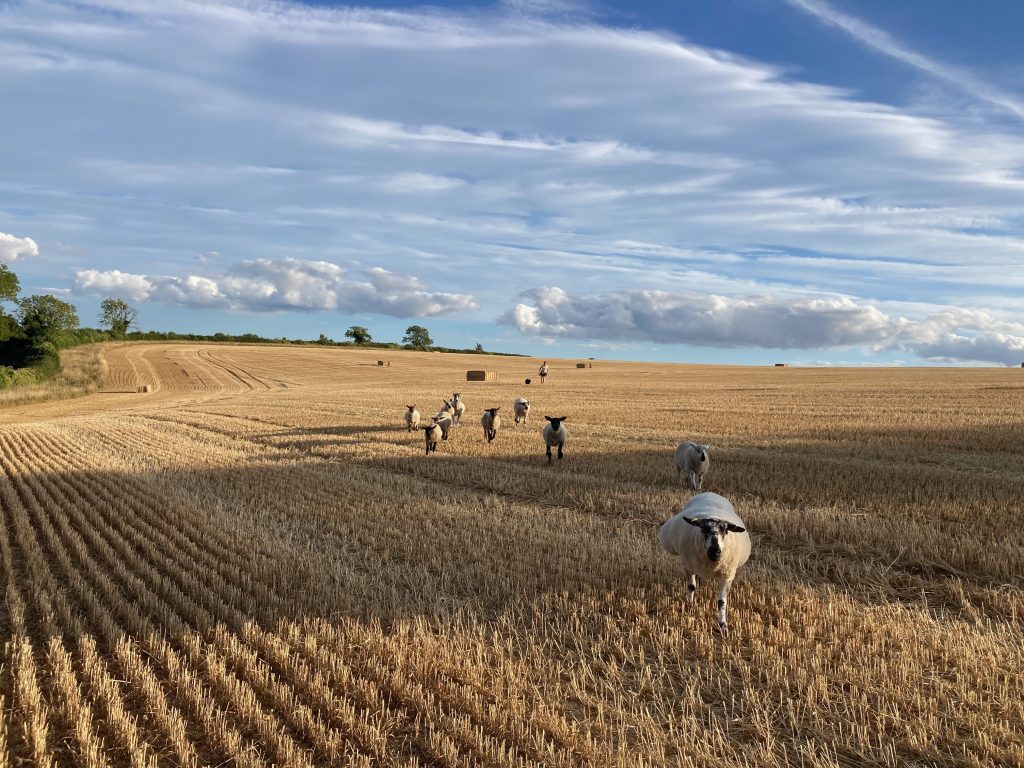
It has been hard work finding suitable grazing for the sheep, here we are moving them across a very unproductive spring wheat stubble. The paucity of straw bales will give you a fairly accurate idea of the kind of grain yield it produced.
No the one in front is not pregnant at this time of year, she is just an odd shape.
The herbal leys are still productive after 2 months without rain, but the permanent pastures are all brown and withered and have been for ages. The sheep have been dispatched to far corners of the farm in the hope that they will knock back brambles and gorse, but they are not particularly happy.
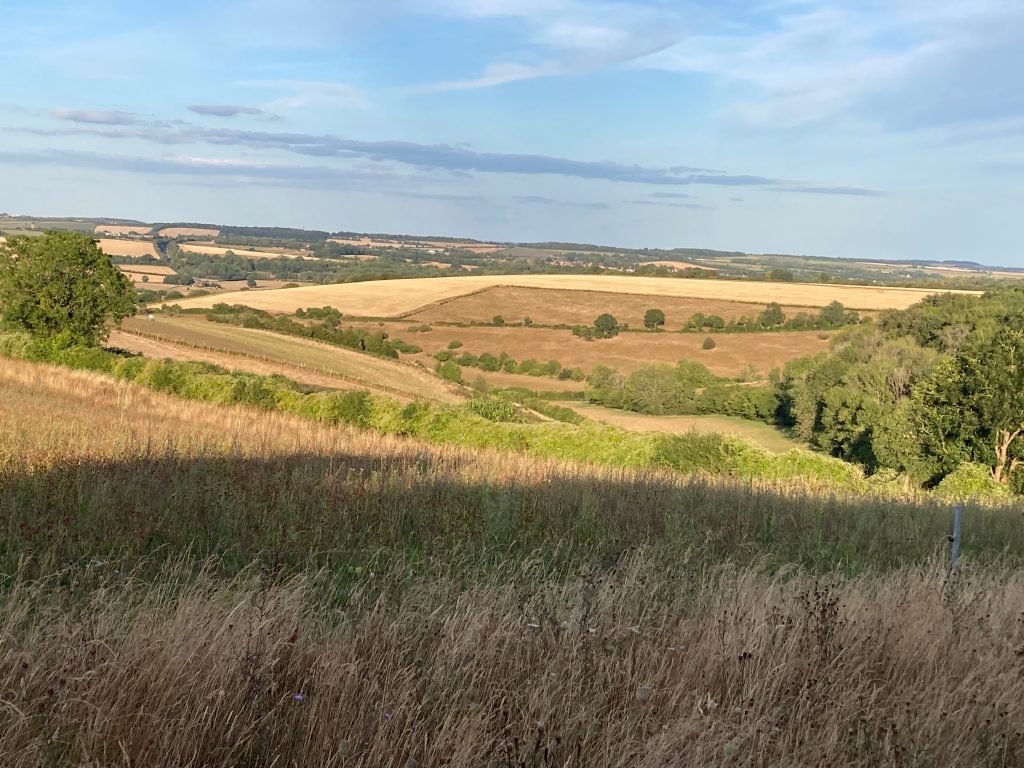
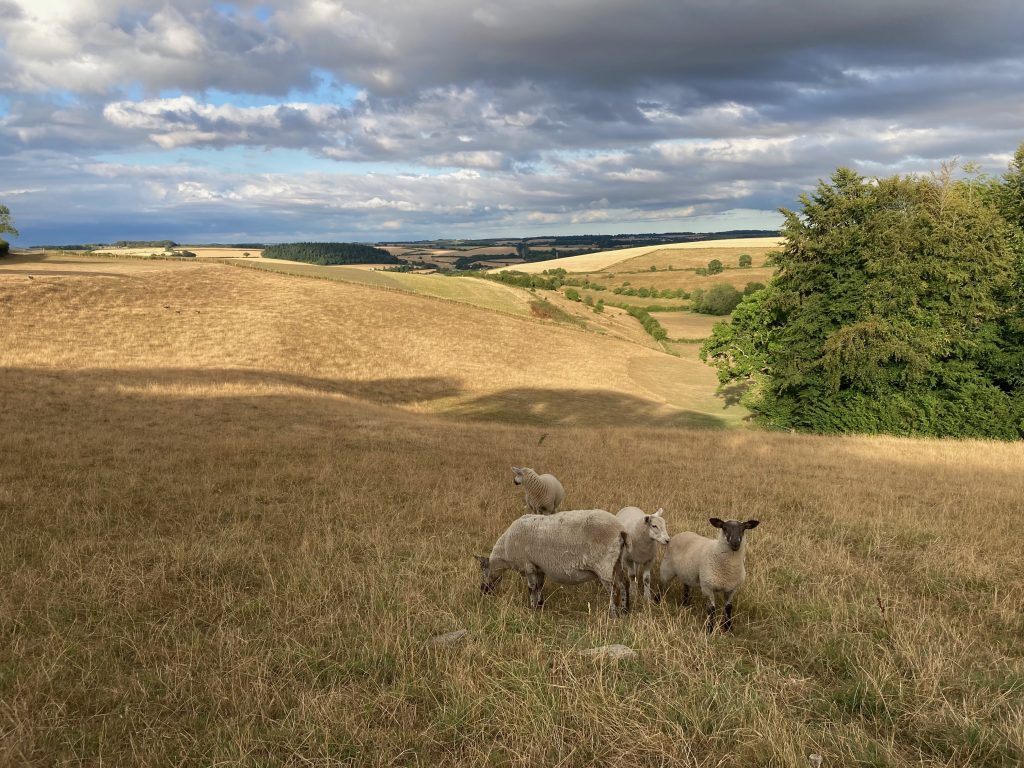
This view across the valley (left) shows the desperate brown of the permanent pastures, with herbal ley in the foreground, which is still sustaining the cows and calves. Two small groups of cattle now have some rough hay to keep them going, and the nearly fit beefies have just been moved into some two year legume fallow now at the end of its run, quite a bit of luck.
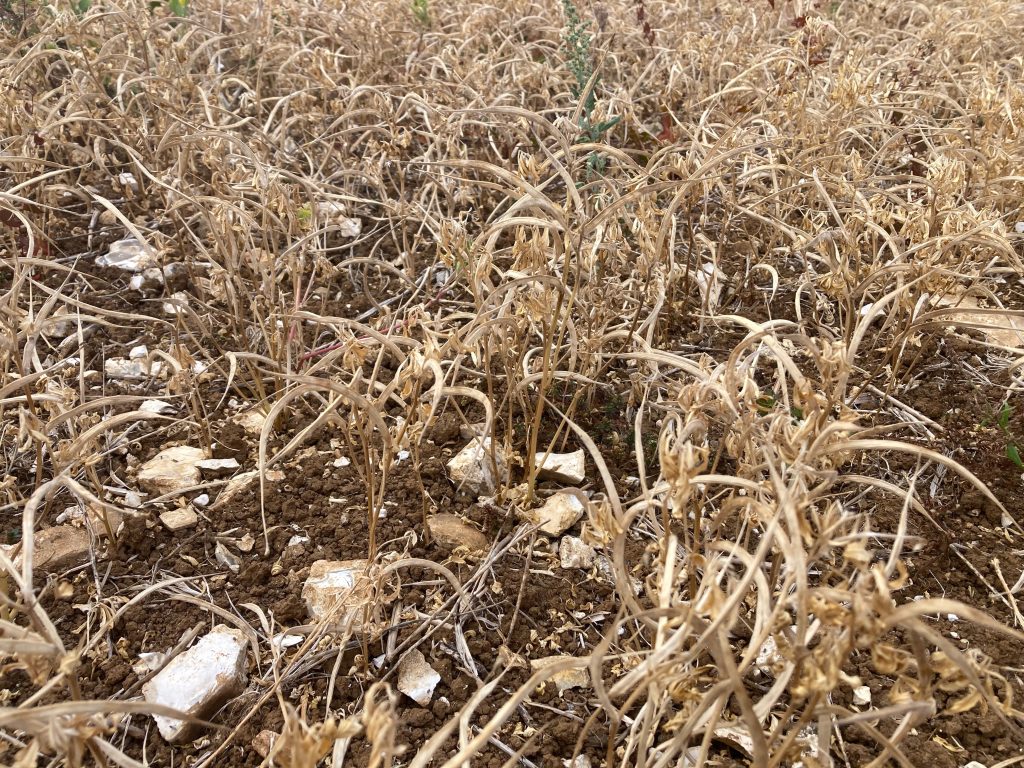
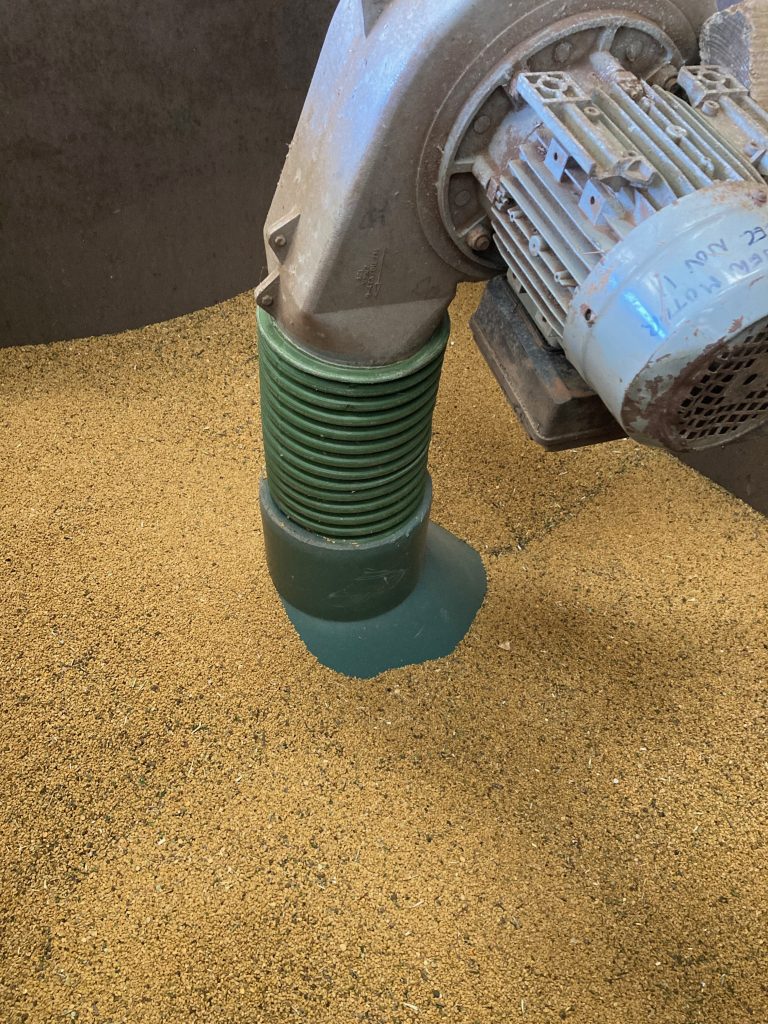
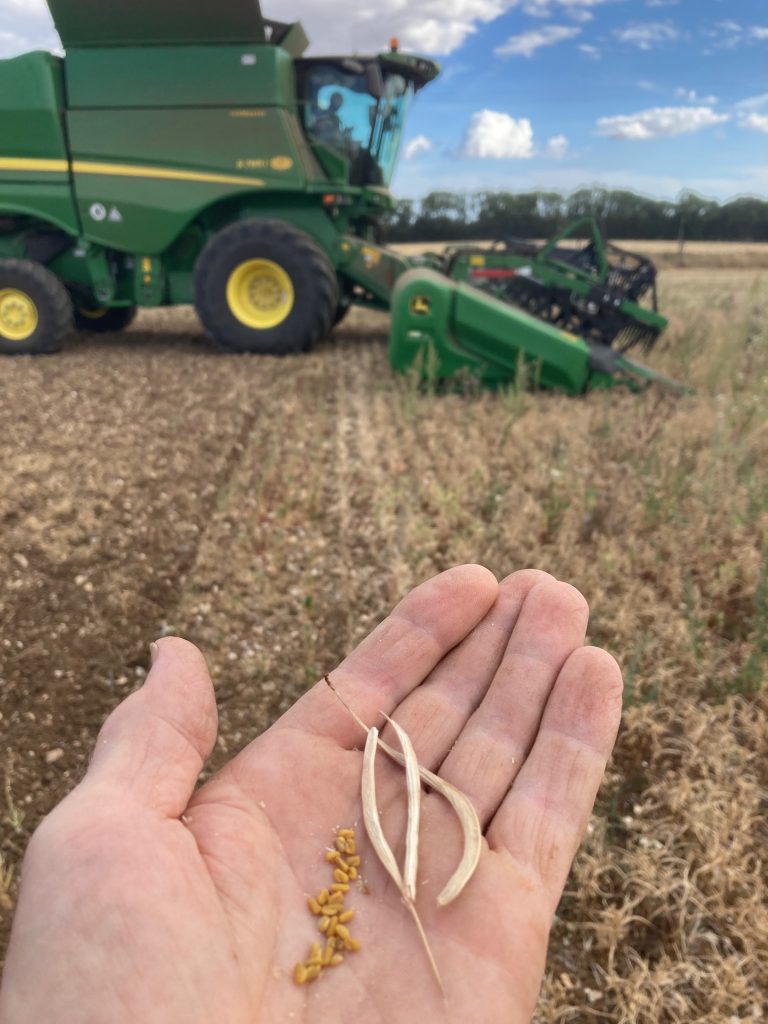
The combine was out again on Saturday (22nd Aug), claiming two more of the cover crop plots. This one is unusual and has done a lot better than it did last year. We have used it in the past as a companion for oilseed rape, the theory being that its pungent aroma might discourage the dreaded flea beetle from attacking our rape plants. I will divulge the name of it at the bottom, and for now will only mention that the ground up seeds can be used in cooking. Like most of this year’s spring crops, it was very short, and hard to get into the combine without leaving some of the rather elegant, spindly pods on the ground.
It’s hard to say whether it really deters the flea beetle, but as we have actually managed to grow some seed this year, we will be trying it again.
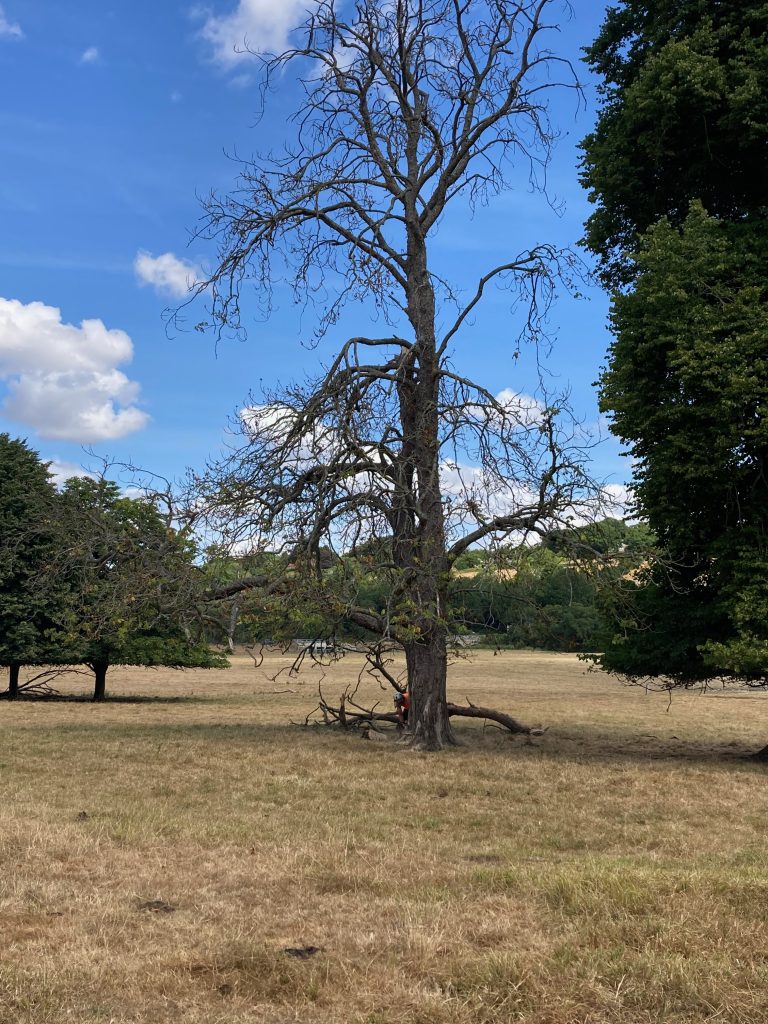
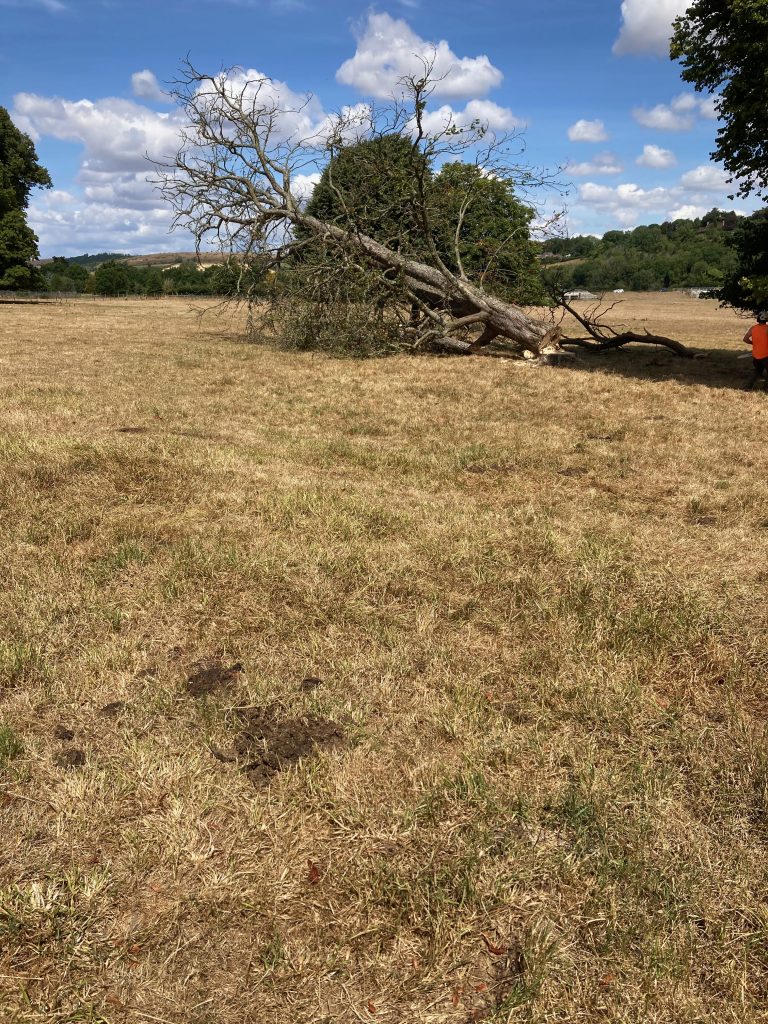
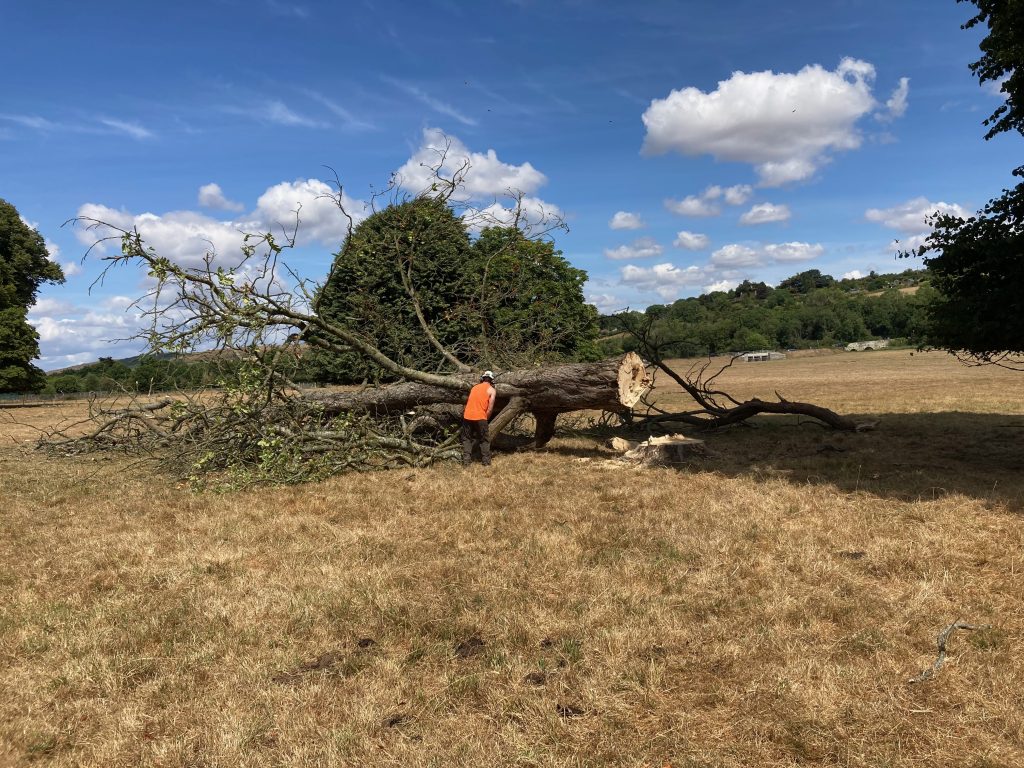
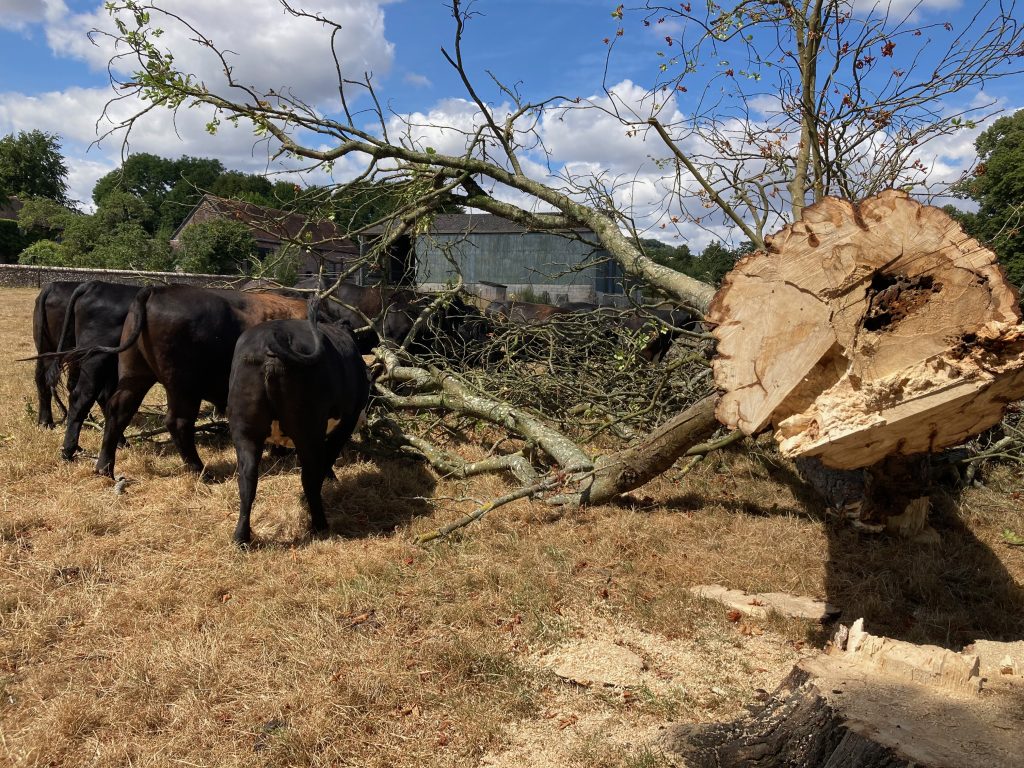
This poor old chestnut on our brown meadows near the Stour has finally succumbed to gravity. Looking very sorry for itself all year, it only grew a very few leaves and has become a risk to animals and users of the footpath nearby. Knowing it would be very unlikely to last the season out, we asked Juddy to come over a couple of weeks ago to deal with it. Last minute fumbling with phone settings meant that I failed to catch the vital moments as it fell, but the cattle didn’t hang about, when there was the prospect of a nice leafy snack, there was no stopping them.
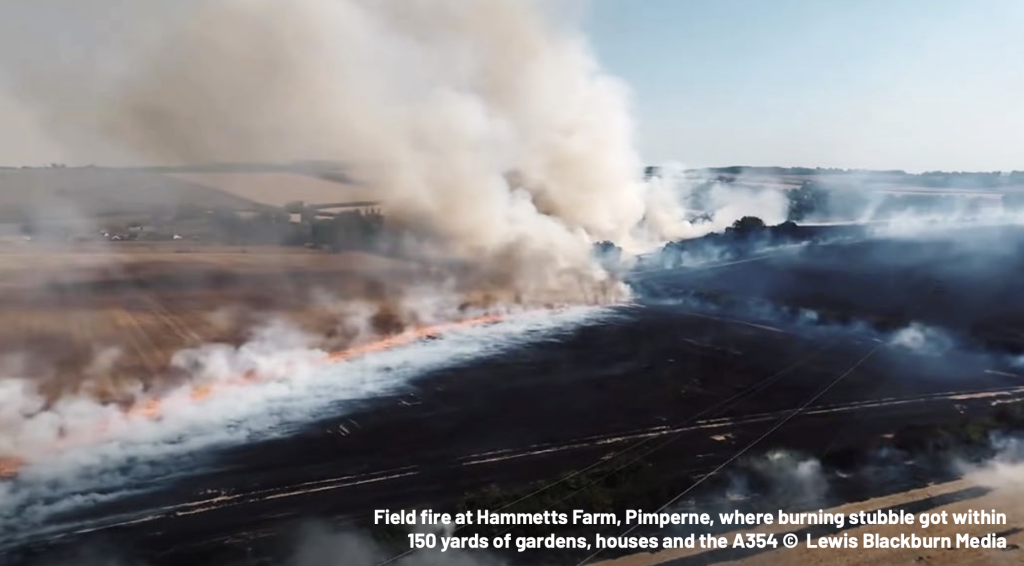
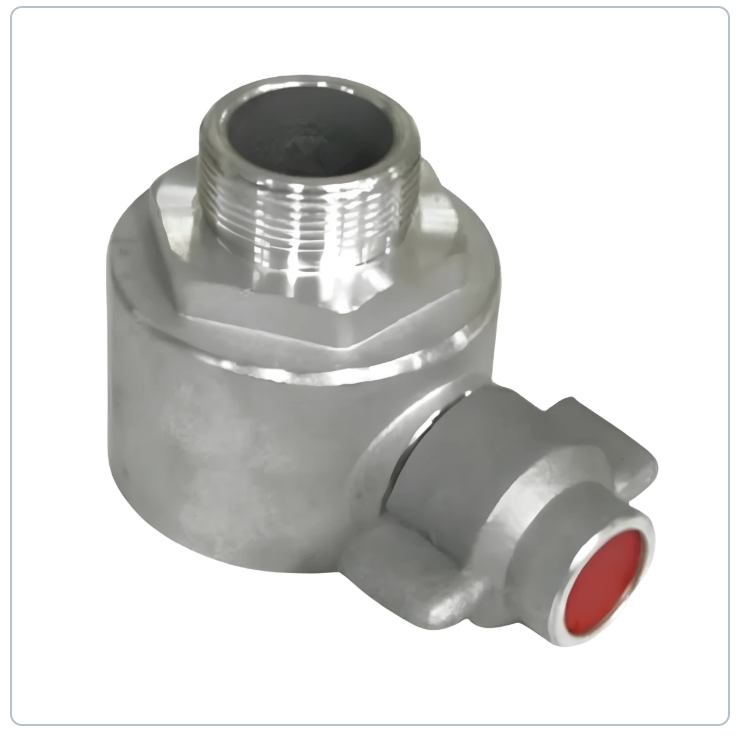
The most traumatic aspect of the long dry period, with the heat, has been fear of fire. Through July and August there have been numerous fires just within a 5 mile radius. Bryanston, Stourpaine, Pimperne, Winterborne Whitechurch, to name a few. The scariest was the Pimperne one where a burning stubble fire got within 150 yards of gardens, houses and the A354. These have been caused variously by farm machinery such as sparks from rakes and combines, cigarette ends, and bonfires. Bonfires, I ask you? And smokers in the open should clearly be subjected to the ducking stool. Farmers if they have any sense will be geared up with water bowsers, pumps and hoses, and a cultivator ready to hand should the worst happen on their own or a neighbour’s farm. Luckily one of our near neighbours set up a whatsapp group a couple of years ago, which now has over 30 farming members in the area, it only discusses fire matters, and if someone smells or spots smoke, everyone has a look out or maybe sends up a drone to have a look to try to pinpoint it, and then if able, will head off to help fight it. Bearing in mind that fire engines generally only carry 2000 litres of water, a farm bowser carrying say 10,000 L can make a huge difference to fire brigade effectiveness. It would help a lot however if the fire service would start a programme of providing the special fitting they use for connection to all farmers with a bowser. It is not a thing seen on farms, so the systems are incompatible without it. It looks something like this:
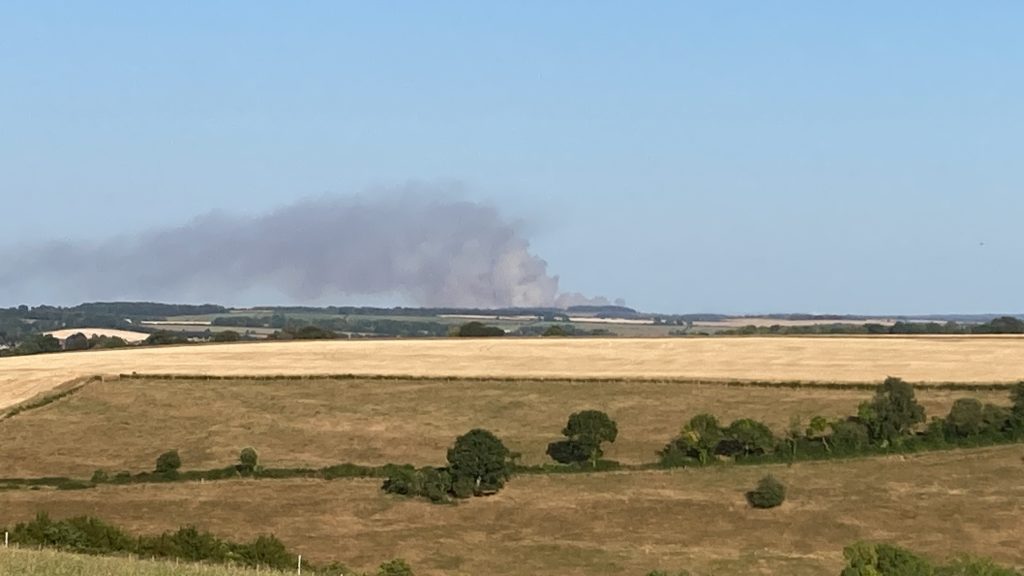
The picture below turned out to be of a scary field burn near Wimborne, back in July. 8 miles as the crow flies, big smoke.
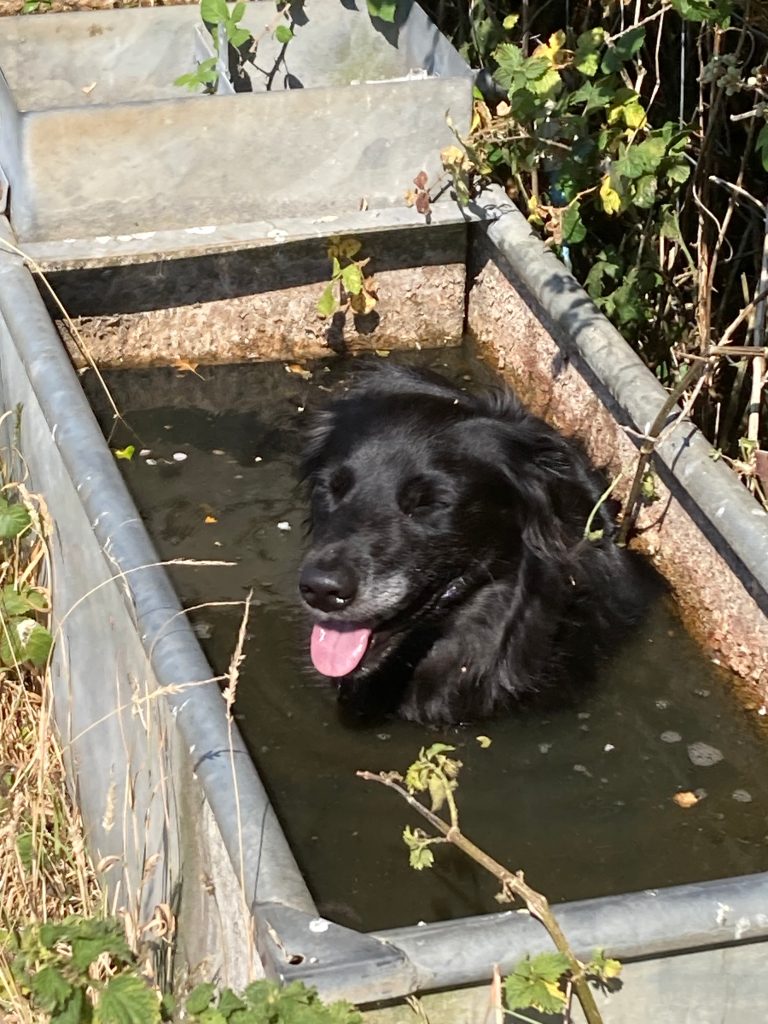
Another weather related problem which has become an epidemic, particularly in Devon, and we fear it reaching across Dorset, is the Bluetongue virus, which seriously affects sheep which will die if untreated, and cattle slightly less so. The virus, which does not affect humans, is spread by midges which have been favoured by the hot weather. The midge bites an affected animal and then spreads the disease by biting another and injecting the virus which is carried in the blood. The disease can be largely prevented by vaccinating flocks and herds, but protection only develops up to 30 days after vaccination. We have not vaccinated regularly for this disease in the UK, largely because it is 8 years since we last had an outbreak, and the vaccine is not cheap. As it has spread, and farmers have been ordering vaccine in increasing amounts, a shortage has occurred, causing increasing worry. Veterinary advice suggests a separate needle is used for dosing every animal, to prevent risk of further spreading. Fiddly or what?
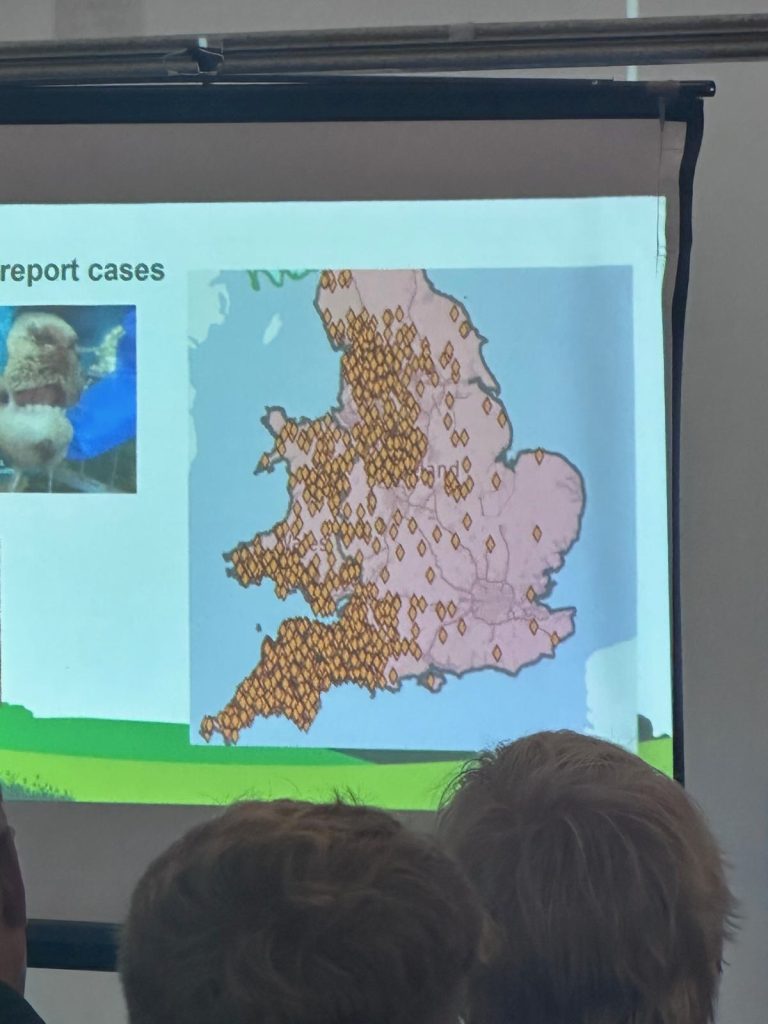
A farmer we met in Northumberland last week told us that their vets have told them that the midge is very temperature dependent. Below 13.5 degrees for 3 days running and they will apparently stop breeding, whereas this advice from the Shetlands Islands Council is slightly different, referring to the breeding sensitivity of the virus itself:
Bluetongue virus is spread by midges and is not spread directly between animals. For the virus to multiply, it requires a sustained temperature over 13 degrees and it can multiply more quickly in warmer temperatures. It is thought that higher temperatures seen in the repeated heatwaves in England and Wales this summer has reduced the incubation period for the virus in midges and contributed to the spread of the disease.
We are planning to vaccinate our 23 sheep tomorrow, and will keep fingers crossed for lower temperatures for the next month until resistance kicks in. Today was well into the 20s however.
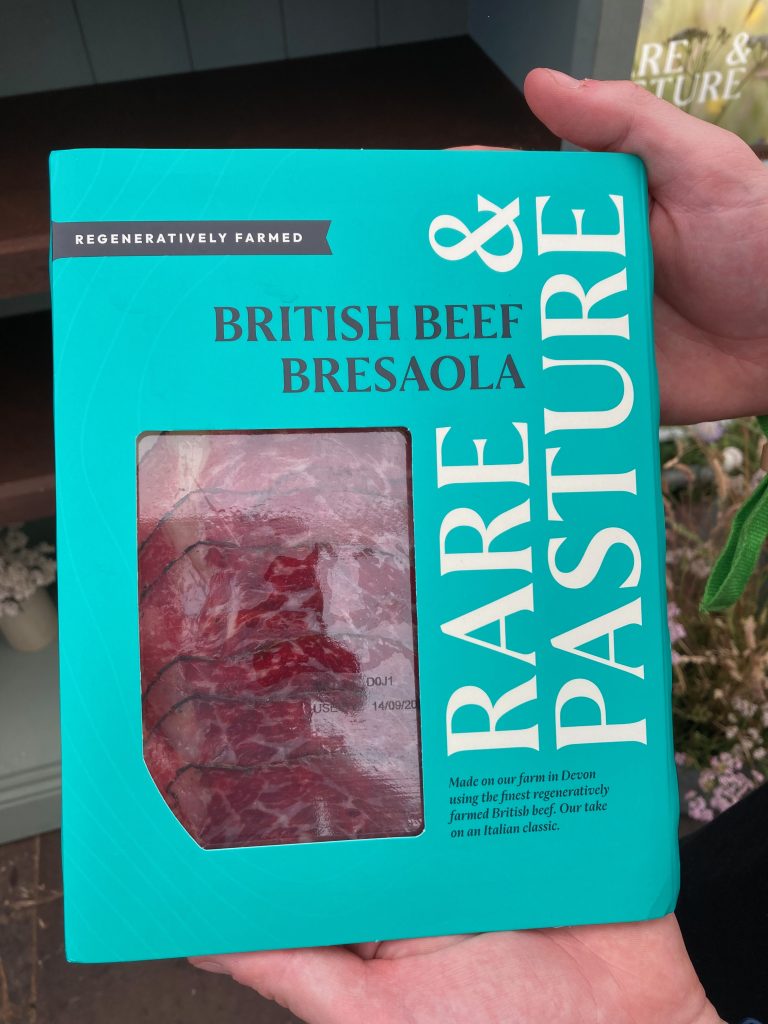
An example of beef products available from exclusively pasture fed beef animals, as seen at the Groundswell agriculture festival in July.
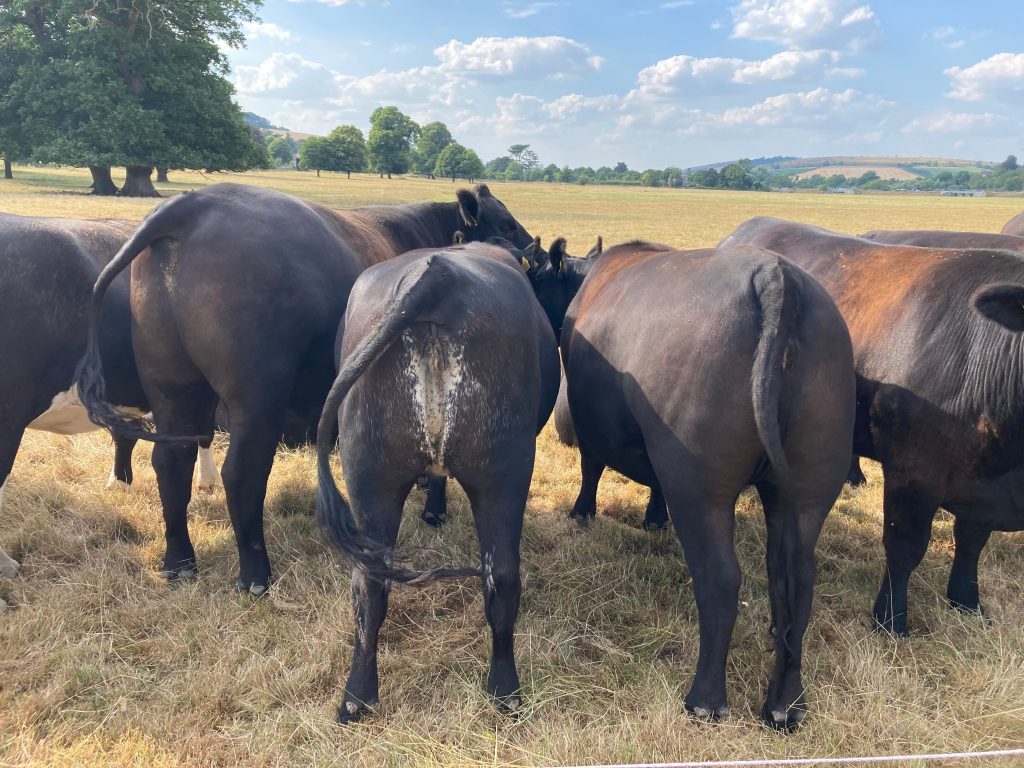
These ones are just about ready.
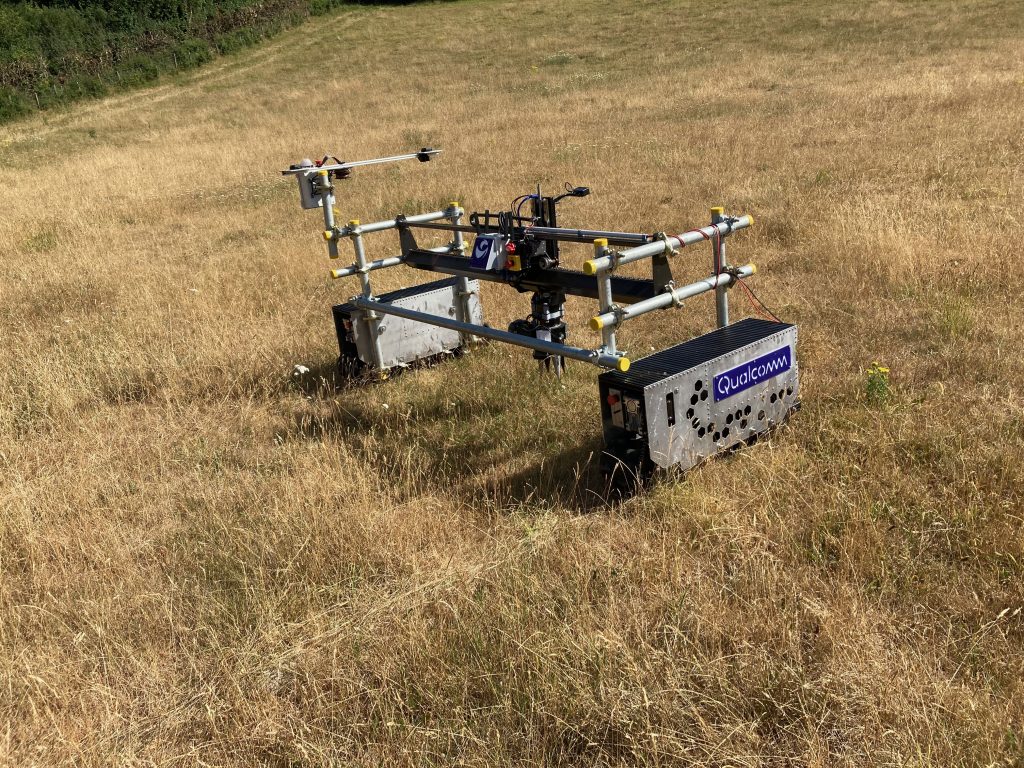
Meet Raggy the ragwort picking robot, seen here being trialled on the farm in late July. This is part of a research project involving Dorset Council, The University of Plymouth, the Robotricks AgTech team, and Qualcomm an IT specialist. Still early days, but the machine is able to identify ragwort plants and dig them up, some of the time! Bearing in mind the hardness of the ground due to stones and drought, the slope, and the varying size and shape of the plants, it did remarkably well. The research continues, with fine tuning of software and hardware, and if the overall cost can be kept reasonable, there could be quite a market for machines like this especially on public and amenity land. Ragwort is poisonous to grazing animals, and spreads easily as its light seeds travel miles in the wind.
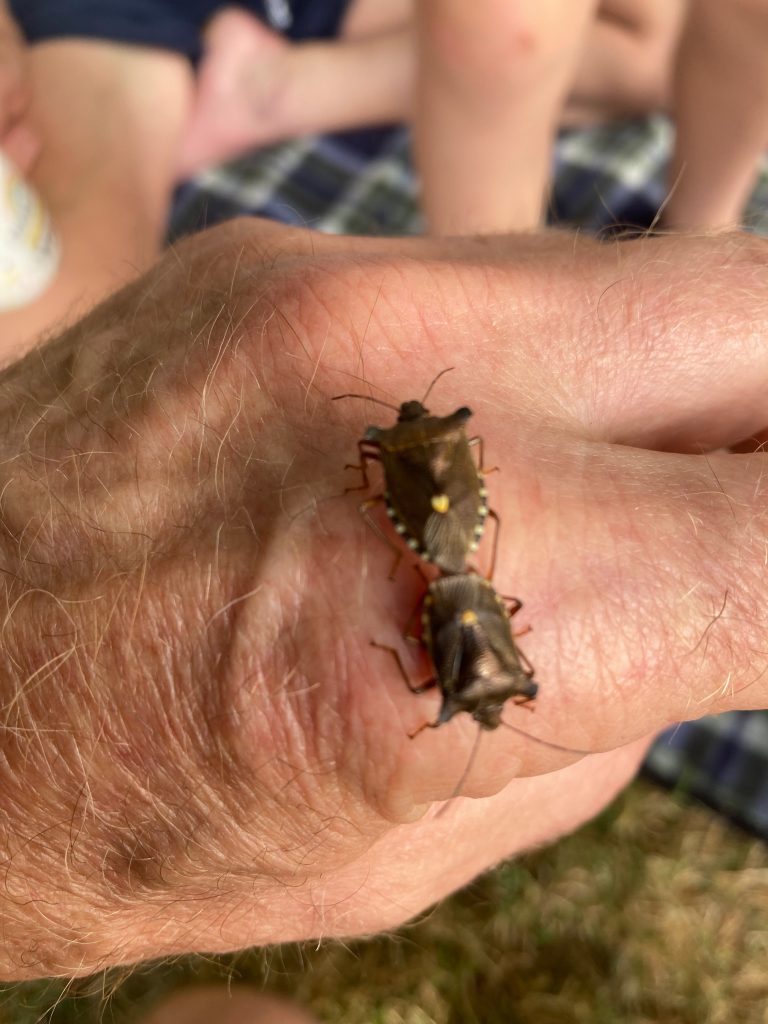
I will leave readers to work out what is going on here, they seemed very unwilling to part.
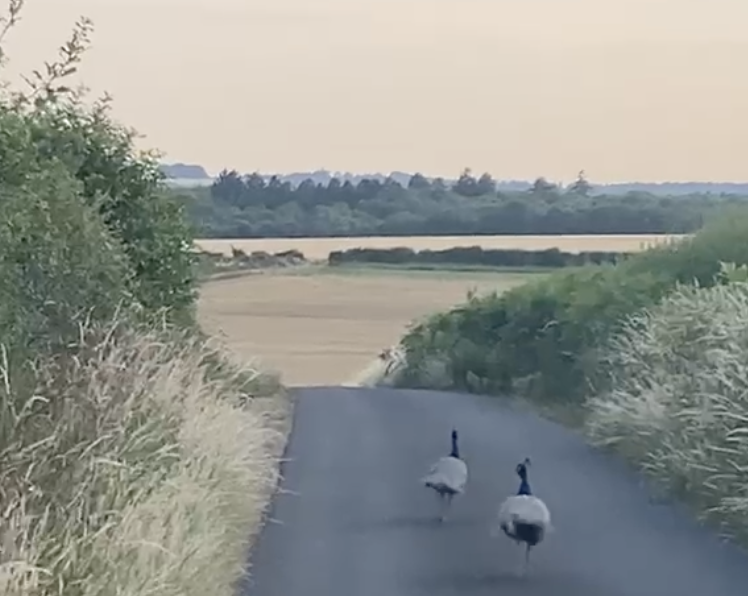
Escapees from bird sanctuary, or dumpees by an owner fed up with their screeching?? No sign of them next morning or since, did they end up as foxie’s breakfast……..?
And speaking of foxing, were you foxed?……………. The yellow seeded smelly crop with the elegant pods is Fenugreek
Next month
Please save me some of the fenugreek leaf – methi – next year
Great stuff George, and excellent advice on fire…we had many round us in East Sussex, including a small one here behind the muck spreader. Unbelievable. Scary Summer
I could do with the ragwort puller here, my current one is nearing the end of her tether and has threatened me with no more lunches.
I hope that it collected all the plants not leaving them about for some hungry animal to eat.
It drops them in a bucket, which has to be emptied by the tethered human running along behind
Really interesting read George, thank you. My brother, who is a vet in Devon, told me that they have been extremely busy with vaccinating for Bluetongue.
I hadn’t realised that fenugreek was used as a cover crop!
Dear George.how amazingly upbeat your view displays,despite what has clearly been an incredibly difficult season,bravo! What a fantastic team you have around you. Had a conversation with your dad some years ago after a difficult spell of weather…..”harvest always comes in…whatever “
But now and crystal ball gazing meteorologicaly and geopolitically there really does seem to be a perfect storm to be weathered. Testing to the limits comes to the mind. Shared knowledge and experience will be invaluable. Mutual support and sharing of ideas will be invaluable. …oh yes and spades of. Good Luck.