The View from the Hill
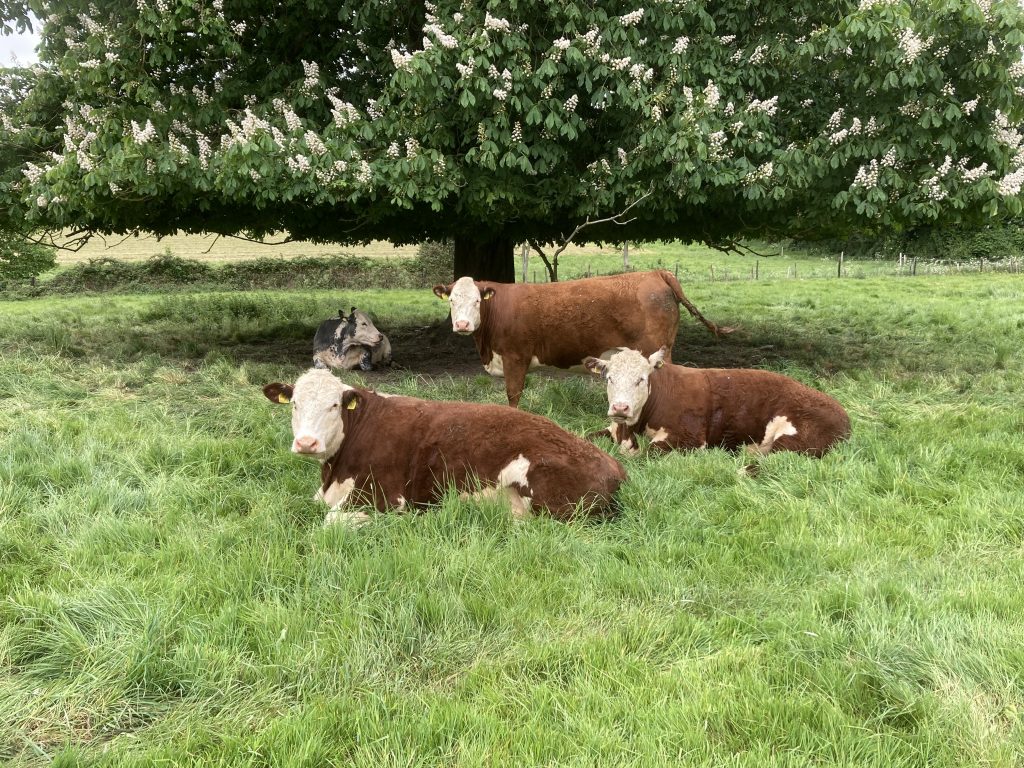
Some of our handsome 2 year old beefies relaxing amongst the Horse Chestnuts in the meadows near the Stour, after winter spent on cover crop, where they put on weight by an average of 600 grams per day since December, with no supplementary feeding. The mixed species grazing and moving onto clean ground every day has done them well. Since going onto grass the growth rate has increased to 2 kg per day. How much grass must they eat to achieve that? Some are very nearly finished.
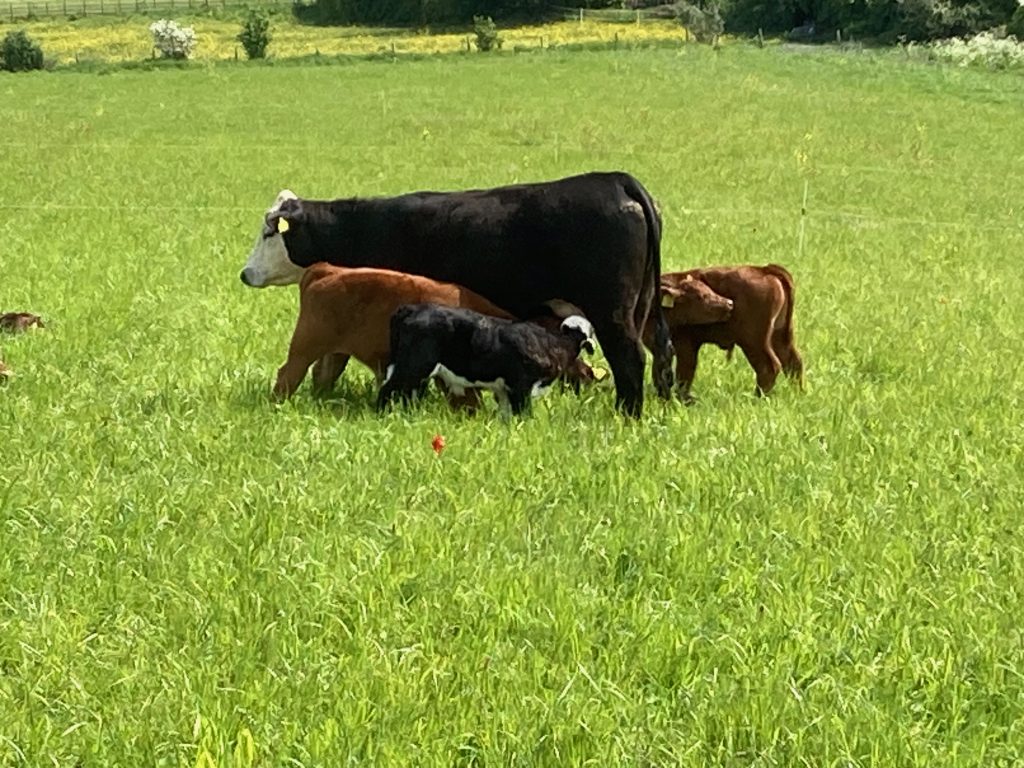
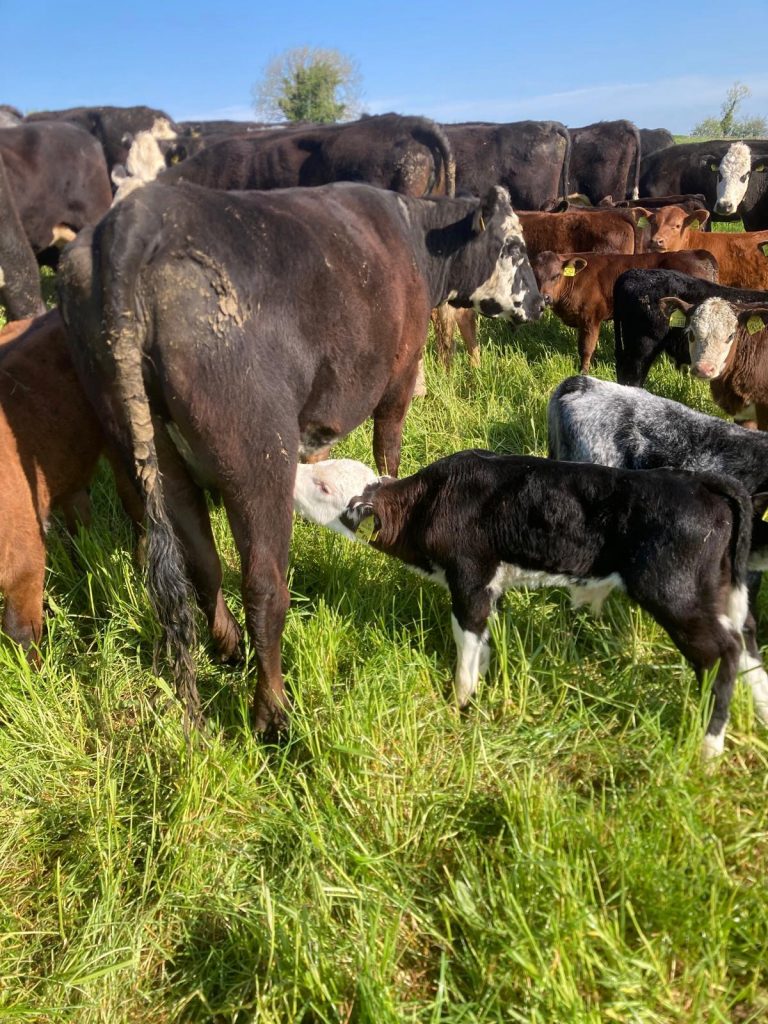
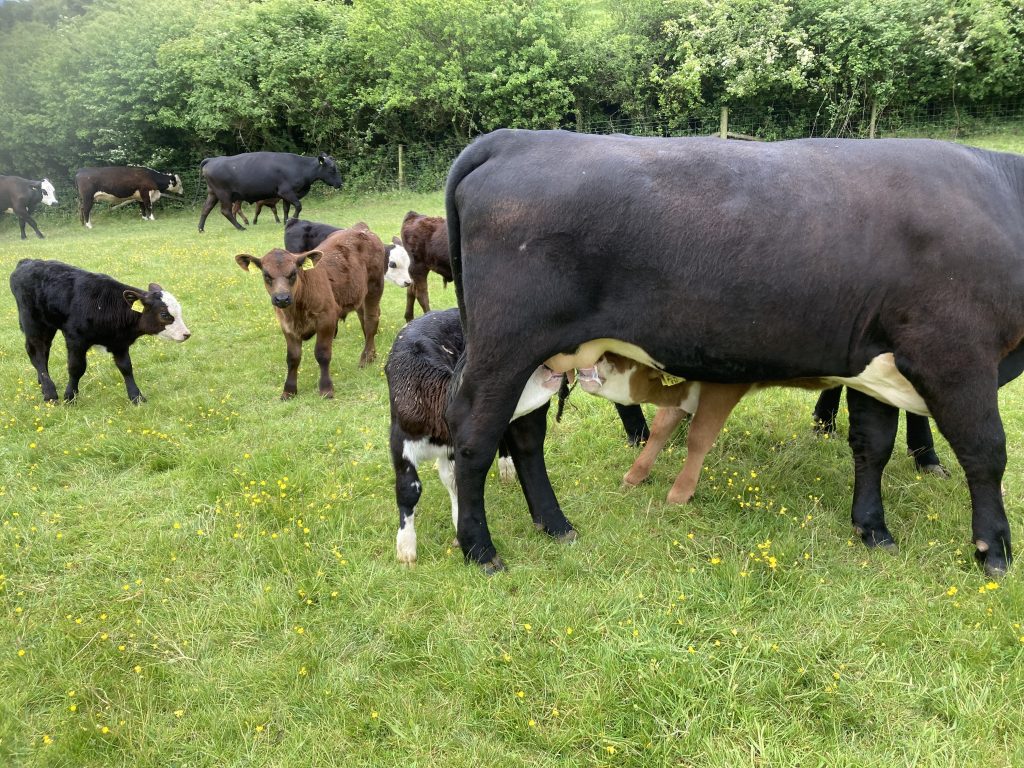
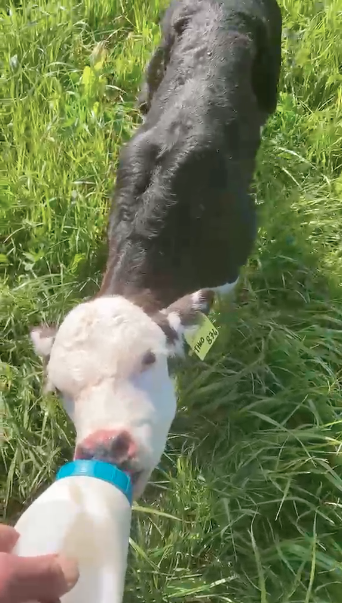
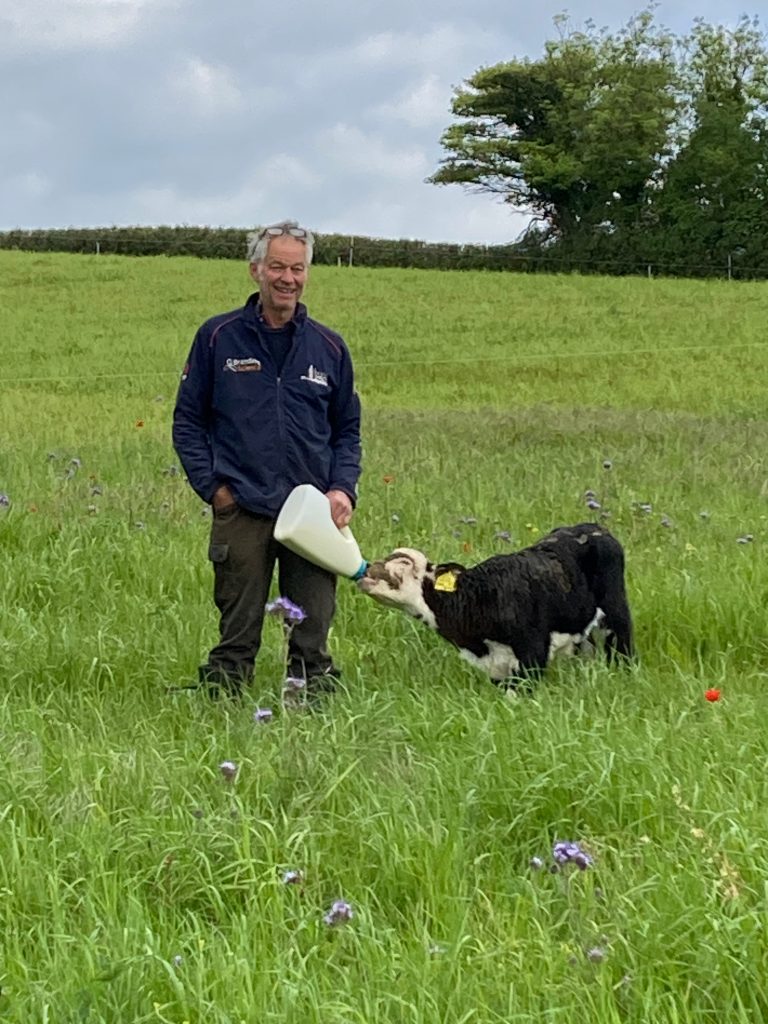
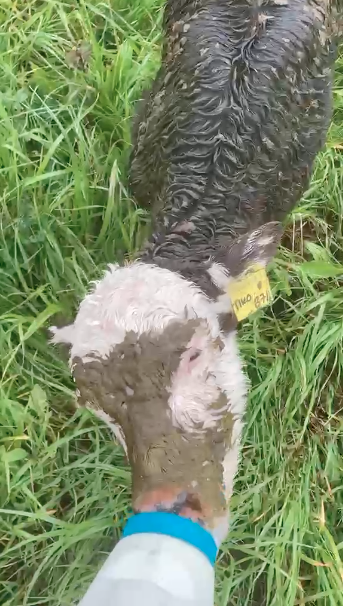
Meanwhile, two groups of cows and calves are outside enjoying spring grass, with just 4 laggards left indoors who just will not get on with producing a calf. In one group there is a sad little character, now called Basil, who lost his mum soon after he was born, he has been receiving a large bottle of milk daily since then, and is expected to pinch further milk off other cows, which he is managing with some success as you can see.
Some of them seem to care for him, with the odd lick and a rub, although they are less happy if they see him actually helping himself to milk. However he has worked out ways to do this surreptitiously, either hiding behind another calf who is already feeding, or else by the more risky ‘between the back legs’ technique, which does present hazards with consequences ……
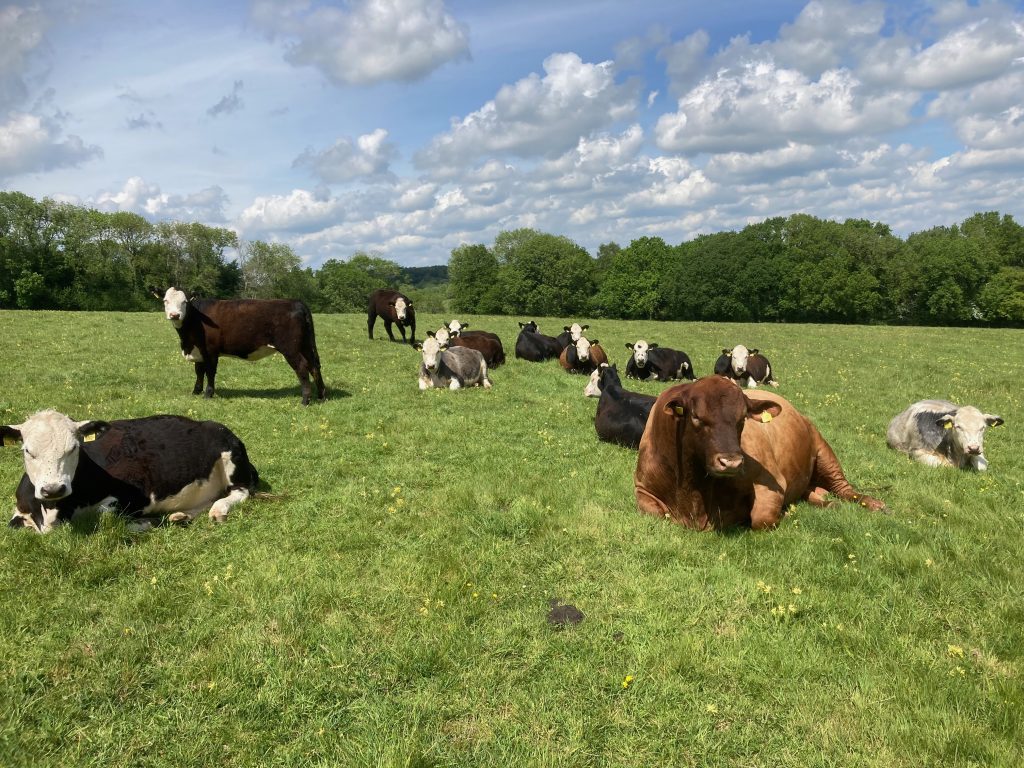
In another field Mr Red finds himself in the company of 14 heifers, herd replacements for next year, sat amongst a sea of cowslips in such company, he really should consider himself in heaven.
Spring crop sowing has progressed well, the wheat, oats and barley have all emerged and are growing well, but are desperate for a drink, and at last we have managed nearly half an inch over the last few days, which should help. Last week Will sowed the Millet, generally only sown once we get into May, to avoid frost risk. We still have winter bird food plots to sow, but hold off as long as we dare, later germination means that flowers and seeds will hold on for longer into winter.
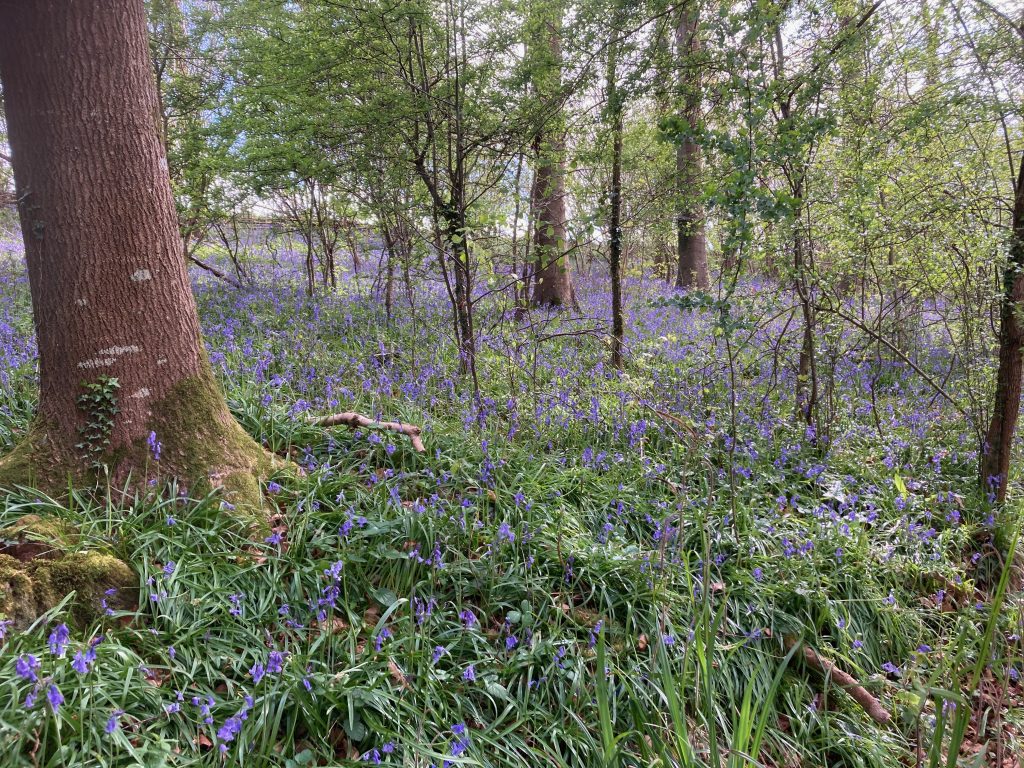
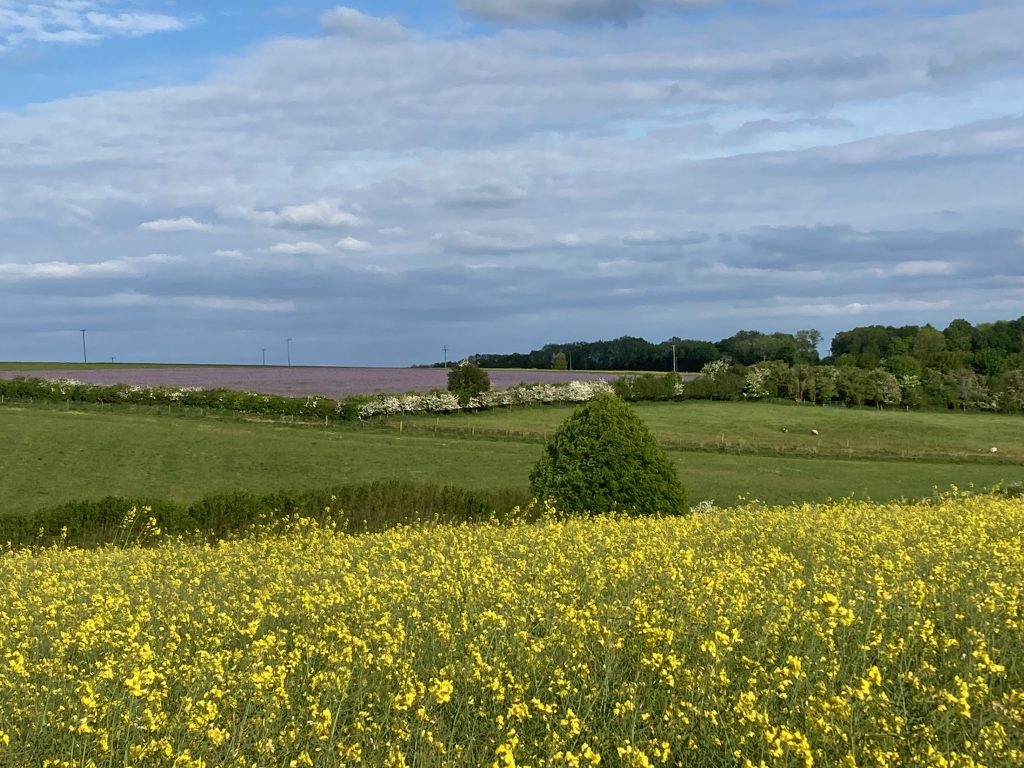
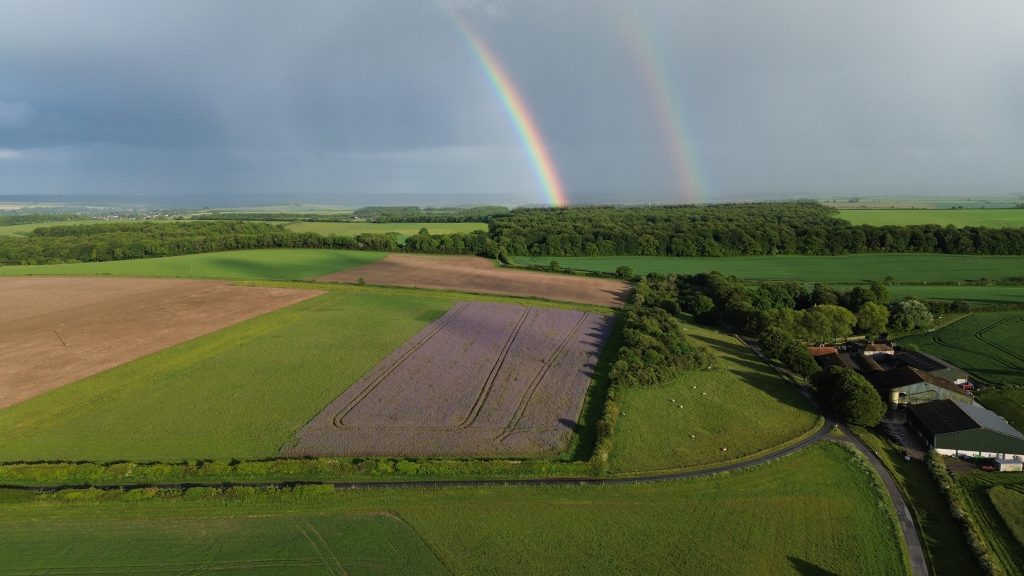
The last few weeks have been a riot of spring colour as first the bluebells appeared in the woods, rapidly followed by the oilseed rape turning bright yellow, now so tall you can easily lose a class of school-children in it. The autumn sown phacelia looks lovely, especially after a shower followed immediately by evening sun. I sent the drone up for the phacelia, and when I swung it round for a shot in the opposite direction this lovely rainbow popped into view, not visible from the ground, as it was masked by trees. We will harvest the phacelia to use in our seed mixture for next winter’s cover crops. The plot to its left is winter vetch, and the rest of the field has been planted with an assortment of other species to add to the mix, including buckwheat, gold of pleasure (camelina), spring vetch and peas.
I can’t help talking a little further about the weather. As I may have said before, it is rare that the weather is right for farmers for more than about 7 days at a time. After the deluges of the winter, with record breaking rain in January and February, it dried up pretty quick in March, which gave us excellent conditions for planting spring crops of wheat oats and barley, which proceeded apace across the county. However since then, until this weekend, (17th May) we have had precious little rain, showing the importance of swift planting once soils are dry enough coming out of winter, for fear of a spring drought, which could still be in the midst of. Forecasts of rain have come to nought time after time. The winter crops still thrive, their roots having had many months to penetrate deeper into the soil in search of moisture than their spring sown neighbours. April produced a paultry 14mm, in fits and starts, of little real value, and early May has produced less . It is all too similar to last year. On the plus side dry weather means less pressure from wet weather diseases in arable crops, and at the start of the season meant that in-wintered livestock could be let outside sooner than in a wet spring. Since early March we have been applying little and often doses of fertiliser to the crops, in the hope that a drop of rain would help it get to work and encourage some growth, but like last year, the lack of rain has held things back. At least we haven’t been hit with high temperatures, which would have stressed plants further.
And what of next year’s fertiliser? Farmers (well, everyone let’s be honest) face a very uncertain future. Once this year’s fertiliser has been used, thoughts soon turn to next year’s supply, and boy do we face a problem due to the folly of idiots making war without a plan.
If you think we can do without it, and that organic farming can feed the world, please think again, the world’s human population long ago passed the level which could be sustained organically. As I was explaining to a group of school children only last week, the exploitation of fossil fuels over the last 80 years has led to a disproportionate rise in world population. Please see graph below. We really are in a bit of a jam. We are consuming the family silver at an alarming rate.
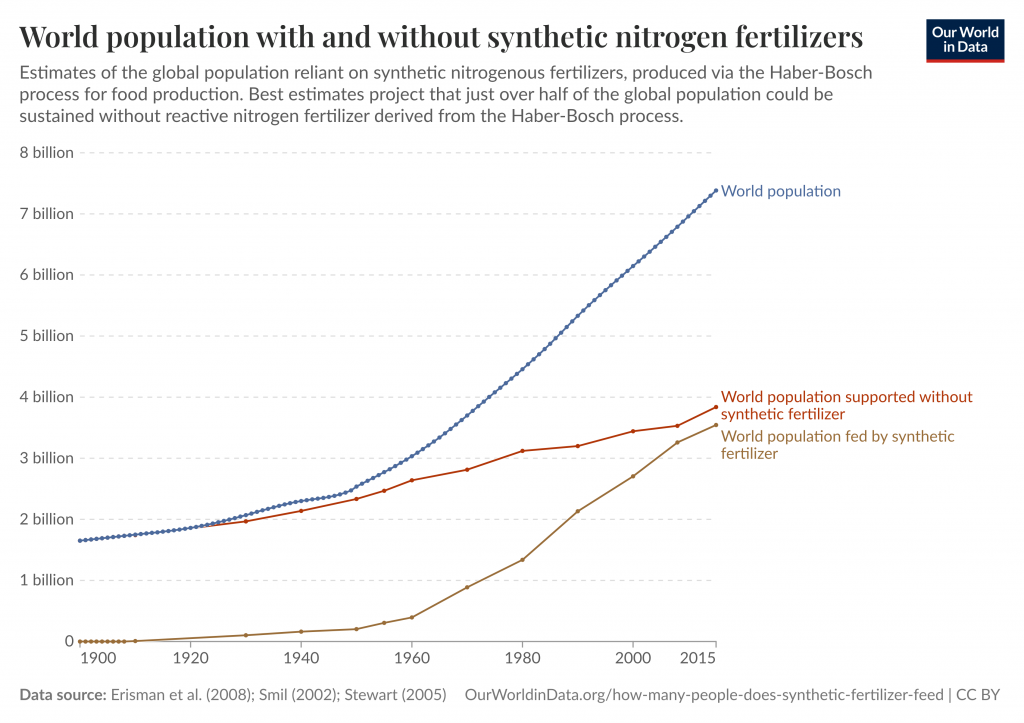
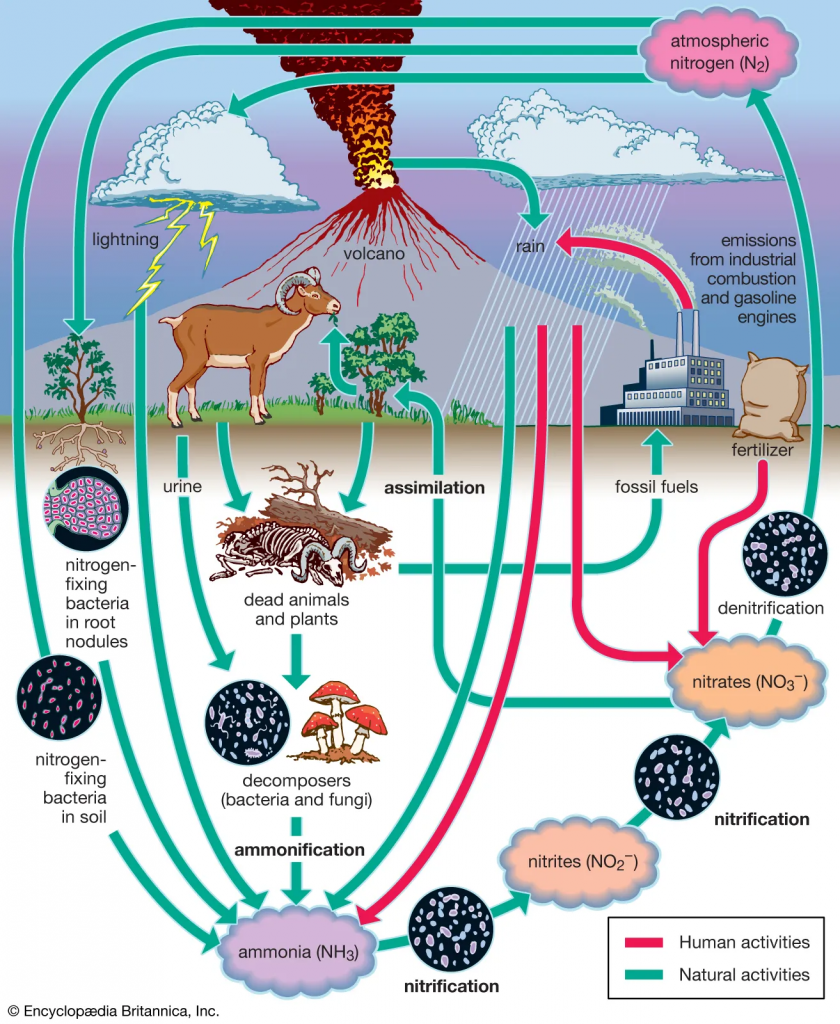
The big question is how do we wean ourselves off this path? Regenerative farming seeks to improve the health of our soils, to make them more productive, and to reduce reliance on synthetic fertiliser and chemicals, but we can’t do it entirely without nitrogen fertiliser, we would have to keep a great many more animals in order to feed our crops exclusively with animal manure. Conventional crop farming is on a treadmill of ever increasing dependence on fertiliser, and chemicals which are needed to counteract many of the effects of fertiliser on plants, eg susceptibility to diseases, to falling over, and to controlling the weeds which thrive in heavily fertilised situations. If only the plant breeders would put more energy into disease resistant varieties, and crops which manufacture their own fertilisers (legumes). Here is a diagram I found to illustrate the nitrogen cycle, including the important role legumes can play in it, fixing nitrogen that the plants can assimilate.
Coming back to today, we farmers are faced with hugely inflated prices for next year’s fertiliser, not only that, but will we even be able to get any? No-one knows, not even the ridiculous perpetrators of the recent/current (delete as applicable at time of reading) war in Iran. The consequences are already grave for areas of the world in different climate zones and seasonal timings. A huge proportion of the world’s ammonia (the precursor for all agricultural nitrogen fertiliser) is produced in the gulf region, requiring as it does vast amounts of natural gas to produce it. In the UK most farmers expect to do deals for the following year’s fertiliser in the summer, and expect to take delivery over the following months, it is a logistical exercise, and the limited number of ships/hauliers available means that we need all that time to get the job done. With 2000 vessels holed up in the Persian Gulf for the last 10 weeks and mounting, and ammonia plants presumably lying idle or damaged, logistics become a bigger and bigger limitation.
You might be annoyed by the apparent profiteering by the oil companies as petrol and diesel prices rose as soon as war broke out, funny that, but there is likely to be a right royal battle over who gets fuel and fertiliser for next year, and that will surely be decided by price. Back to the farmer’s position, grain prices barely reacted to the outbreak of war, yet we had to stomach doubled fuel prices immediately, and we have no way to increase the cost of wheat or rapeseed, they are dictated by world markets, and for some time the view has been that world supplies are plentiful. More recently wheat prices have climbed around £10 per ton, which of course is welcome (approx. 0.5p on a loaf of bread), more to do with a dry period in the grain producing plains of the US than the price of fuel and fertiliser, but we wait with interest to see what happens next year. Here we have already sold a proportion of our 2026 harvest, as we usually have done by this stage, was that right, and what happens next? Hold off until next year?
Watch this space.
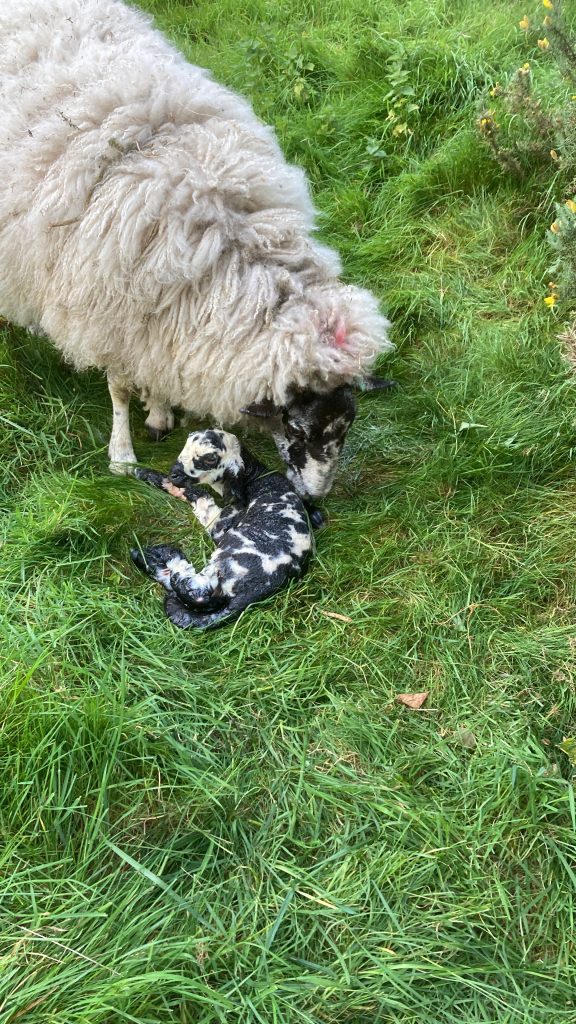
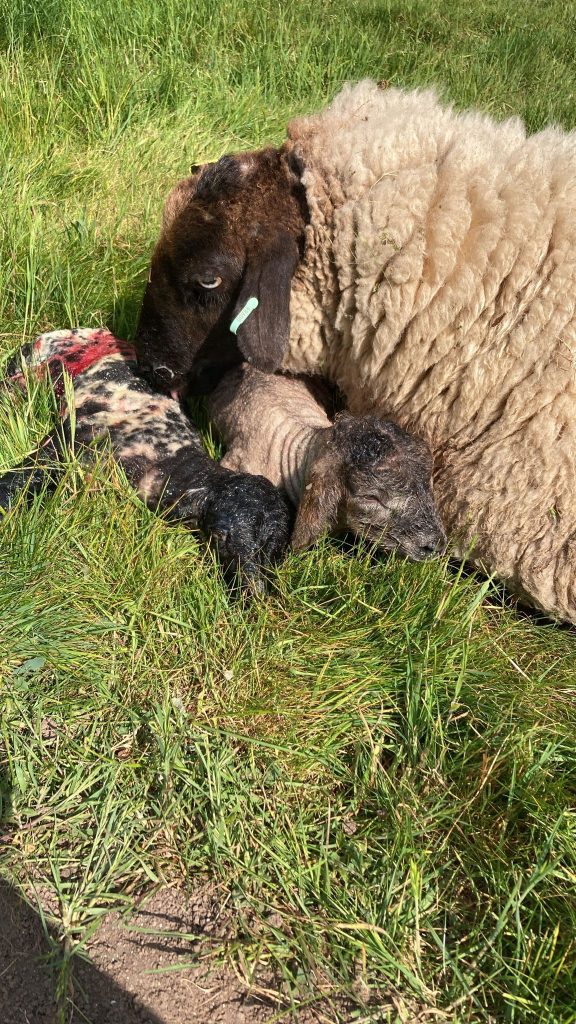
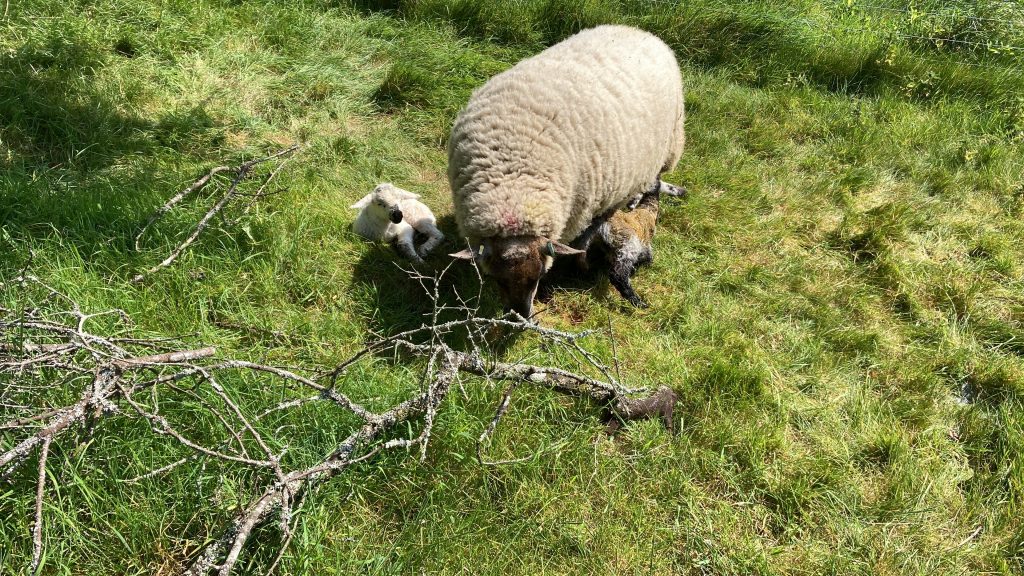
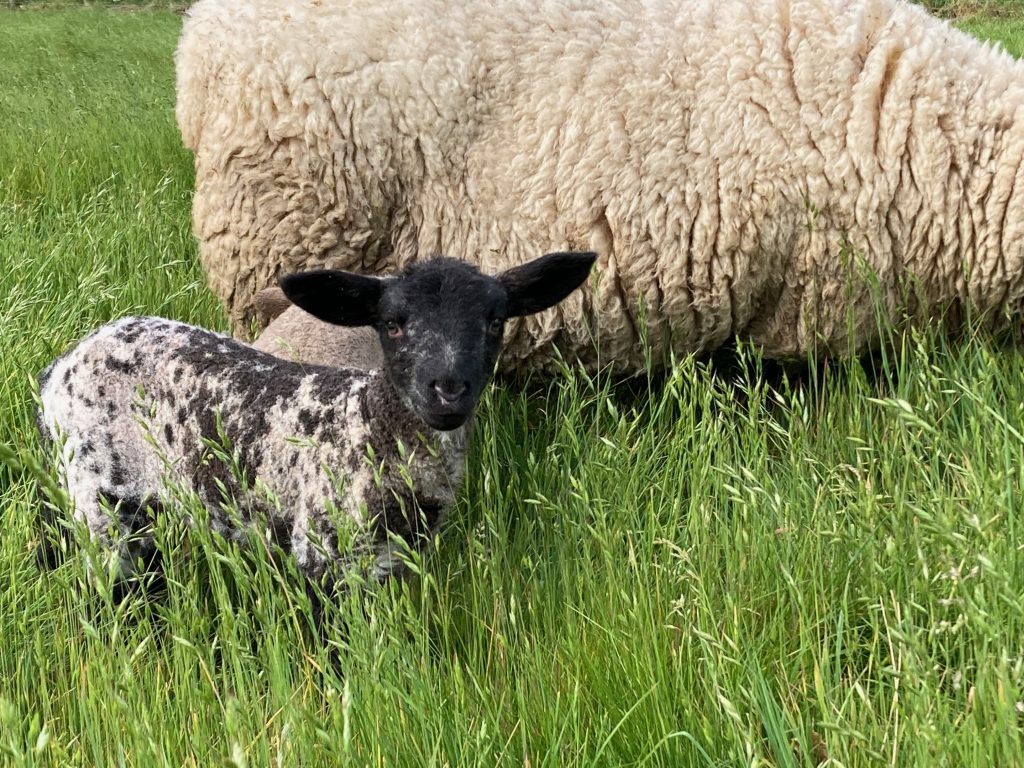
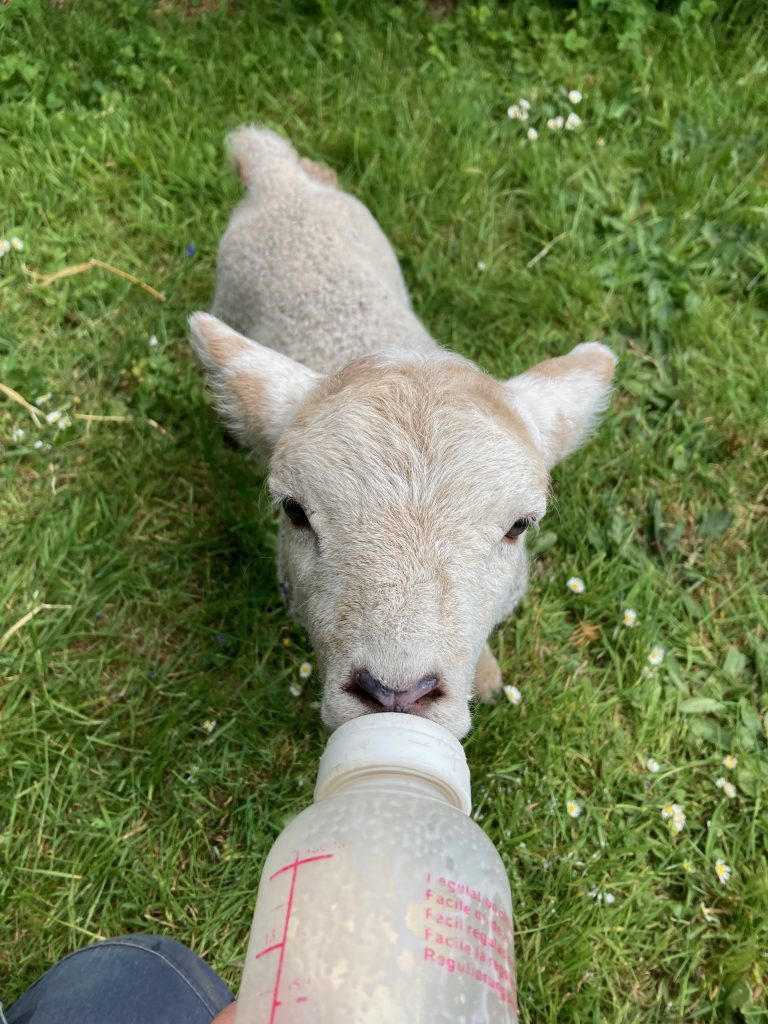
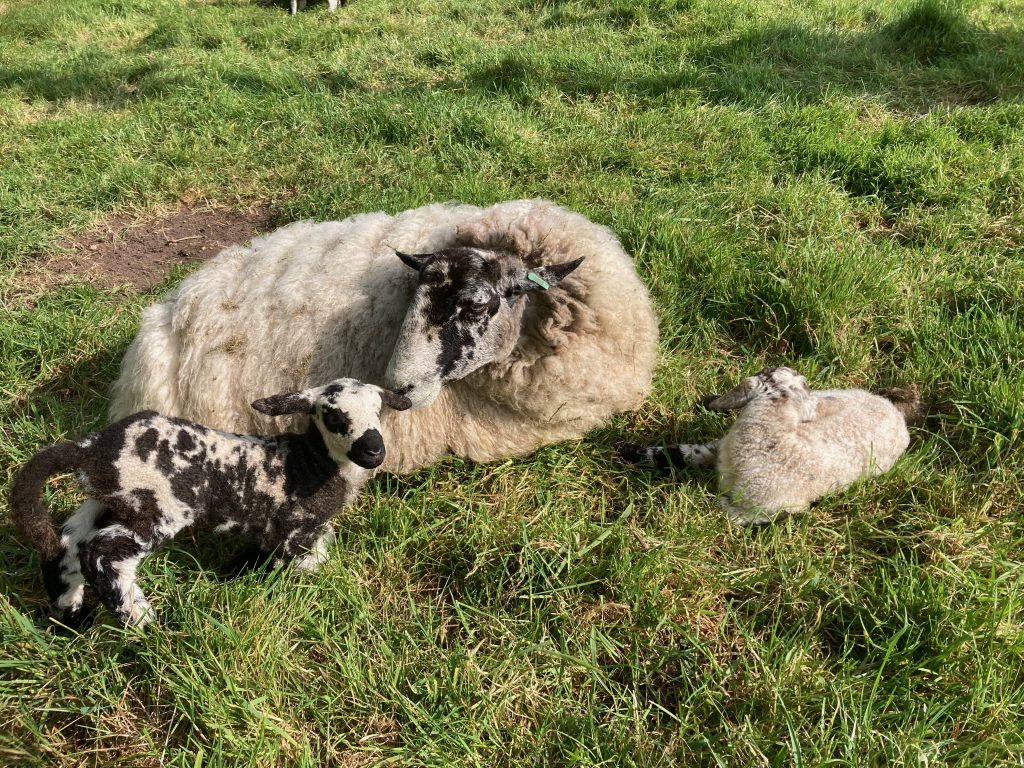
Lambing has been and gone in the blink of an eye, only six ewes to lamb this year, and they have produced five sets of twins and one of triplets. We decided to take away one from the triplet, having seen too many fail over the years, the mother can rarely provide enough milk for three, and only having two teats means that delivery is always a fraught affair. So we have a single orphan, Sandy, (daughter of Pebble if you are looking for a theme….) We had hoped that perhaps another ewe would produce a friend for her, but she remains alone sadly. In the last few days we have introduced her to the others, and hope she will soon join them galloping up and down the field in the evenings.
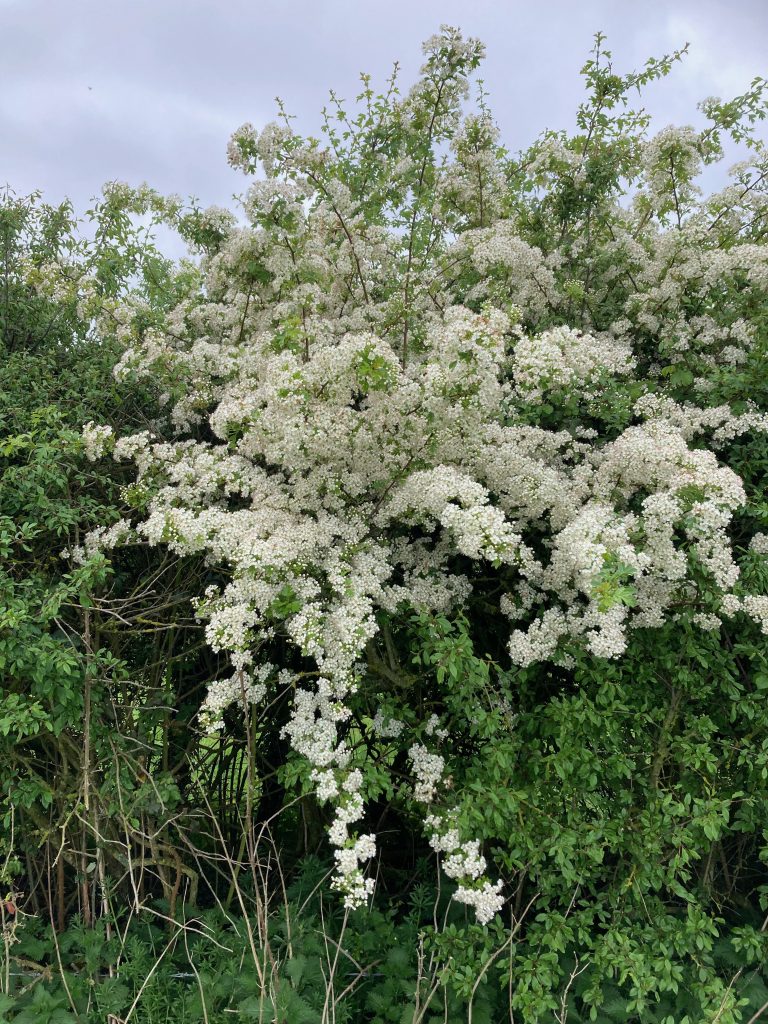
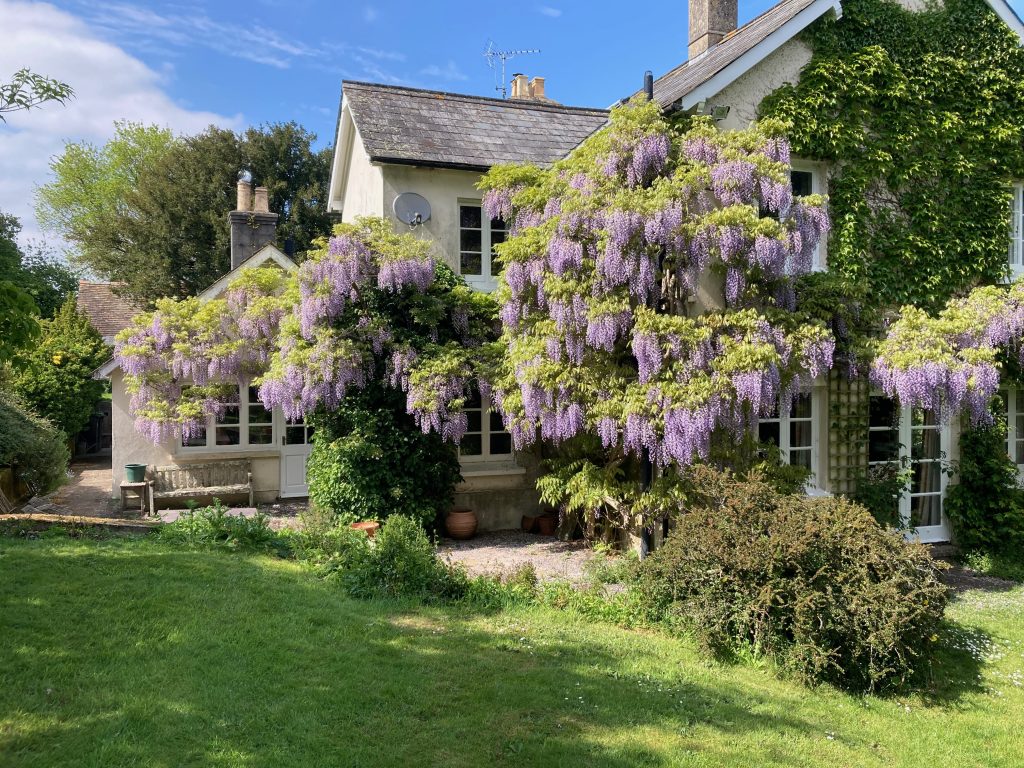
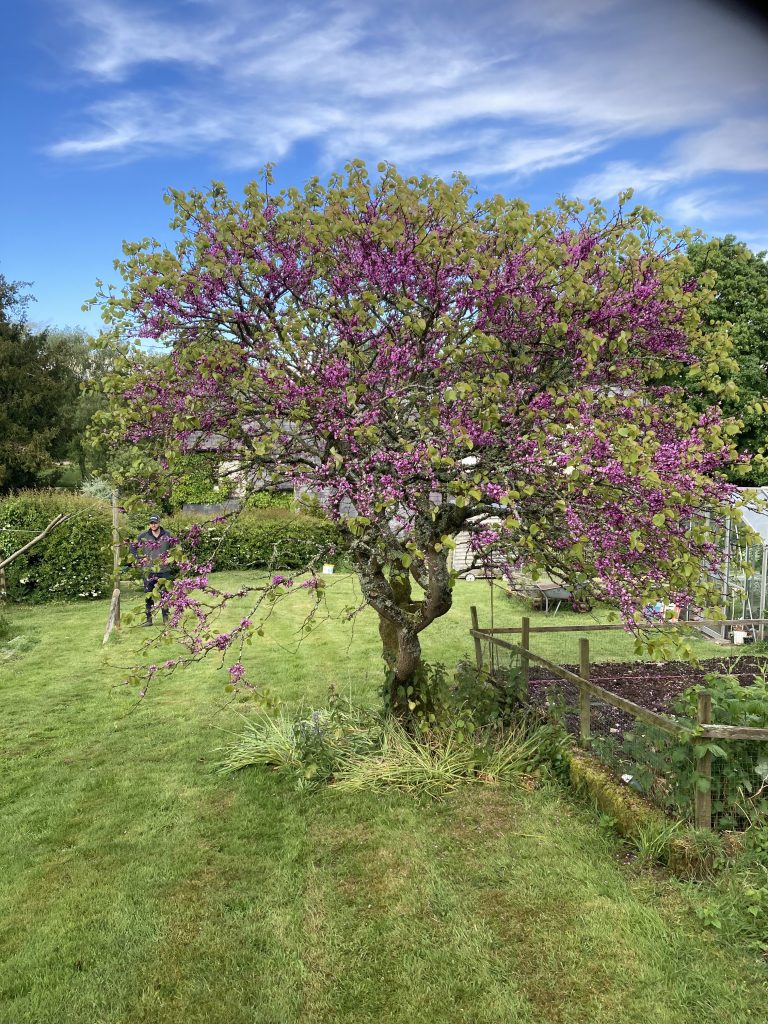
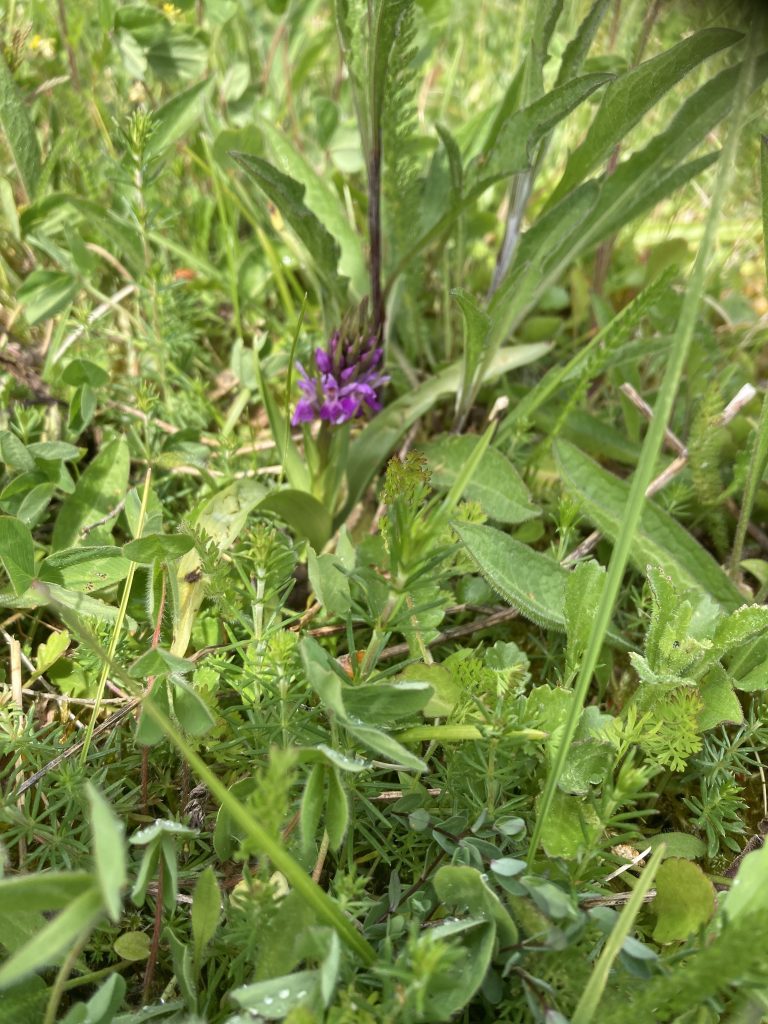
The glories of a dry and sunny spring, from the top, may, or hawthorn, flowering copiously in the hedgerows, wisteria and a Judas tree in the garden. Below is our first southern marsh orchid spotted emerging last week, by an ‘ologist’ of his own description; wildflower and entomology expert Marek Nowakowski of the Wildlife and Farming Company, who came to speak to the Milton Valley farm cluster last week. He told us so many fascinating things, about solitary bees in particular, (it would add at least another 15 minutes reading here if I were to report fully on these amazing creatures). They are of far more value to crops needing pollination than are honeybees. Honeybees and Bumblebees collect nectar and pollen from flowers, and mix them together into a paste that they carry back their hives or homes in sacs on their hind legs, pollen carried in this way is not readily distributed into other flowers, unlike pollen carried by the hairier solitary bees (more than 200 species in the UK), they carry it dry, and readily sprinkle it around flowers as they scavenge from bloom to bloom in search of nectar, which they carry separately. Each solitary bee builds a tubular nest of its own in the ground, or other suitable location, and lays its eggs in order along the tube, each sealed into its own cell, and each one with its own supply of pollen, importantly dry so that it doesn’t rot. Long after the parent’s death during colder winter weather, the new season males hatch first in spring, the larvae feed on the pollen, and eventually emerge, first out of the nest, so that they are ready to mate with the females as they emerge soon after. The females hatch from fertilised eggs, whereas the males hatch from unfertilised eggs. Makes one wonder about the genetic variation in solitary bee populations, where they seem to breed entirely in families. Maybe this is something to do with why there are so many distinct species.
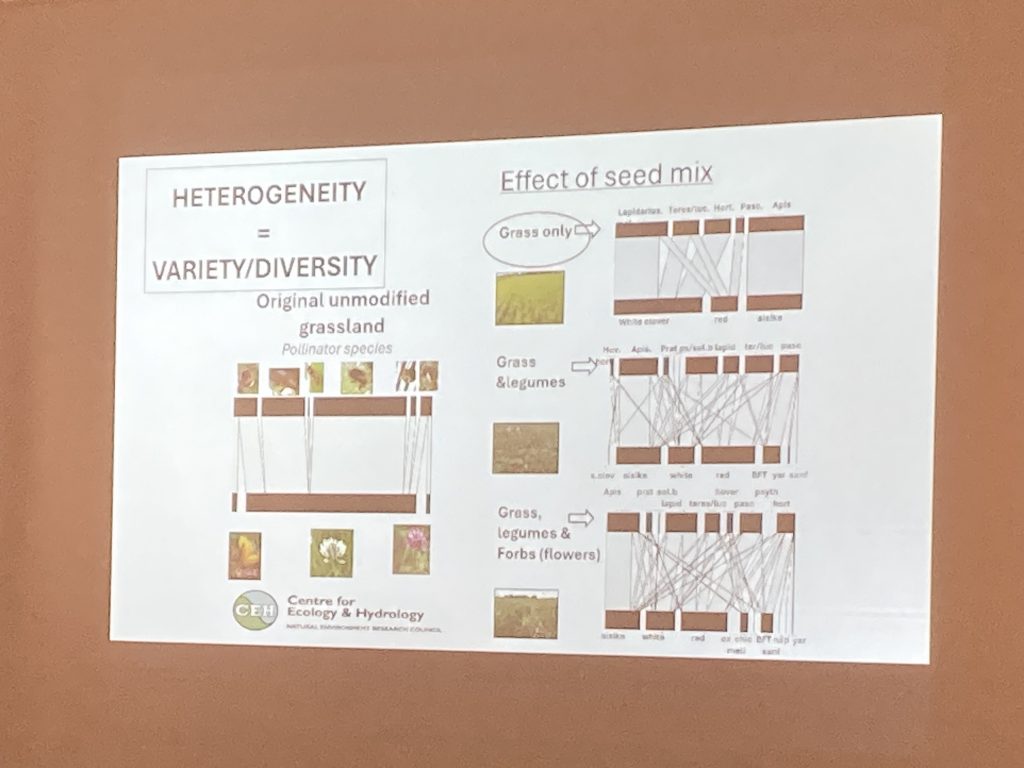
Marek went on to discuss the importance of wildflowers in the environment, how diversity is essential, and how to optimise ones chances of success, as the seed is expensive. If you are hoping to establish a wild flower ‘meadow’ or margin that will last many years, it is well worth doing it properly, and investing in good seed. This will pay dividends in future years in the insect and bird life it will sustain.
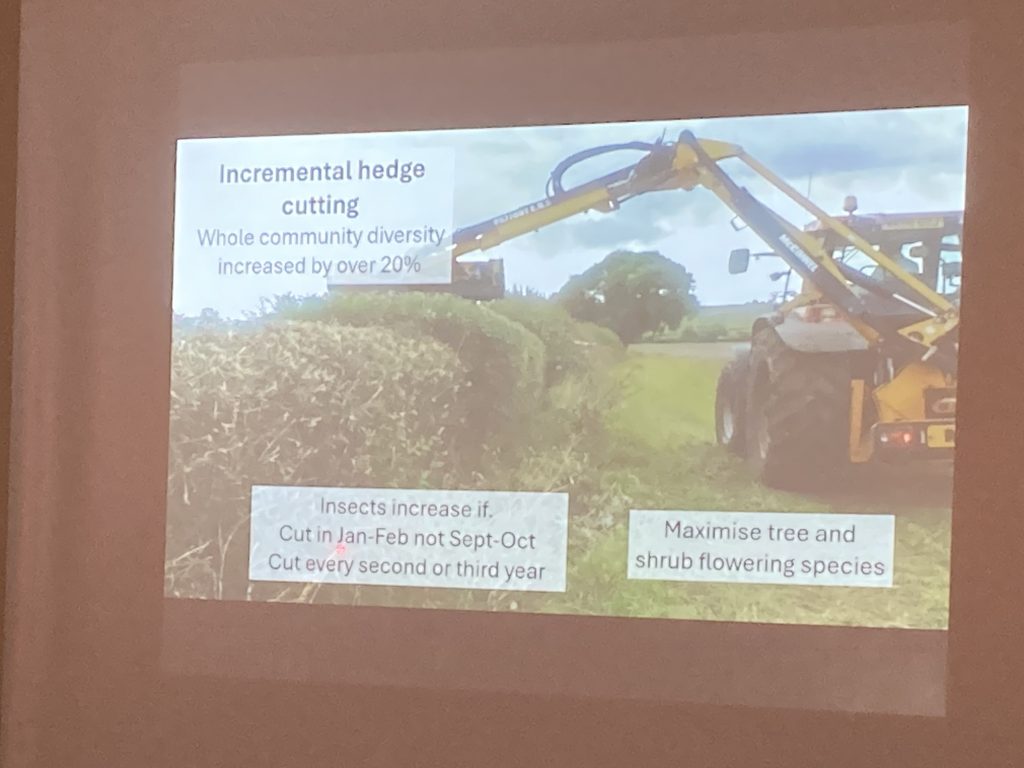
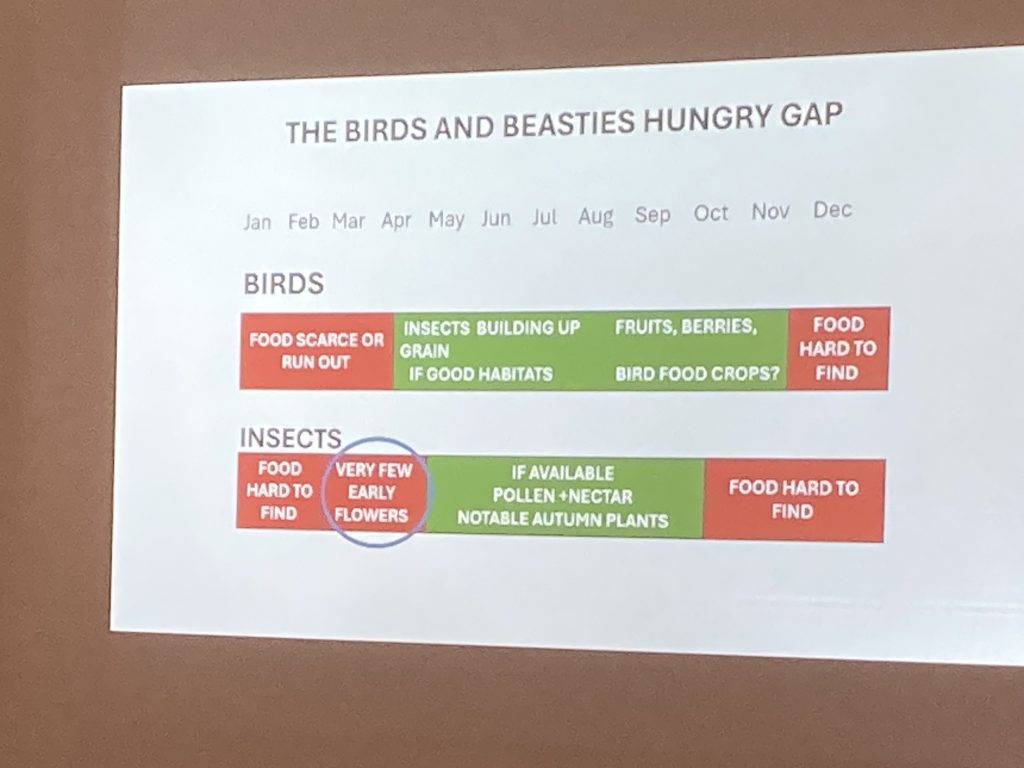
This simple message about hedge trimming, and how to optimise environmental effect, is one of many practical tips we were given. As was the importance of supplementary feeding of birds in the hungry gap.
Here is a link to Marek’s very useful and interesting book “Habitat creation and management for pollinators”, it’s free to download: There is a lot of detail on the different types of bees, and even the importance of bees’ tongues, along with a lot of other great stuff.
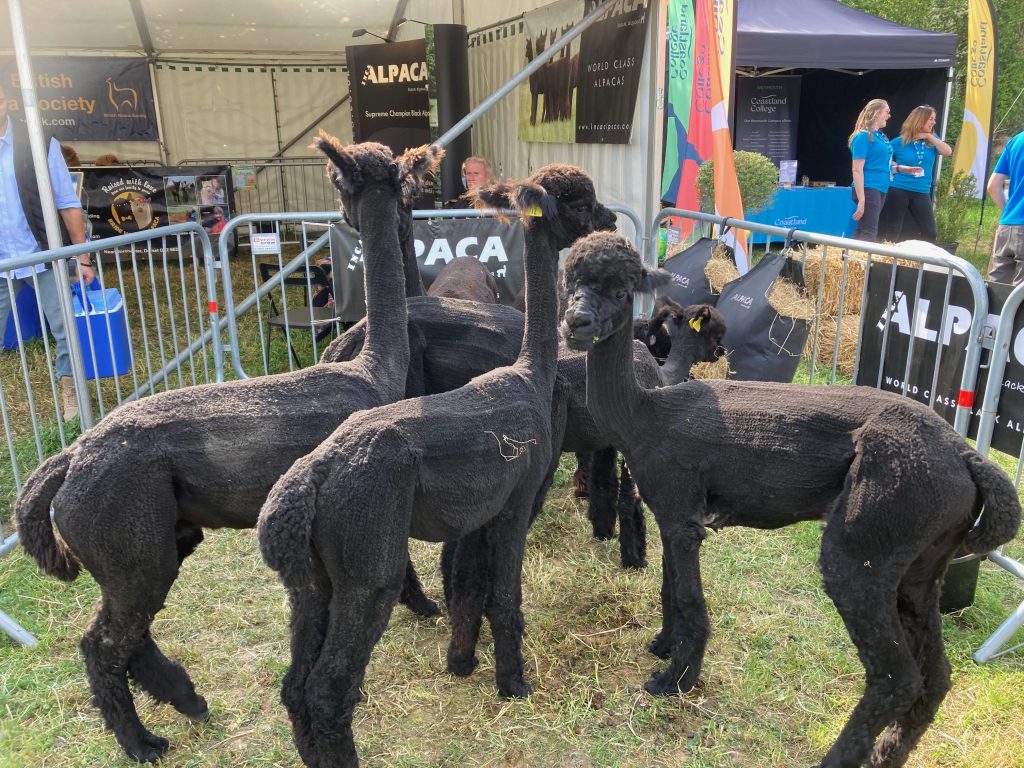
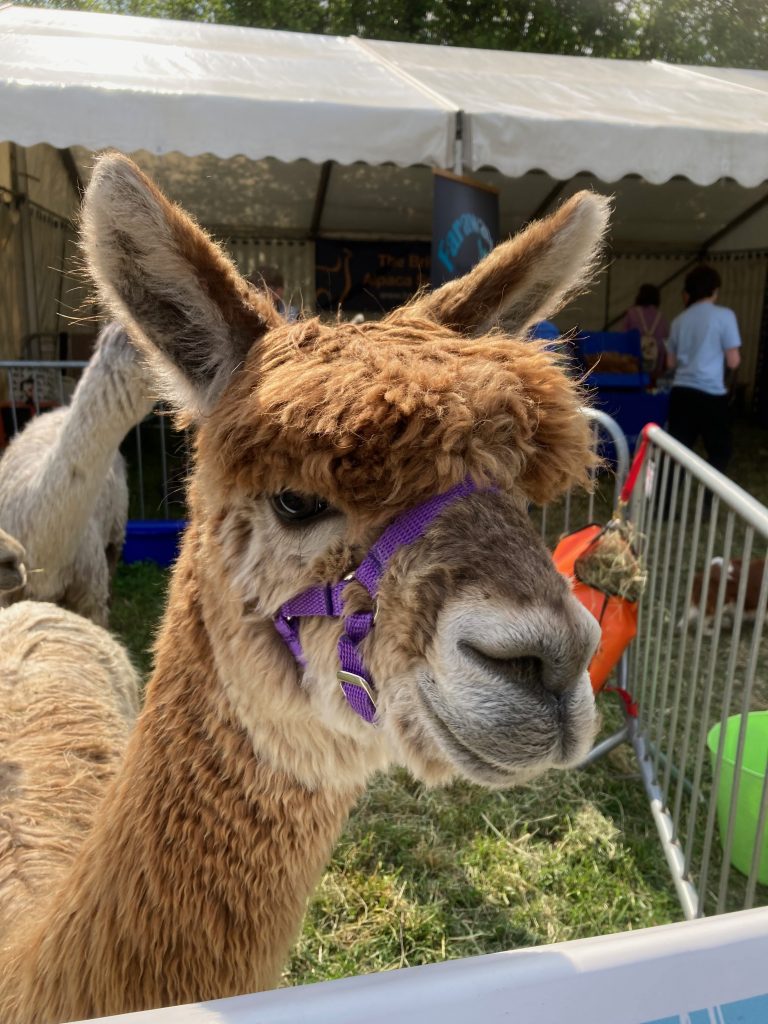
Funny creatures as seen as Dorset County Spring Show
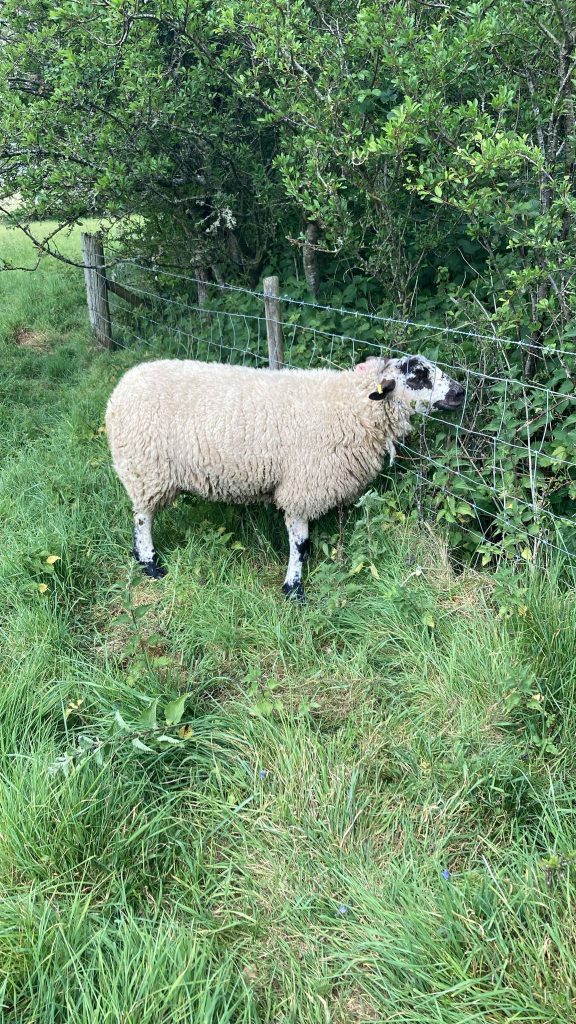
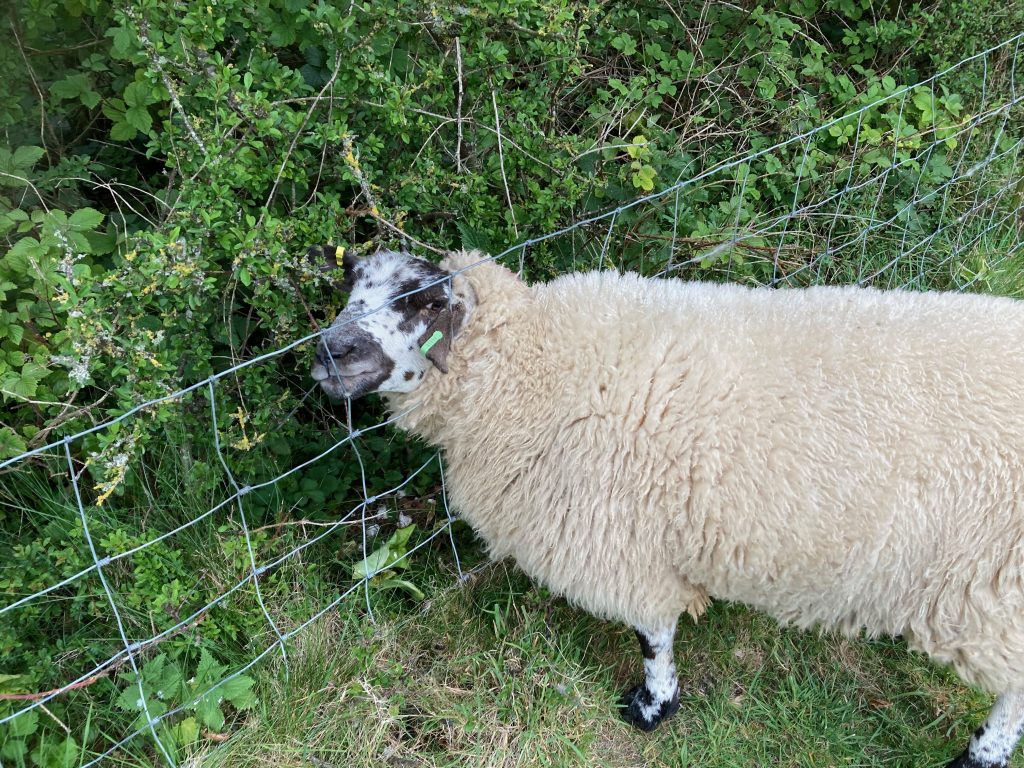
Daft creature seems certain grass on the other side is always greener, she has done this at least 3 times in the last fortnight.
Another good read.thank you George
Welldone again George!
Great photos & stories!
Rainfall! Here in the centre of the Blackmore Vale we had 12″ this year to mid February, only 9mm in April but 13mm in dribs and drabs until last weekend, just over half an inch! Fossil Fuels, Fertiliser and Food, the driving force in agriculture all my life! Where do we go?
Population is a big problem & Africa the biggest, education and birth control needs to speed up there, before migration overwhelms Europe!
Best wishes Andy
Thanks once again George for another absorbing read. I guess that the fact that female solitary bees result from fertilised eggs means that a good degree of genetic mixing is still involved on a population wide basis. I wonder how far they roam to find mates? If populations are separated by geography or feeding habit or other reasons, then those might be other decent explanations for speciation. Congratulations on your sheep trap. It seems to be very reliable. Hopefully you’ve secured the patent?
This does put the crass stupidity of the war mongers in a perspective from us the people.
Jim Atkins
Another fabulous ‘View’ George, always enjoy your insights and beautiful pics. Basil and his facemask made my day!