March 2022

The View from the Hill                                                                       20th March 2022

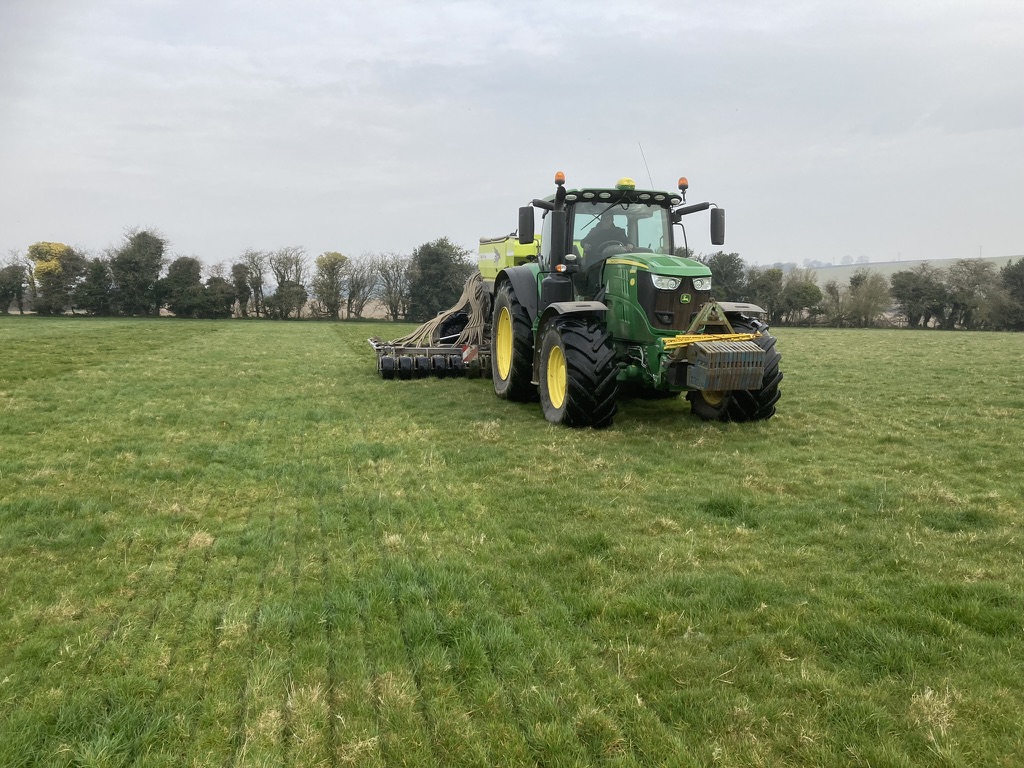
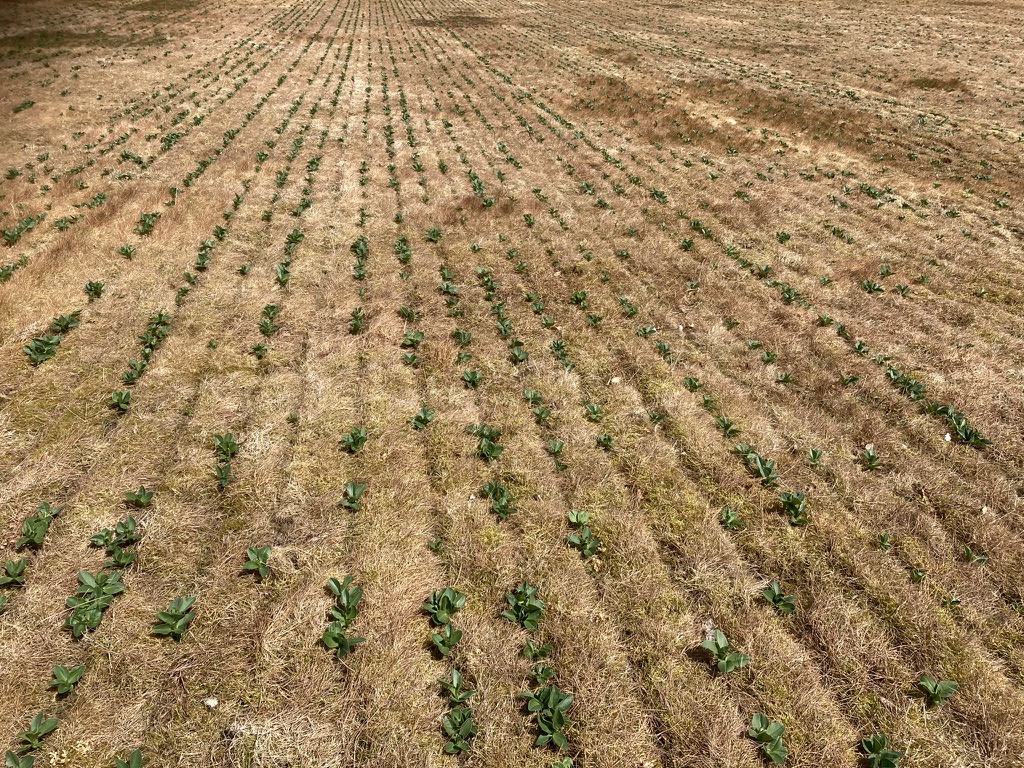
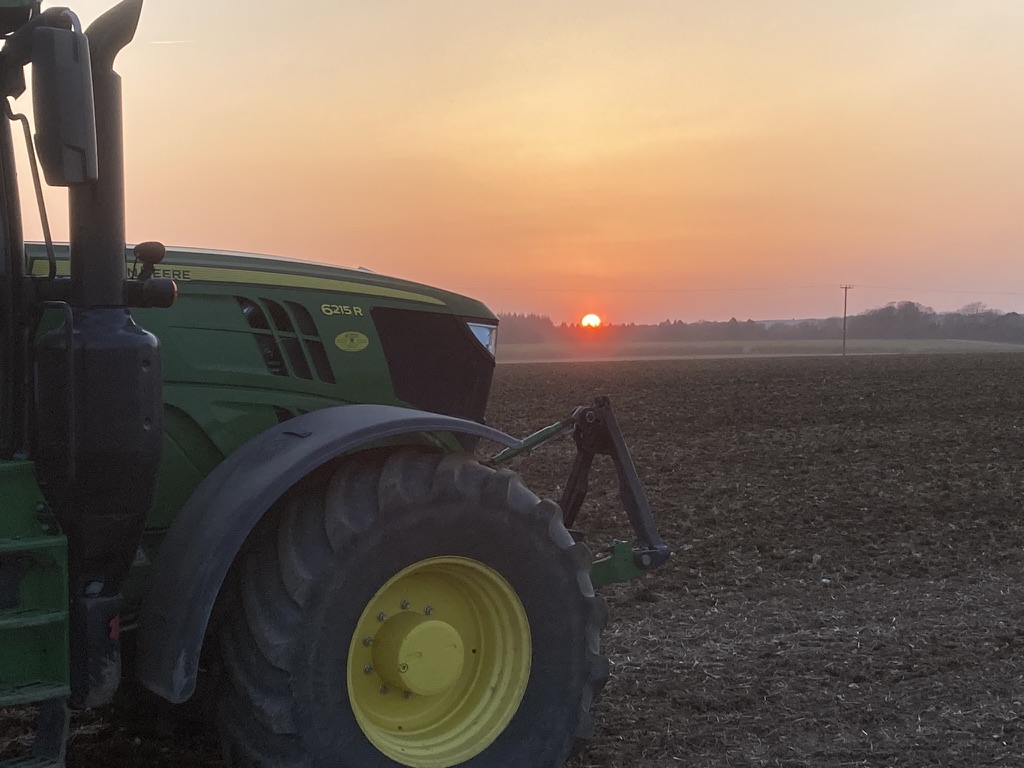
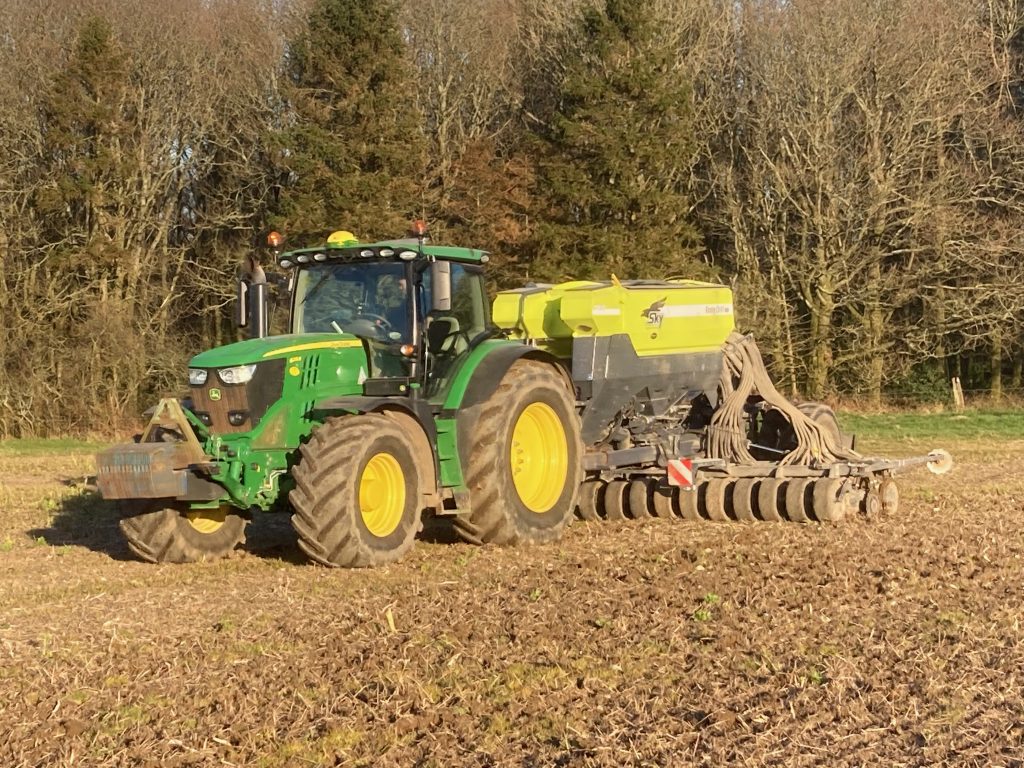
All we wanted was a few dry days and a bit of sunshine, and finally it arrived last week (21st March).  Being farmers of course means that it is no time at all before we are starting to worry that it will never rain again, and it becomes a rush to get the beans planted, rolled and sprayed, so we can push on the with the spring barley, which is far more important.  Direct drilling is a challenge at this end of the sowing season; wet soils are painfully slow to dry if you don’t move them first.  Thank goodness we didn’t have any manure to spread this spring, which would only slow the process, and make horrible wheel marks in the seedbeds.  I hope the Secretary of State is listening, he who seriously seems to believe (and announced on television last week) that we don’t need artificial fertilisers because there is enough manure and digestate in the country to sufficiently fertilise all of our crops.  What planet is he living on?  He is implying a) that we have been wasting fertiliser all these years because we never actually needed it, and b) we must have millions of tons of FYM hiding somewhere that we accidentally haven’t been using. The fact is that we already use 48 million tons of manures on our crops in the UK every year, and 1 million tons of nitrogen fertiliser. You would need 57 tons of manure to replace the nitrogen in one ton of manufactured fertiliser. To think it is possible to replace all manufactured fertiliser with manure is clearly ridiculous, we have nowhere near enough animals. (And we keep being told that animals are bad for the climate, but that’s a story for another day).

I must be an idiot to have ever taken seriously anything that George Eustice has said, I have tried to convince myself that public money for public goods will really make sense when we see what it means, that ELMS will eventually arrive just as BPS expires, with an administrative system that works first time, complete with a functioning mapping system, and that the disconnect between Farming Rules for Water and creating healthier soils will be mended.  I generally try to be a ‘glass half full’ person, but when faced with such bare faced dishonesty and ignorance such as has been spewed out recently I find myself really struggling to remain calm.

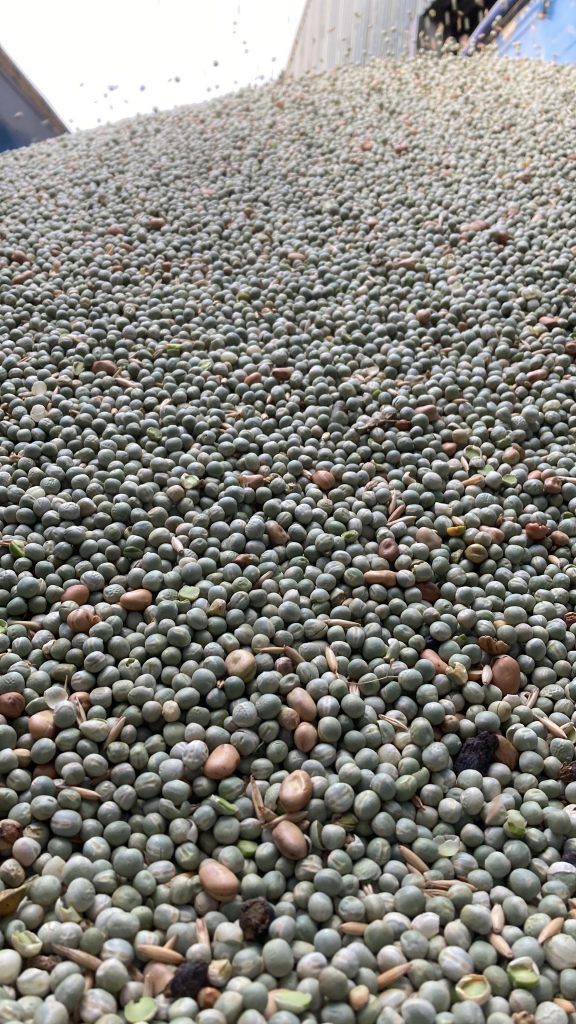
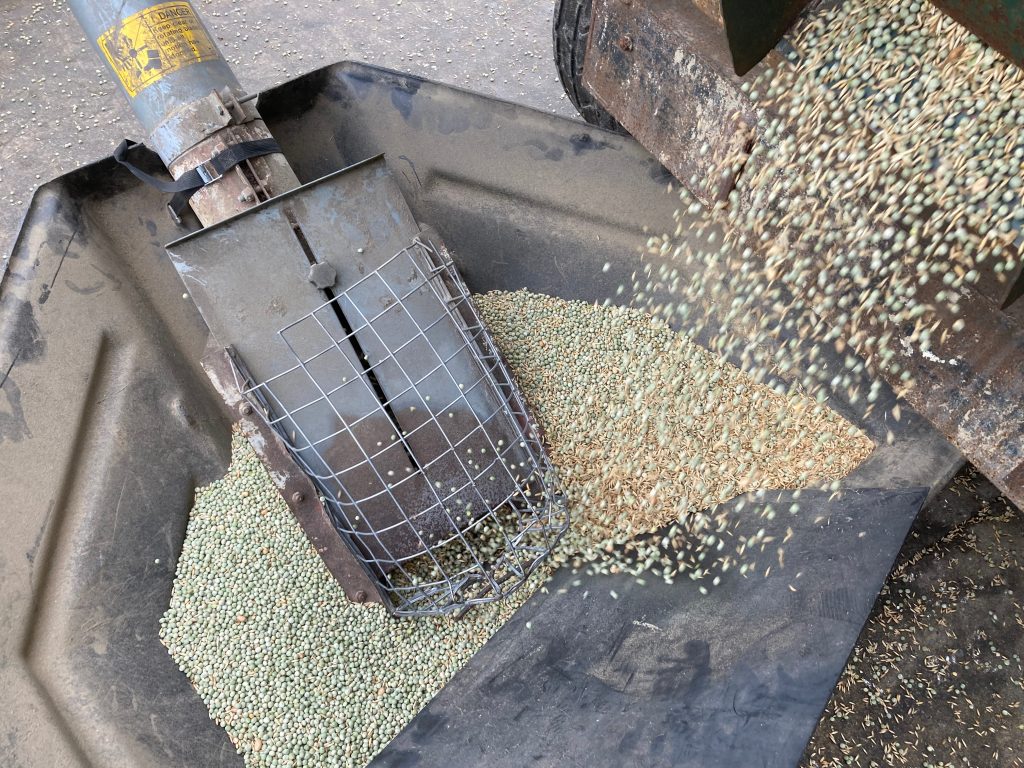
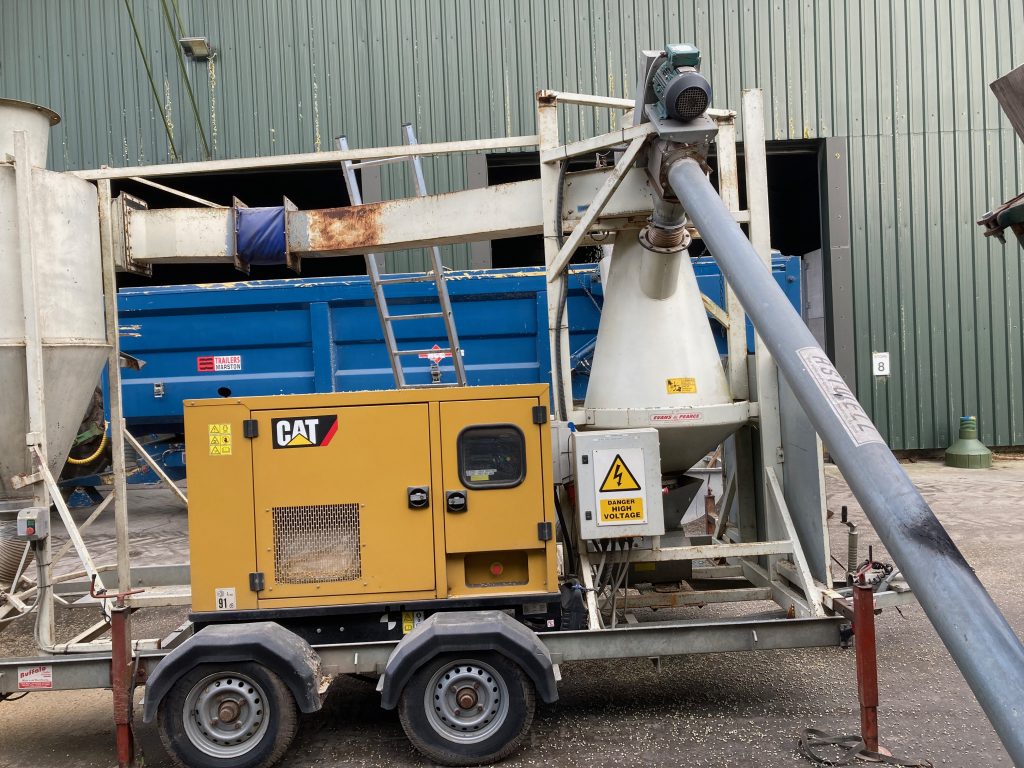
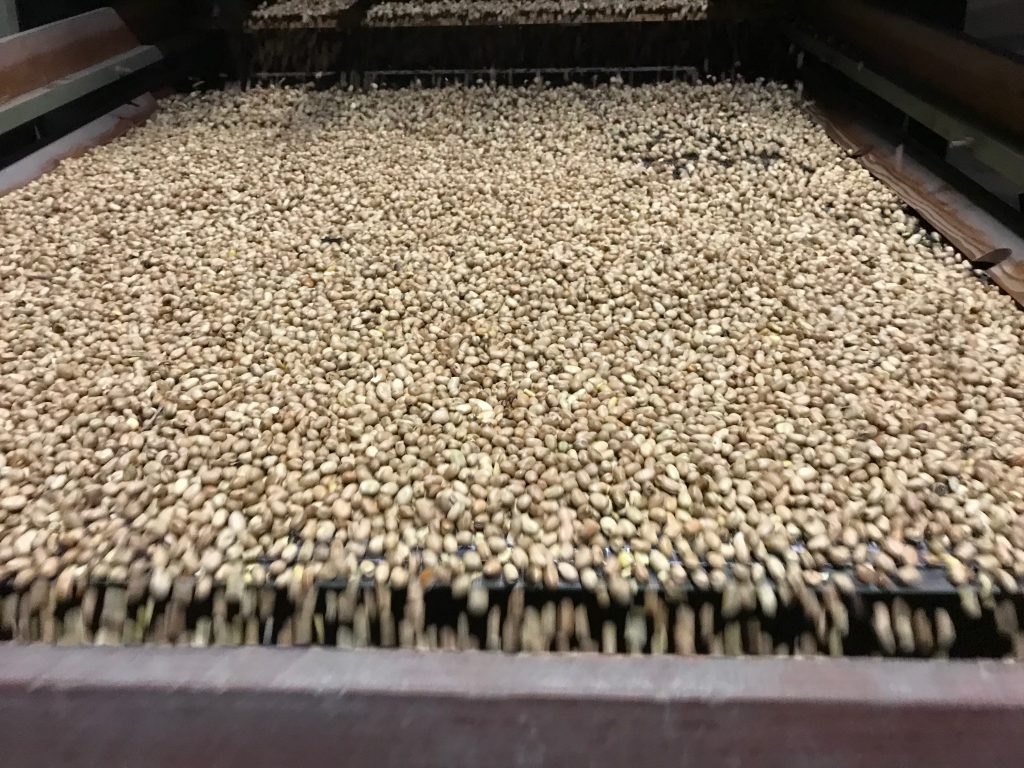
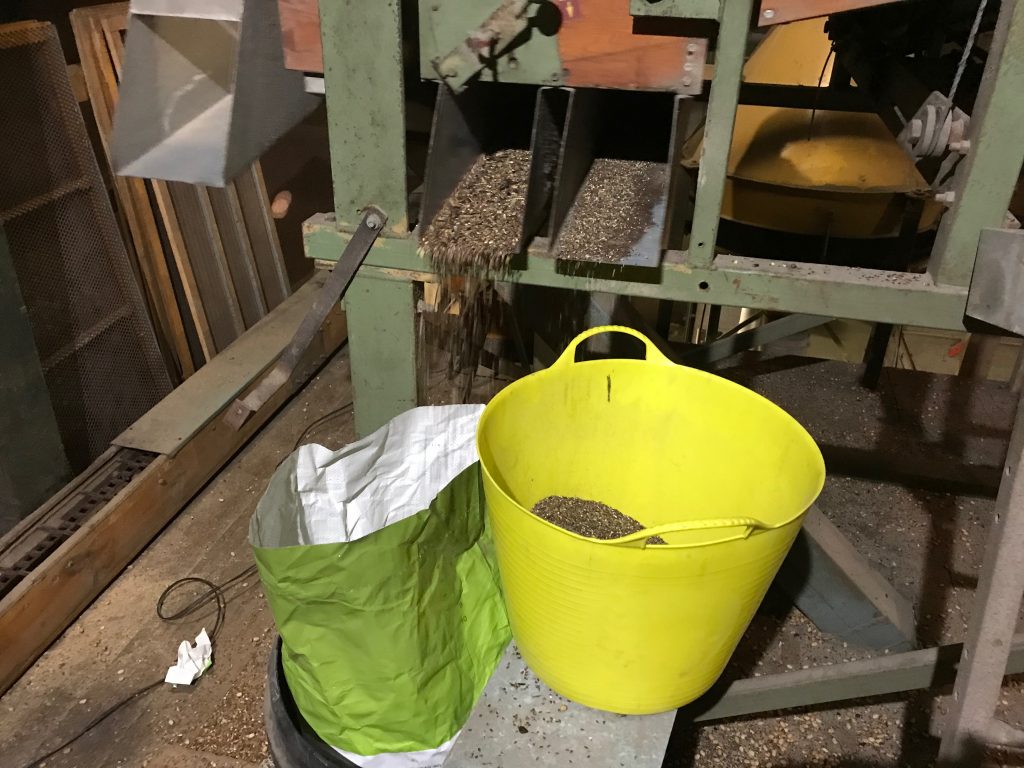
Seed cleaning update: As a consequence of our experiments with mixed crop plots last summer, we have had several odd seed mixtures sitting around in bags and piled in corners here and there.  It couldn’t be put off any longer, we had to have a go at separating them.  Starting with the easiest first, separating linseed from beans turned out to be very easy through our ancient Rutherford shake cleaner.  The quantities were not huge, but should be enough to bulk up our cover crop seed stocks, which was the whole point of the exercise.  5 bags of linseed (approx 100kg) separated from around 3 tons of beans was quite straightforward.  After that we had to fix up something a bit higher tech than the rickety old Rutherford, so we hired a bulk cleaner set from our local seed cleaners Evans and Pearce Ltd.  This machine did a great job with the peas and oats mix, not the usual 85% purity one expects from purchased seed, but good enough for cover crops, along with a few stray beans, well who was going to clean the combine out between every 2 acre plot?

Vetch/phacelia worked well, resulting in a pretty clean sample of both, but vetch/oats was the biggest challenge, running it through several times, varying the speed of running through and playing with the auger screens, yielded reasonably clean samples though not as good as I would have liked.  There’s quite a few split vetch seeds in the oats, and still too many oats in the vetch.  If doing this again a return to the Rutherford and a search for some 3.5mm screens might be required. 

Our local John Deere dealer Smart Ag Services has been taken over by Hampshire based Hunt Forest Group during the last few months, now the vans have had a makeover, and the last vestige of Smart Agriculture sadly seems to have finally disappeared.  Colin Smart set up the business after the demise of Milton Mills Engineers in 1998, and has set the standard for Dorset dealerships since then.  A recent visit to the premises revealed this beauty (an 8RX, tracks all round) on the forecourt, a new take on the 3-400HP range of tractors, though how anyone might consider buying such fancy tinwork in current circumstances beats me.  Rocketing input prices and yo-yoing grain prices leaves us with a very high risk of making bad decisions.  Fertiliser is in the spotlight, not only because of price, but because of supply, how many will go short this year?  Some well-resourced farmers are in the habit of buying their nitrogen requirement almost a year before they need it, and those who did so last year should be feeling very smug right now, prices having risen by a factor of four.  But should they be using all that fertiliser this year, or should they save half of it for next year?  We are often reminded that 50% of the nitrogen applied to a crop gives up to 80% of the yield, NIAB has many graphs demonstrating that the last bit of fert, which we have in the past often applied ‘just in case’, barely pays for itself in more years than when it does.  So is this not a time for experimentation, to see what we can get away with and still grow a profitable crop?  Headline yield is not what we need to pay the rent, it is the margin over costs that really matters, and right now we need to do our sums really carefully.  On top of fertiliser woes, we have a huge headache over fuel price and availability, without fuel we can’t even spread fertiliser if we have any, and let’s be honest, something will grow even if it gets no fertiliser at all, but without fuel, we won’t be able to harvest what has grown, so I know which I consider the more important.  Having said that, for red diesel to be costing more than DERV does at the local pumps once the 47p per litre difference in fuel duty has been taken into account, someone must be pulling a fast one.

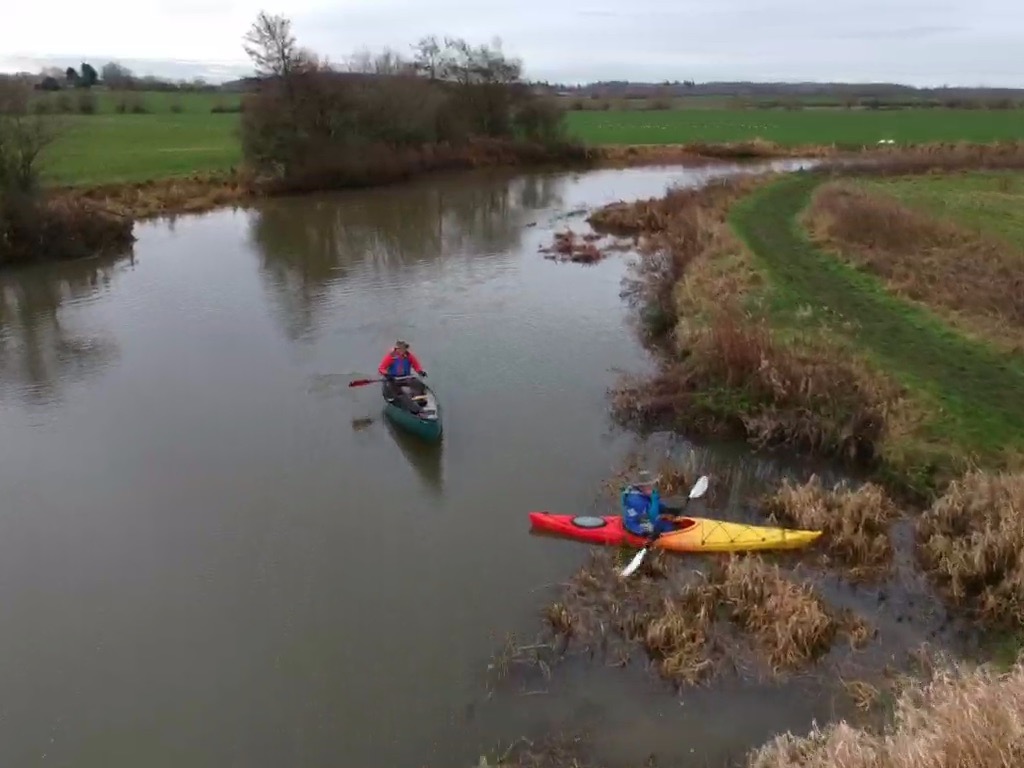
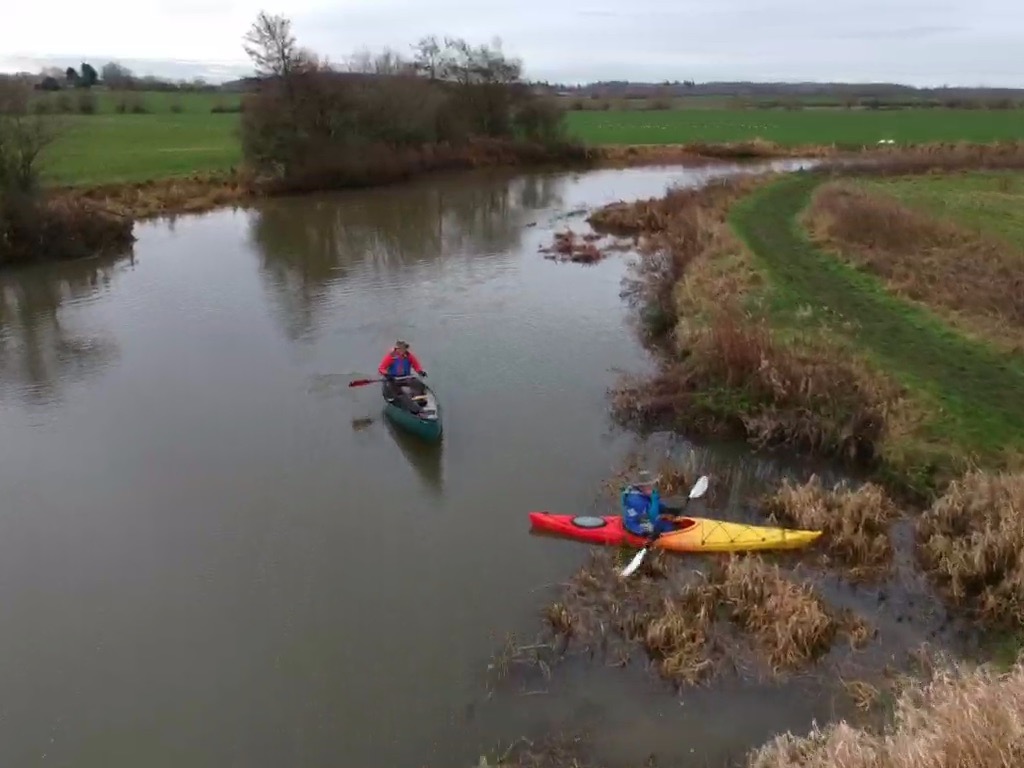
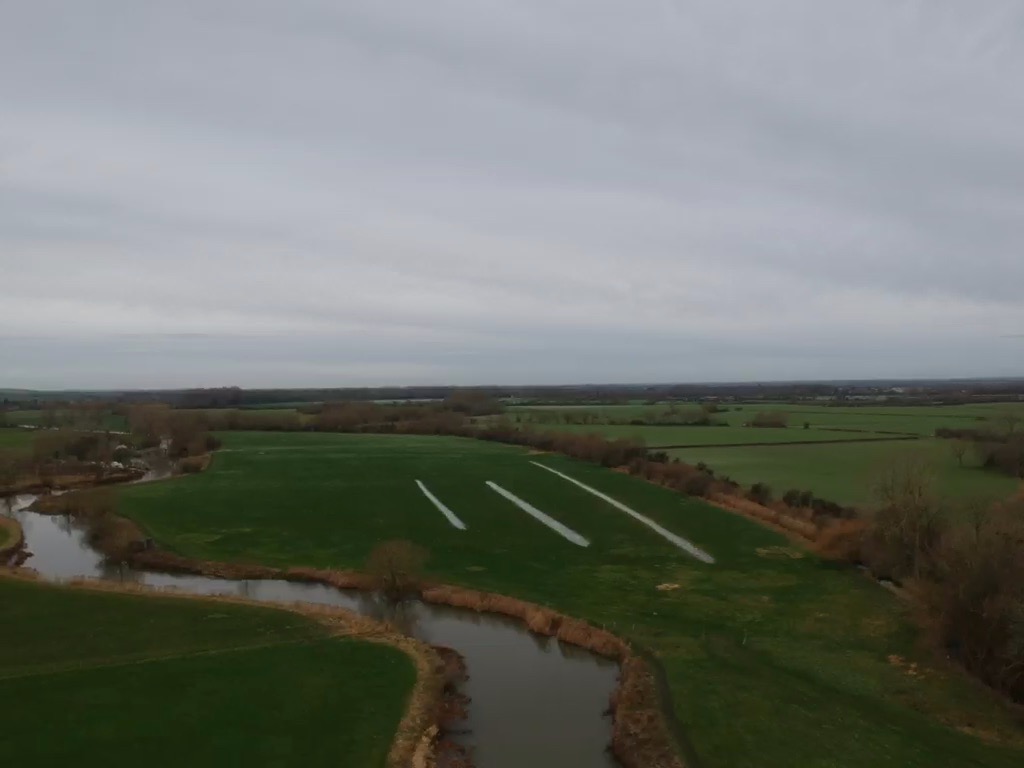
As a postscript to last month’s account of paddling on the Thames, which included a foray out into a flooded field of maize stalks:  I had mistakenly believed that we had been in Oxfordshire and that the story wouldn’t come back and bite me on the bum.  It turns out that we were in Wiltshire and the land in question is farmed by a regular reader of the farmers’ magazine where some of this guff also appears, who called me on the day the magazine hit doormats!  Very relieved to have not been severely berated I feel it is only fair to put his side of the story.  Crops have been grown next to the Thames in that region for many years, but it floods far more often than it used to.  As the years have gone by, nearby in the catchment, Swindon has grown exponentially reducing the area over which the river can spread, not only that but there are many trees in the river which no longer get cleared out, reducing flow, consequently the land remains under water for longer periods than in the past.  Also, the farmer tried his best to put the fields in question into arable reversion under his stewardship agreement, but for some inexplicable reason they were turned down.  Surely this kind of sensitive land is exactly what should go into such schemes ?

His final point was that cover crops, if established after the maize has been harvested, could result in even more soil leaving the field, as the soil would not have the benefit of having ‘bedded in’ as it does over the previous months while the maize is growing.  I acknowledge that he makes fair points, although would point out that a cover crop can be planted in maize much earlier in the season, leaving plenty of time for soil to stabilise, and make it far less likely that soil might wash away with flood water than with no cover crop at all. 

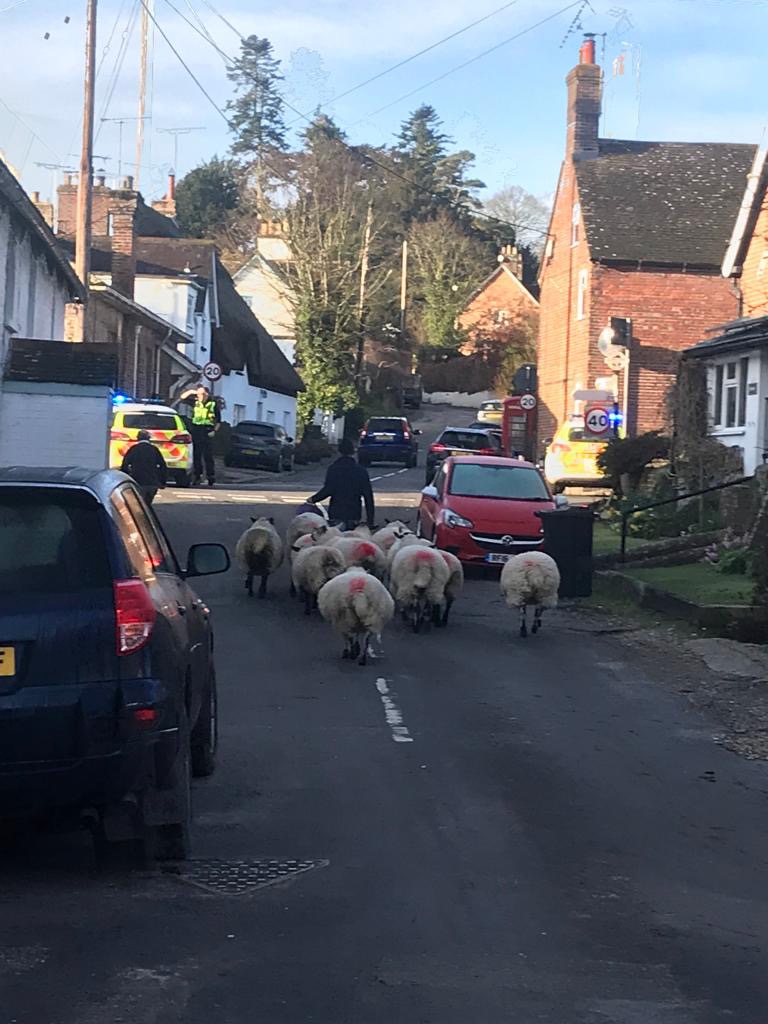
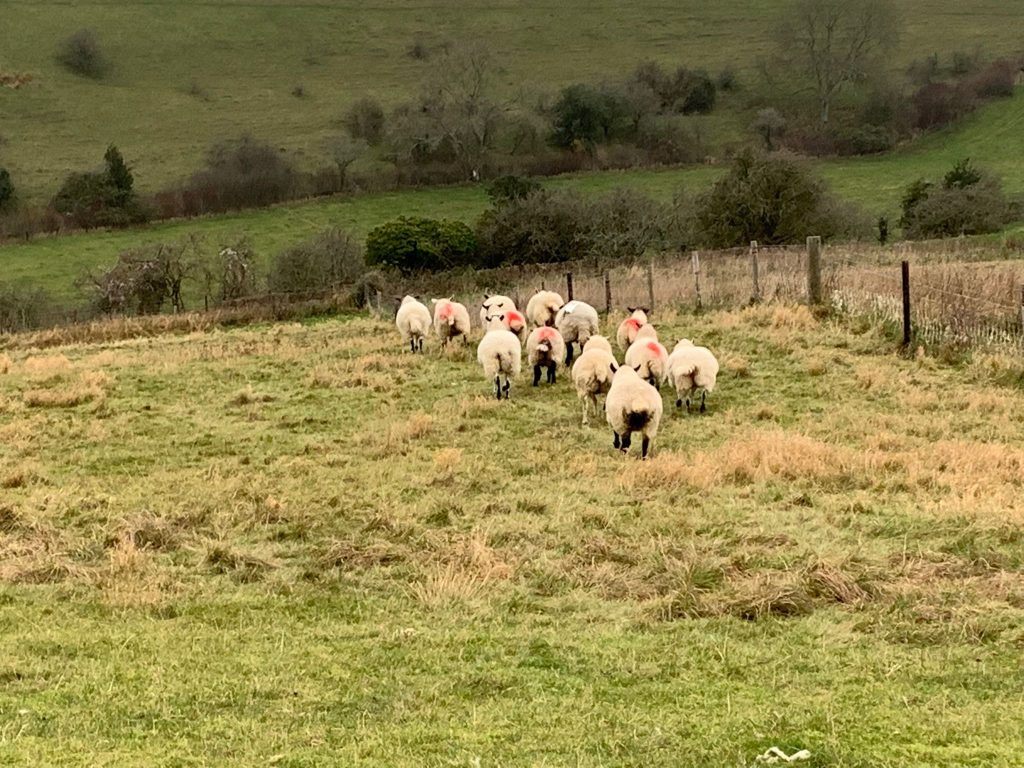
A small bunch of sheep went walkabout in the village the other morning, by the time we caught up with them a couple of police cars had joined the chase as well, careering into the village with sirens wailing and blue lights flashing.  It was the usual problem of someone leaving a footpath gate open, so the sheep enjoyed a few hours of freedom, being caught on one resident’s hedgehog webcam and by a neighbour filming them wandering around a garden nibbling bits of this and that, before being escorted back to the field under the eye of the law. Luckily they were pet ones, and happily followed a bucket.

Last month

10 years ago

Next month

February 2022

The View from the Hill                                                                       20th February 2022

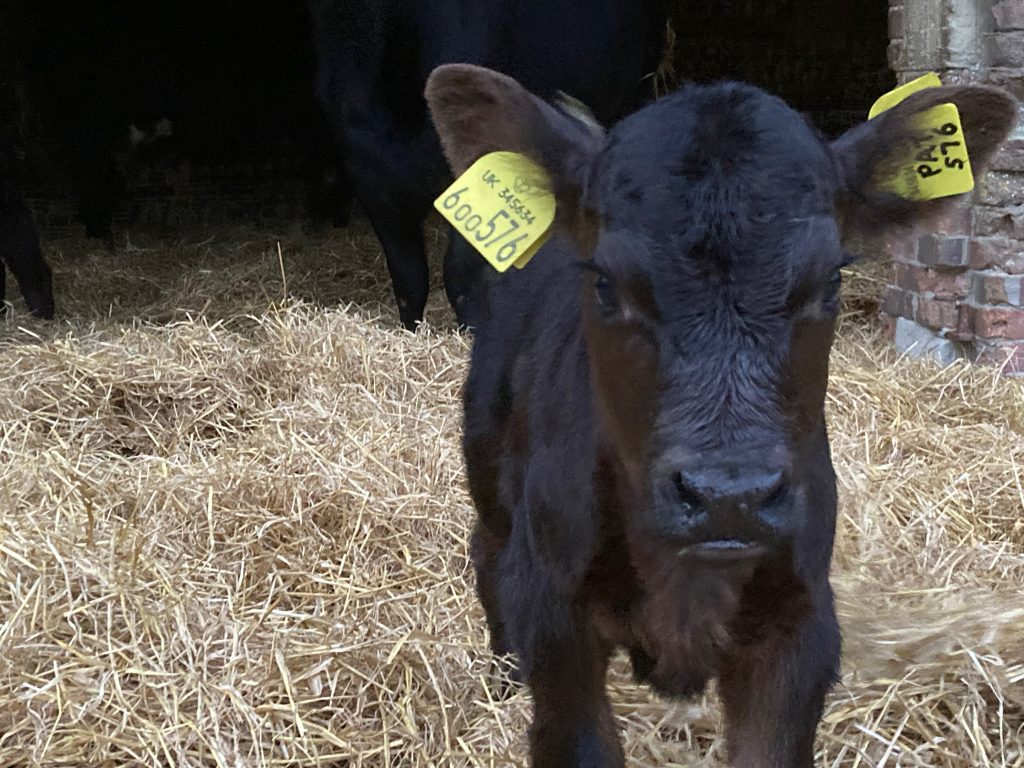
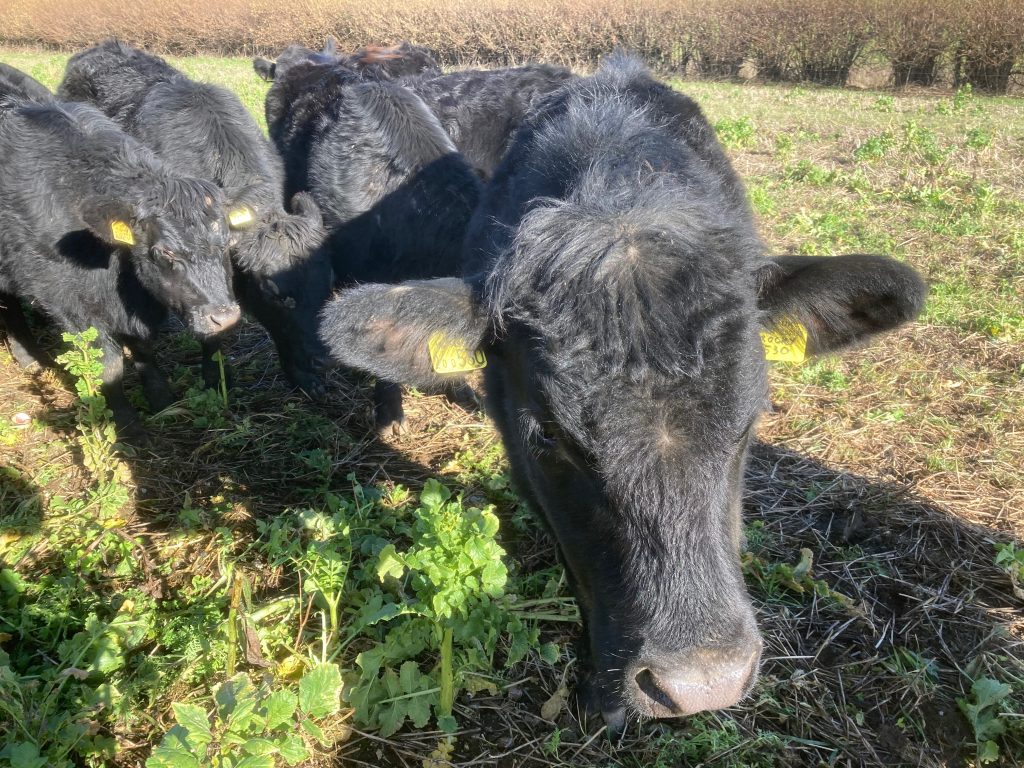
Our first calves of the season arrived last week. As 55 plump cows munch happily on hay and silage from stewardship margins and pasture, indoors, waiting to produce a new crop of calves, their older offspring continue to march through cover crop and turnips outside, waiting for warmer weather and grass growth to wave the magic wand of compensatory growth, and transform them from scruffy and slightly muddy individuals with incredibly pongy breath, into rippling hunks of shiny beef by mid summer.

Would the establishment of a premium market for pasture fed meat split the farming community down the middle?  We would love to retail our own beef and lamb as premium pasture fed, but when 50 beefies fatten over a two month period in summer, and 250 lambs all reach their best in January and February, we would have a continuity problem.  It is fine to proclaim the benefits of pasture fed, but how do we keep the nation fed for the rest of the year?  Fresh is best of course, so freezing is not the answer on such a huge scale. These arguments need to be taken on board by those who would criticise our industry for climate/health reasons.  Ask 10 vegans or vegetarians why they have chosen that route, and you will probably get 10 different answers, some of which might not stand up to scrutiny if we could find out how and where the vegan diet is produced.  It all points to the continuing need for rational calm debate.  Over 55% of the UK is permanent pasture, humans can’t digest grass, but ruminants can turn it into food that is climate friendly, nutrient dense and packed with essentials.

Several days have been spent recently attempting to separate the various seed mixtures we grew last year in our experimental bi-cropping field. We grew 6 different combinations, some have proved easy to separate, such as beans with linseed, where there is a huge difference in size and density of the two species, oats with peas were also not too difficult, but when it comes to oats with vetch, or beans with peas then the job gets really tough. We have used our own ancient Rutherford ‘shake’ cleaner, and have also hired a bulk cleaning rig from our regular seed cleaners Evans and Pearce, which uses air to separate seeds and chaff, but neither are able to achieve the impossible. We have obtained useful samples of peas, oats, vetch and phacelia, but the others will have to remain forever mixed. The bi-cropping theory is that a mixture of species growing together can be healthier for the soil, and the diversity can bring protection from diseases to the foliage as well. More care will have to be taken with pairing choices this year.

A trip to the Oxford Real Farming conference had been planned for the first week of January, so when it went virtual for covid reasons, a couple of mates who suffer a bit of a paddling habit, suggested we still went to Oxfordshire, but dressed rather differently, and that we should take a couple of boats with us. 

The Thames rises in Gloucestershire, quite near Cirencester, although there is some dispute about exactly where, it is a moveable feast, depending how much it has rained and where the water table is.  It becomes navigable before Cricklade, which is where we began our trip, next to the cricket club.  It had rained quite a bit over Christmas, so the river was still quite full, though its level doesn’t vary a great deal, regulated as it is by weirs and sluices.  Having purchased a licence, we felt entitled to employ the services of the lock keepers as we passed, who were unfailingly friendly, though some were less keen to open lock gates for us than others, so we sometimes had to drag the canoes out of the water and carry them around the locks.  It wasn’t long before one of our number managed to get a ducking when he couldn’t bend enough to get under a low concrete bridge, annoying for him so early in the day, but very entertaining for the rest of us.  Halfway through the morning we noticed that a section of the river had burst its banks, so we paddled off into the field only to find ourselves surrounded by maize stalks, and no hint of a cover crop to stabilise the soil.  Let’s be frank, this was not a good advertisement for responsible farming, the soil will be washed into the river, along with attached nutrients such as phosphate, and cause huge problems in the water, the silt covers the gravels so important for fish and other aquatic life, and the phosphate causes algal blooms which starve the water of the oxygen so vital for healthy water life.  Our cluster group on the Dorset Stour has had many presentations on the importance of keeping soil and phosphate out of water, and any sensible farmer understands that letting his productive soil wash into the river is pure madness.  How can maize be so valuable that it justifies such loss of soil down the river?

Further on down the river towards Lechlade, we met a group of wild swimmers, on their way to take a refreshing dip in the river, cheerful, and dressed in an assortment of brightly coloured gowns, did they really know what they were about to cover themselves in?  Only a few days later the national media took up the story of how much sewage finds its way into the river from Thames Water treatment plants when it rains hard and the plants can’t cope with the volume of sewage, which gets diluted by rain water.  Wessex Water, in our own region, is not very different, it is easy to find information in the public domain about how much outflow emits from their riverside treatment plants through the year.  It’s not pleasant to recall the much trumpeted privatisations of the public utilities in the 1980s, which have resulted in them being owned by enormous international corporations more interested in paying dividends to shareholders than upgrading ageing and inadequate infrastructure.  It begs questions when we find the water companies trying to offset their pollution by paying farmers to reduce their applications of manures and fertilisers and grow cover crops.

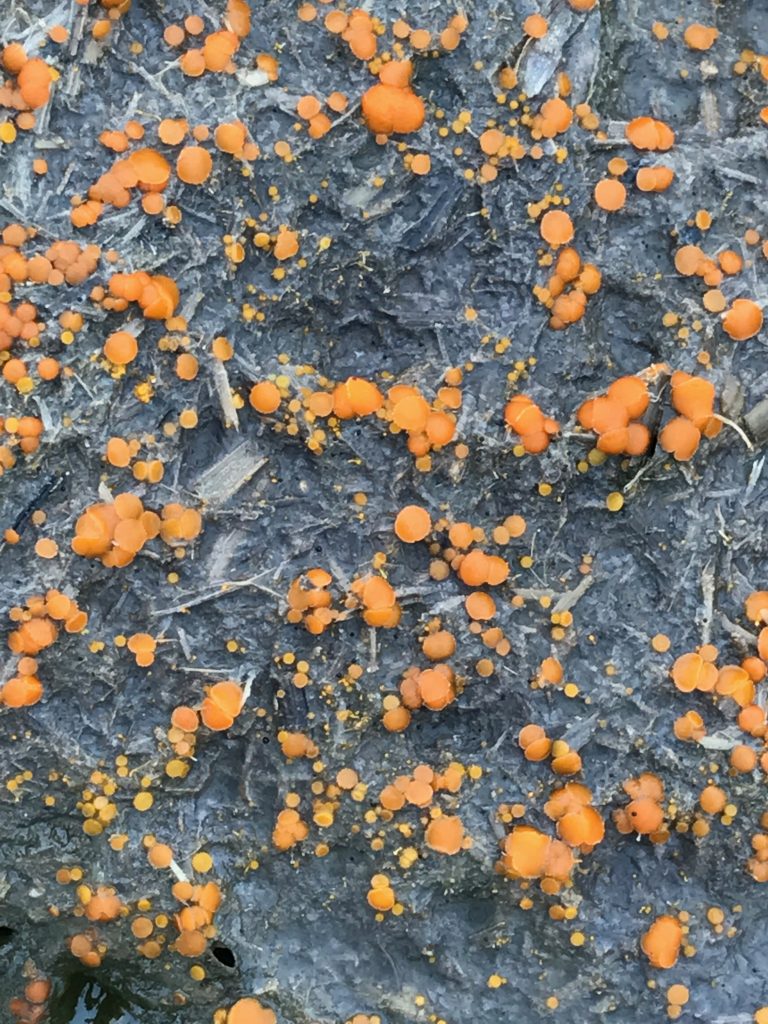
For those still mystified by last month’s picture teaser, sadly no correct answers have been received, the close-up shot of little round orange fungi was in fact from a cow pat, and to those who would claim that our cowpats are unhealthy I would unleash a resounding raspberry.

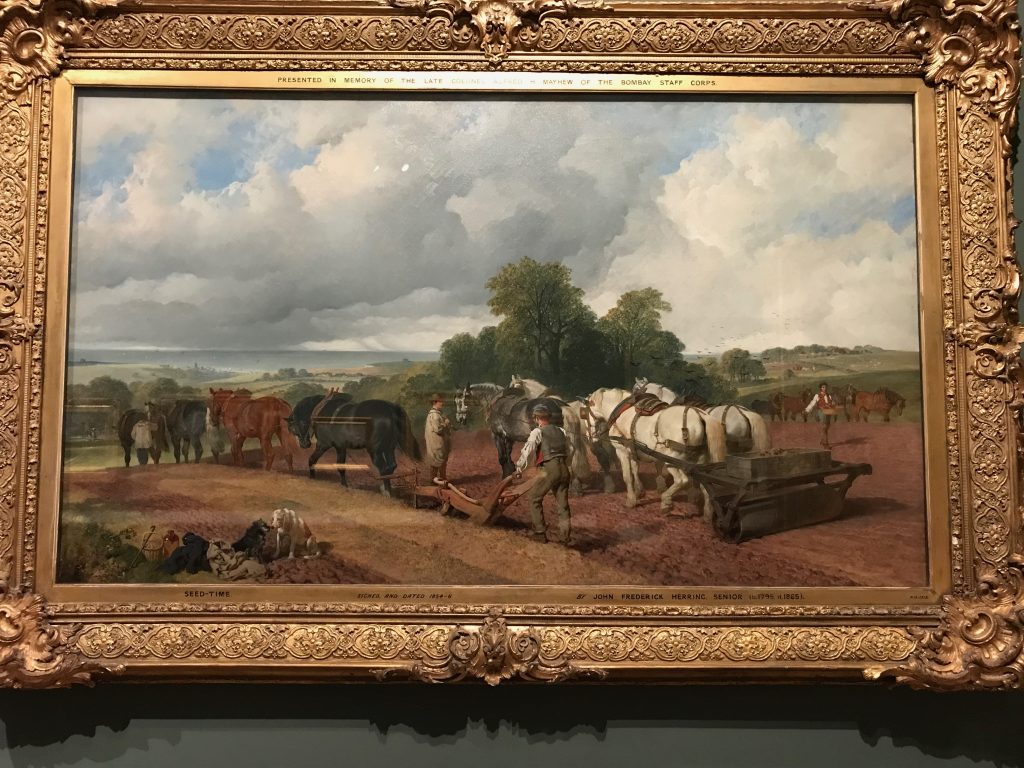
Found in a gallery in the Victoria and Albert museum in London, this lovely picture by John Herring Senior shows a form of traditional arable farming from before the days of no-till. 1855.

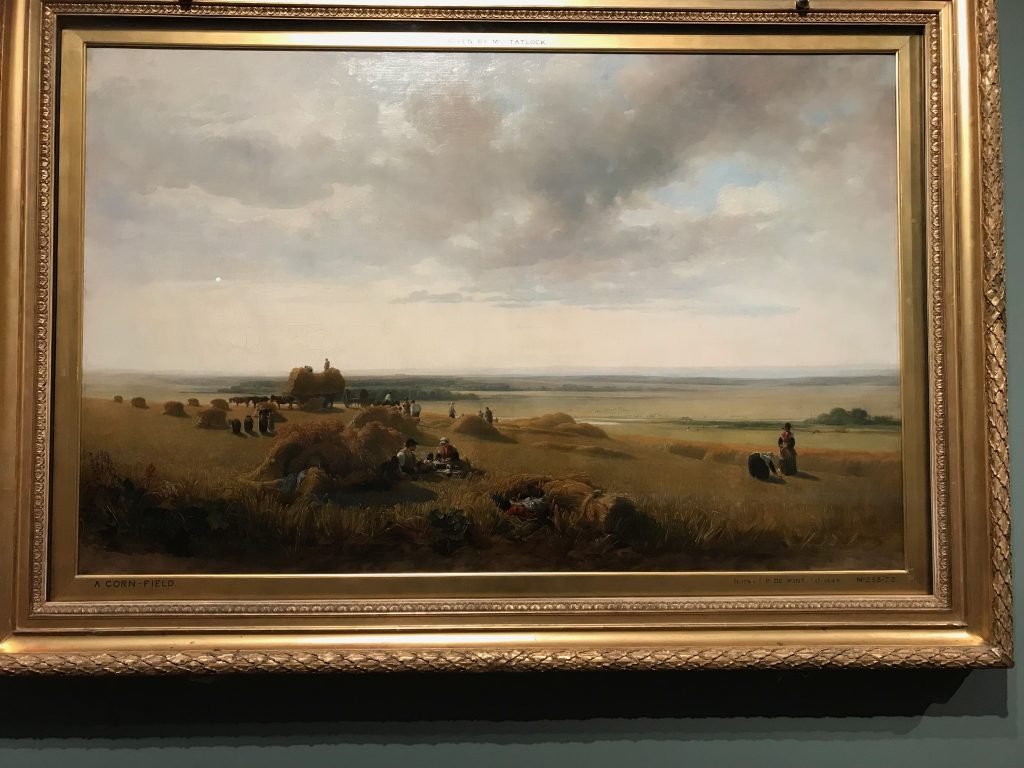
And an idyllic harvest scene from a couple of decades earlier, by P de Wint.

The real purpose of the trip to the V&A was to visit an exhibition of the work of renowned Dorset potter Richard Batterham. The route to Room 146 took us through long galleries of art and ceramics from around the world, architecture, decorative ironwork, and almost every element of human culture you can imagine. One of the most spectacular areas is the Cast Courts where you can find casts and copies of some of the world’s most inspiring objects, such as Michelangelo’s David, and a section of Trajan’s column. (The original stands in Emperor Trajan’s Forum in Rome).

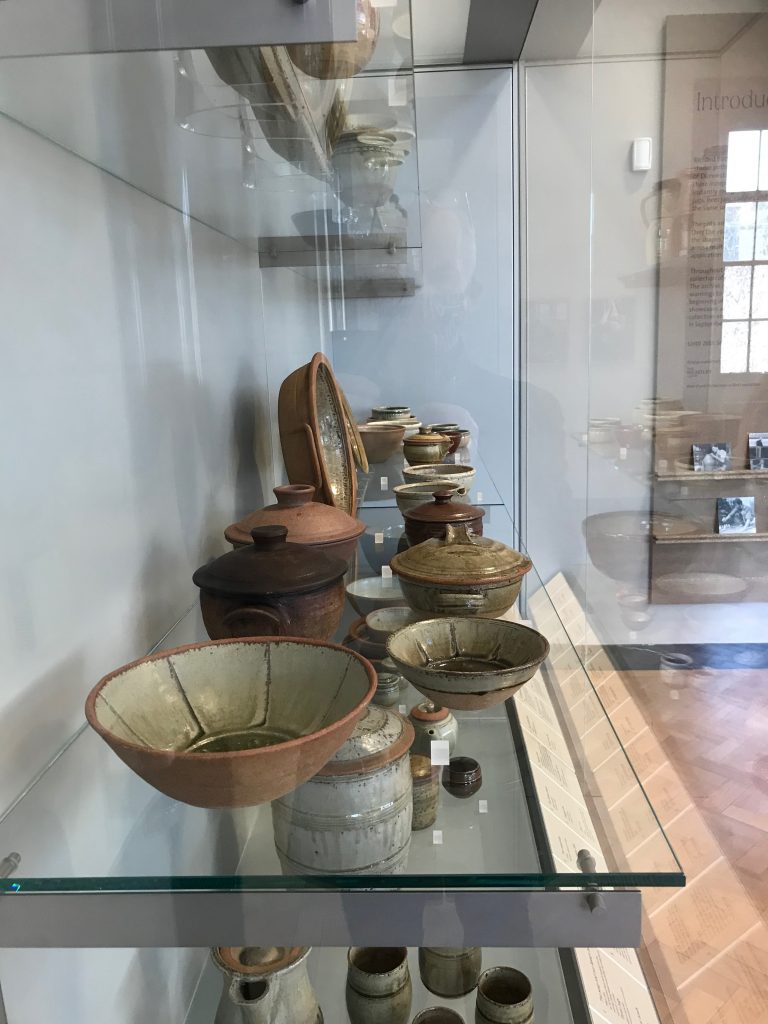
On arrival in room 146, we were able to see how the V&A has presented Richard’s work to the the world.

Richard Batterham (1936-21) was one of the most revered studio potters of his time.  In 1959 he married Dinah and they settled in Durweston, where they brought up their five children and together built a new pottery in the early 60s.  Richard spent the whole of his life creating many thousands of beautiful pots, he always carried out every stage in the process of making, mixing and preparing his clays and glazes himself, to create a range of pots, jugs, caddies, teapots and numerous other items, many of which will be familiar to friends in the area who are fortunate to own and use such items. The pots speak for themselves, but the story behind them, of Richard’s work and dedication to his passion, is fascinating.

Richard and Dinah were both kind, friendly and popular people in the village, and in the long years since Dinah’s death, Richard continued to play his part in village life. It was a pleasure to know him and it is a real treat to own and use his pots every day. He was a truly remarkable fellow, whenever one would visit him at work in the pottery he was always happy to take time out for a catch up, and then without missing a beat he would return to creation of his timeless and beautiful pots. I like to imagine the archeologists of the future unearthing Richard’s pots in thousands of years time, as we do now on the farm find fragments made by others, long ago.  He certainly left his mark on this earth.

There are two short films available about Richard and his pots, each is approx 30 mins, and both are well worth watching.   The first: Richard Batterham – Independent Potter, is a delightful, gently paced ‘interview’ of Richard at work:  https://www.youtube.com/watch?v=tN3hRRIO4-c

The second: Richard Batterham – Master Potter, is similar but different, and includes observations and comment from students of his work, including David Attenborough.  The main film begins 3 minutes in:

Last month

Next month

January 2022

View from the Hill                                                                                16th  January 2022

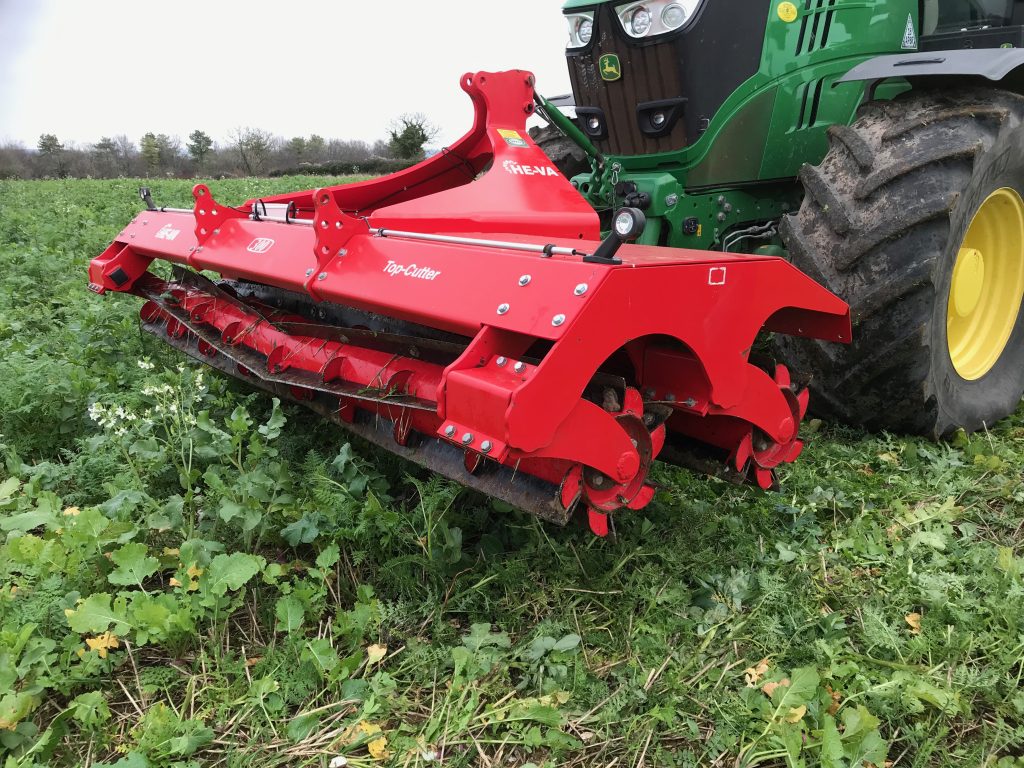
Never ones to miss an opportunity to try out a bit of shiny new kit, on a dry day just before Christmas we were out in the field playing with this crimper from Heva. One day we will hopefully be growing cover crops so huge that they will need one of these to knock them down, so far though, what the slugs left is barely going to be enough to keep all of our out-wintering cattle happy. 

The 10 month old bunch are eating only cover crop, and the 22 month ones are on cover crop with added silage.  We are keeping them moving across the ground on large areas of land to keep poaching to a minimum.  As for the crimper, it did a pretty useful job, and when we have more cover crop than we need to graze, it may have a place knocking down the crop, which, once shrivelled up, will give a single shot of glyphosate a better chance of hitting all the smaller plants hiding at ground level, when it is time to terminate the crop in time for spring sowing.

The frosty weather whilst writing this mid January is a welcome break from a very damp December and new year. There have been a handful of beautiful sunny days, and some calendar quality sunrises and sunsets. The Christmas period was a welcome break from politics of all kinds, farming, and in particular the national variety.  Unfortunately the latter has come back with a vengeance, whereas the farming bit just carries on rumbling underneath, no less important than it was before.  Issues such as continuing trade deals, lack of decision making on the future shape of agricultural and environmental policy, labour shortages, continuing deadlock over future trade relations with the EU, astronomical fertiliser prices and don’t forget the infamous Rules for water, are keeping farmers’ representatives very busy.  Unfortunately expecting progress on much of this is a bit hopeful whilst the upper echelons of government are drowning in embarrassment, and worse. These issues are directly affected by decision making at the highest levels in government, and it is immensely frustrating to see the nation constantly distracted by frivolity and scandal when there are so many important issues to discuss and decide.

Labour shortages – Home Office

Trade deals – Dept for international trade

Fertiliser/gas prices – Enterprise, Trade and Investment

Rules for Water – DEFRA via Environment agency

Lump sum retirement and New Entrants schemes – Treasury (needs new taxation rules)

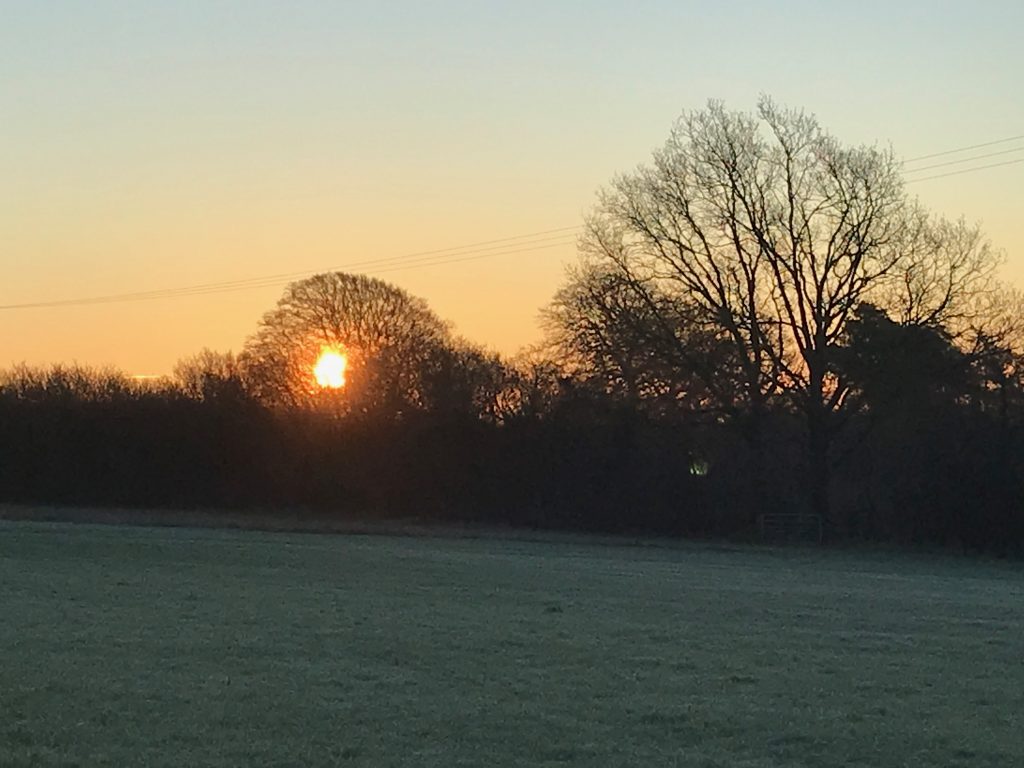
A beautiful sunrise one frosty morning

The Public accounts committee has again reported that it is not convinced that Defra understands how its environmental and productivity ambitions will affect the food and farming sector over the next ten years. It was even more robust in some places – accusing Defra of ‘blind optimism’ when it comes to rolling out the new schemes. 

New red Angus bull being checked out by a cheeky young ewe.

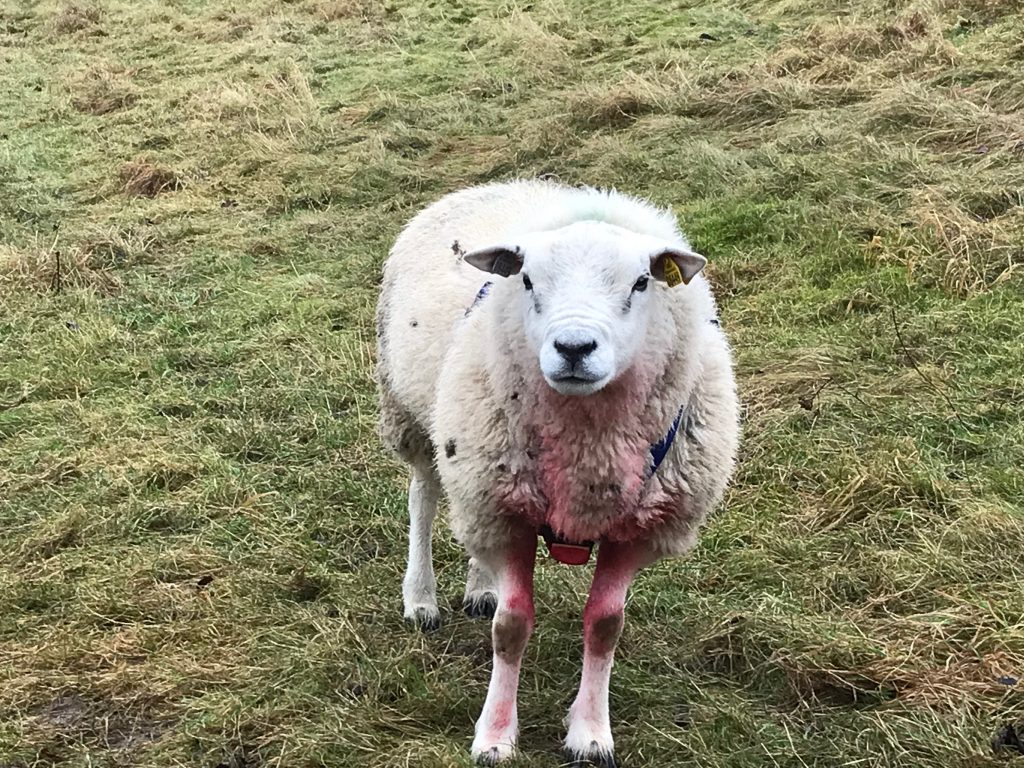
Our tame sheep flock have this year been treated to their own room service.  A handsome Texel ram has been shipped in to do the honours.  He arrived in the field one day at 6pm, and by 9am the following morning 5 rears had tell-tale red marks on them. 

Tommy the Texel, complete with red raddle crayon

Over the next few days all but one of the remaining 6 ewes were marked in the same way.  After the first 17 day cycle, the raddle crayon was changed for blue, none have been revisited, and the one untouched remains untouched.  Mysterious seeing as she is a young ewe, and we know she had triplets last year.  It is interesting to follow what happens when putting a raddle on the ram, we generally have not bothered for many years with the main flock, but knowing each of these ewes individually since they were hand reared means we will have an idea of which order to expect them to lamb in. 

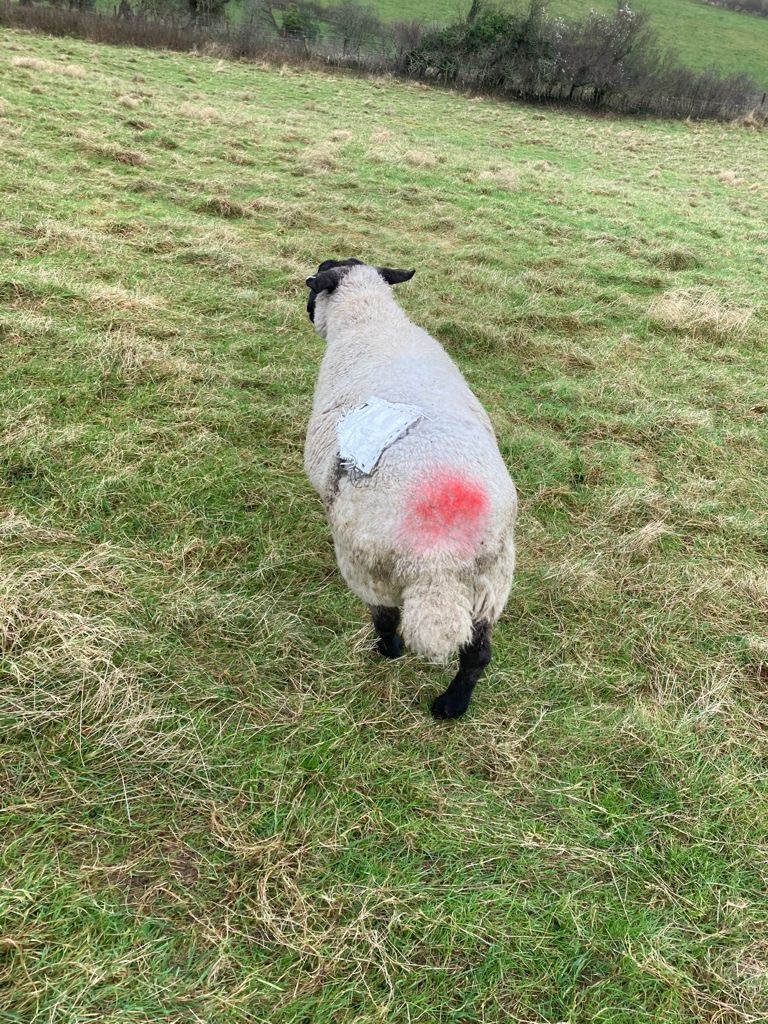
Even more of a mystery is how Rocky the 9 year old wether, still sporting his anti magpie patch, also collected a red mark……

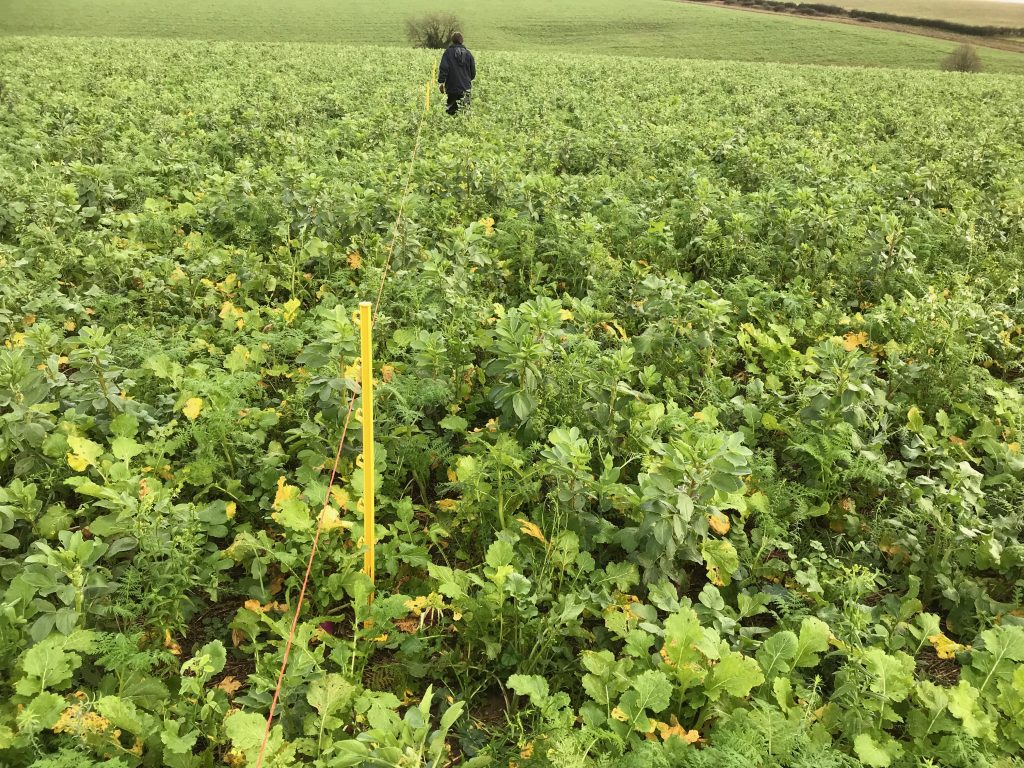
Moving an electric fence over christmas
Copper sunrise through a copper beech.

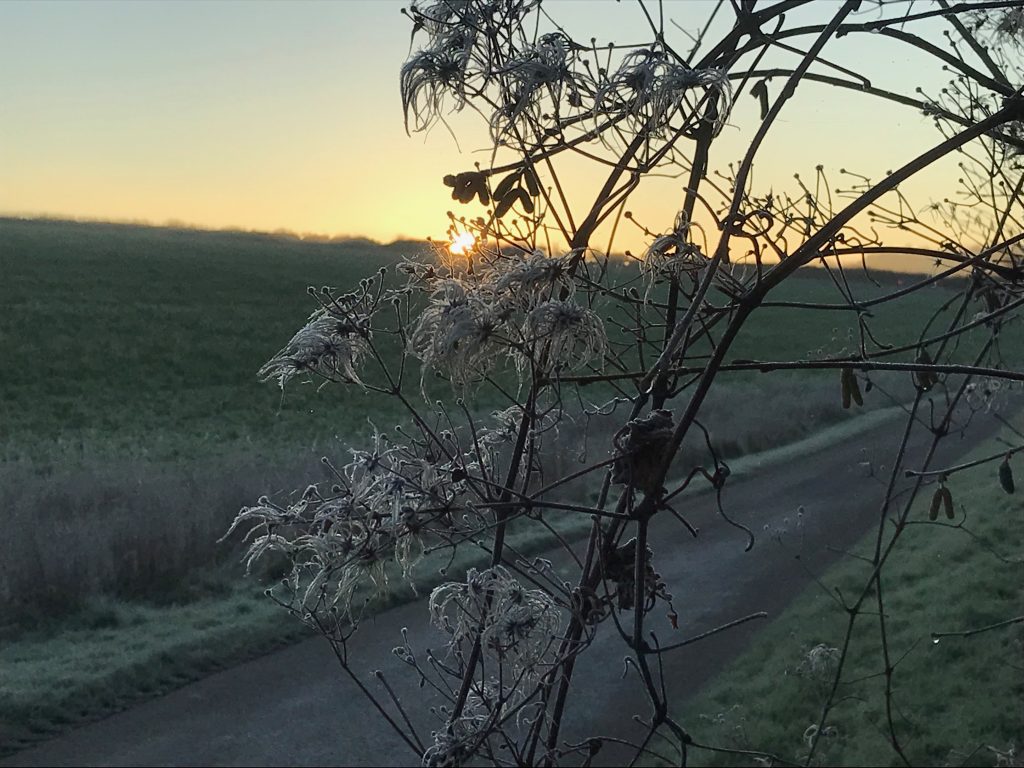
Old Man’s beard on a frosty Friday morning

In the last week we have loaded out Maris Otter barley for the Warminster maltings, to be turned into high quality malt for mainly micro breweries, also onto lorries destined for the Dingemans Mout maltings in Stabroek, Belgium. We also loaded wheat for the ADM feed mill at Westbury.

This week has also seen the dreaded event of a TB test for all our cattle. This has now (since July 2021) become compulsory every 6 months in the high risk area (HRA), although if you join the CHECS (Cattle Health Certification Standards) scheme, you can improve your animal health standards to a level that will allow you to qualify for annual testing instead. The whole of England is divided into HRA, Low risk area (LRA), and Edge area. The HRA of England encompasses all of the South West counties, plus Shropshire Worcestershire and Staffordshire. CHECS enables herds at lower risk of TB in the High Risk and Edge Areas to remain on annual testing if they satisfy certain criteria, as covered by CHECS TB Herd Accreditation.

Fortunately all of our animals tested clear this time, and we now hope we can pass the requirements of the CHECS scheme to ensure we don’t have to test again until next January. Many farmers are feeling bitter after the change to 6 monthly testing in the HRA, seeing it altered shortly before the government announced the premature ending of the TB cull in all areas, most areas now have just one year to go, instead of the extended 5 year period that was intended to follow the initial 4 year intensive cull. The cull has continued to operate since the first areas were licensed in 2015, with enormous success, new TB outbreaks in cattle herds have reduced by an average of 54% across all cull areas, the science cannot be denied, and yet the prime minister personally intervened to close down the cull areas before the job has been completed. We have been offered a cattle vaccine within 5 years (again), and badger vaccination has begun in tiny areas. It is hard to take badger vaccination seriously because the trapping of badgers is extremely difficult, and requires a high proportion of the badger population to be re-vaccinated each year. The cost will be astronomical, and one has to ask if this a wise use of public money. Stopping the culls early, before we have a cattle vaccine, and attempting to control bovine TB only by vaccinating badgers will, as well as allowing TB to escalate once again, also undo the other benefits that lower badger numbers have brought, such as an improvement in hedgehog numbers and ground nesting bird hatchings, also a reduction in destruction of anthills and bumble bee nests. An unrestricted badger population will on average increase by 21% annually. Rough calculations indicate that TB breakdowns will be back to pre-cull numbers within 10 years without any badger culling or cattle vaccine, and all of the hard work of running the culls will have been wasted. It is heart breaking for cattle farmers, released from the scourge of TB which in some cases saw their farms, now open, closed for 11 years or more before the cull began, to face a possible return to that fate.

Mystery picture of the month. What are these tiny fungi feeding on?
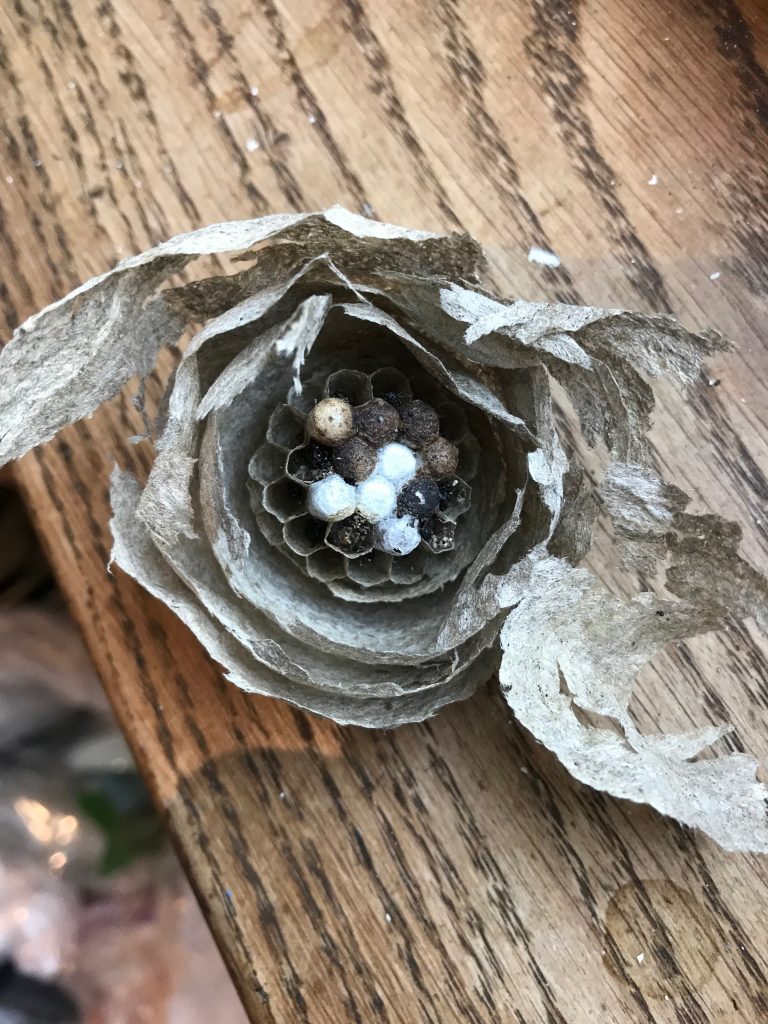
What lurks inside a wasp’s nest?

Last month

10 years ago on the Hill

Next month