The View from the Hill
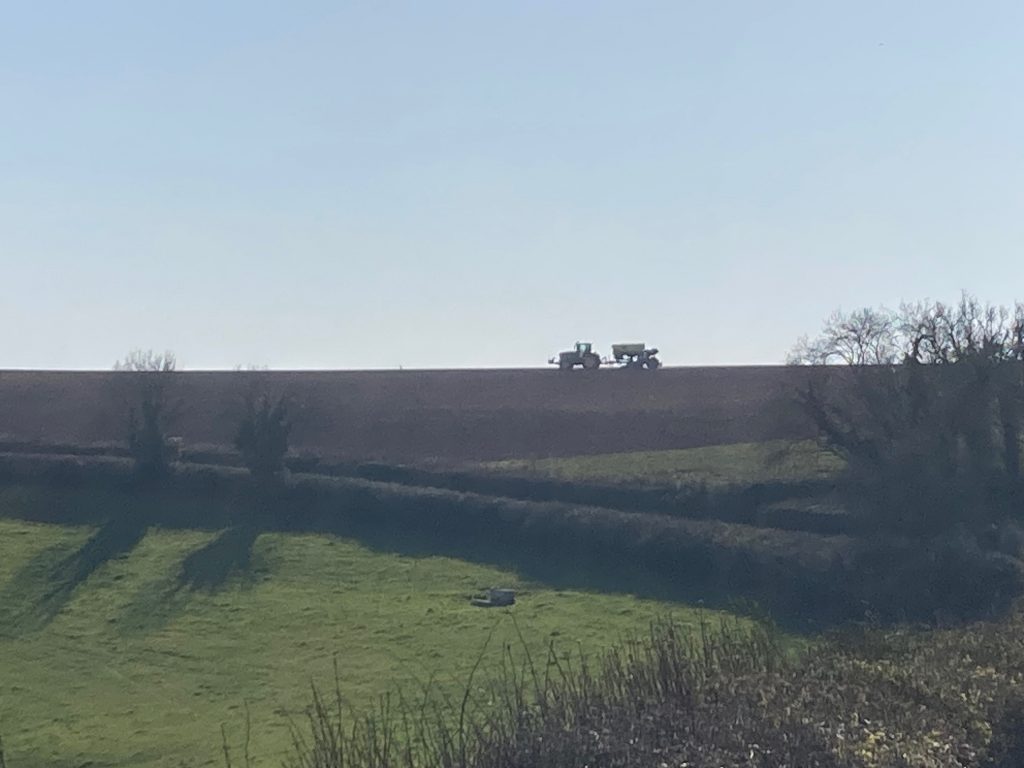
Spring sowing has proceeded at pace over the last couple of weeks, aided by some lovely weather, all the more enjoyable following such a grim couple of months with record breaking rainfall. We started over at Thornicombe at the beginning of the month with some 30 ha of spring beans.
As is usually the case with spring sown crops, the soil benefits from a bit of a lift with a cultivator, direct drilling doesn’t work as well in the spring as it does in the autumn. This is because in autumn, the soils are generally dry, and have the capacity to absorb plenty of moisture as the weather gets wetter, whereas for spring sowing, the soils coming out of winter are wet, and need time to dry out, this can be speeded up by cultivation, once dry enough to travel without making a mess with machinery. A regenerative approach to farming suggests that cultivations are minimised, because damage to soil structure by tines, discs and tyres can result if one is too eager to get going. However it always feels like a race to get spring crops sown because of fear of early spring drought, so once the weather dries up and the sun comes out, a good seedbed must be produced, ideal for swift germination of newly sown seeds.
This season we have been trying out different cultivators on demo from local dealers.
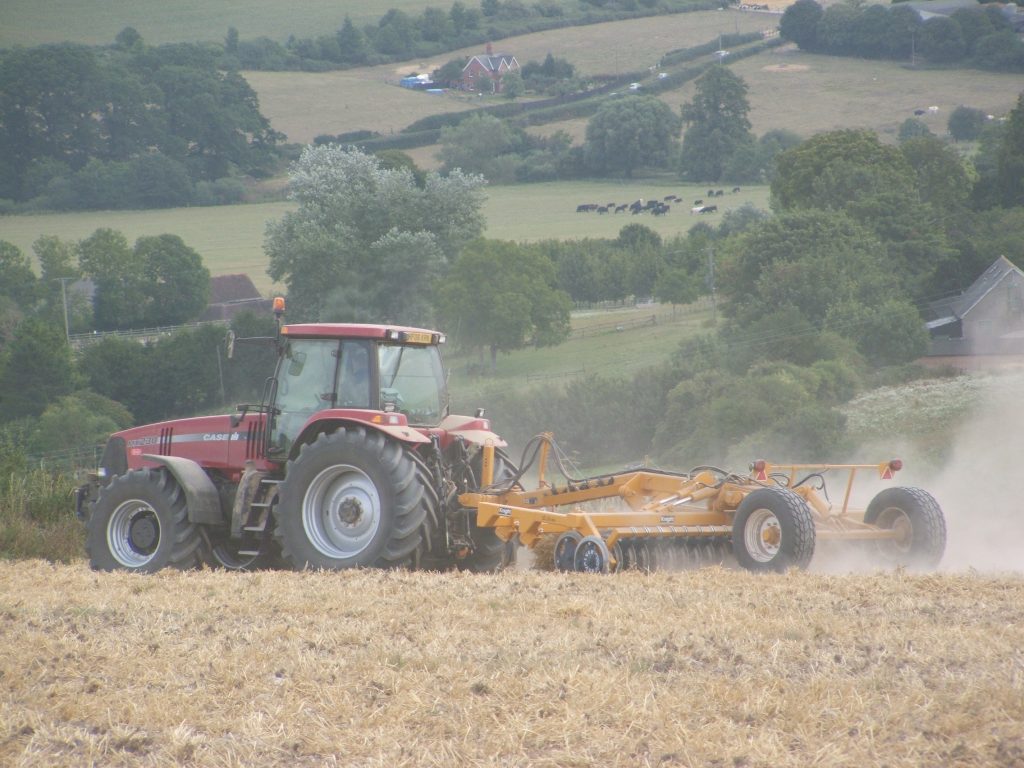
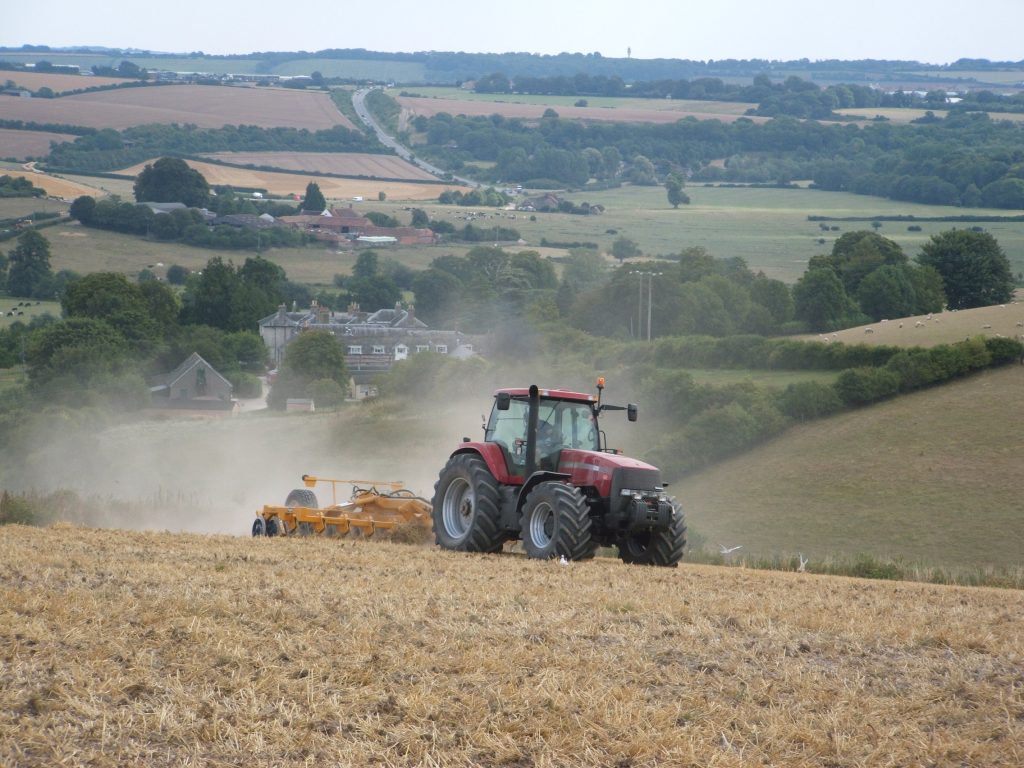
The old Knight M press at work in 2006 —————–Norman at the wheel of his Magnum
Our old Knight M press, which has served us very well since it was new in 2006 (costing £11,000), is now not the best machine for the job. To do a half decent job it needs to be run quite deep, deeper than we wish or need to cultivate, and there are issues with the bearings on the press rings. The time has come to consider a replacement. Will had lined up three different machines to try out, a Kvernland Enduro, and two machines from Vaderstad, the Opus, and a Cultus. All are variations on a similar theme, based on tines, discs and a press at the rear. I could go into the detail of the important differences between them, but will restrain myself for now, and let the pictures explain.
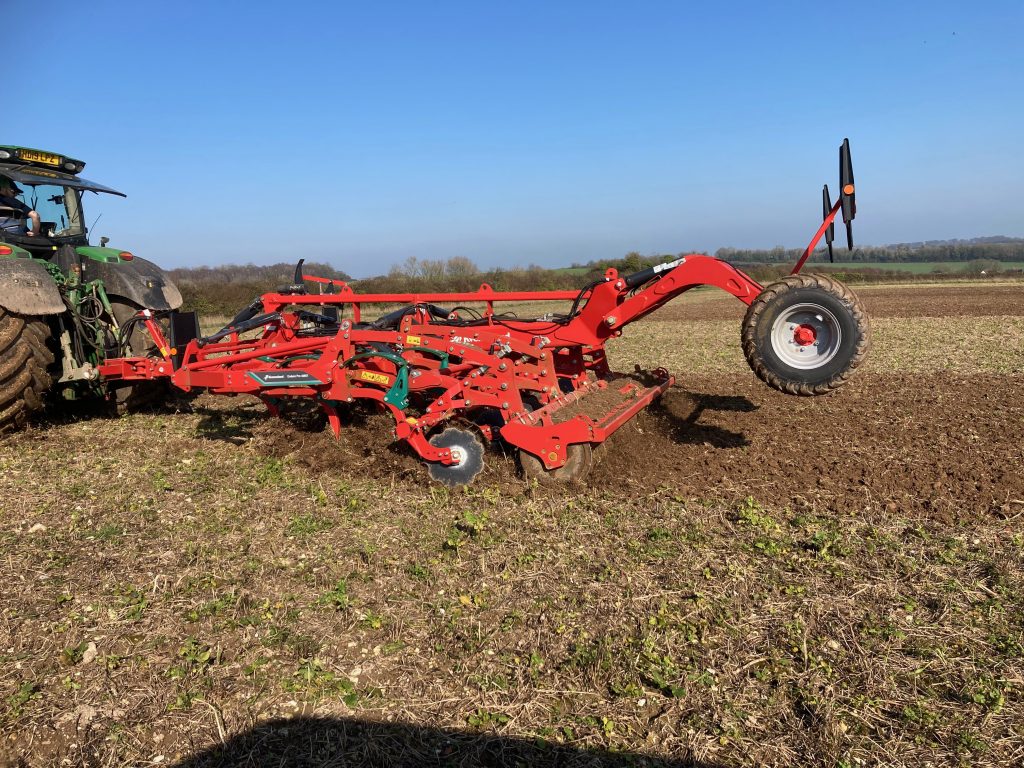
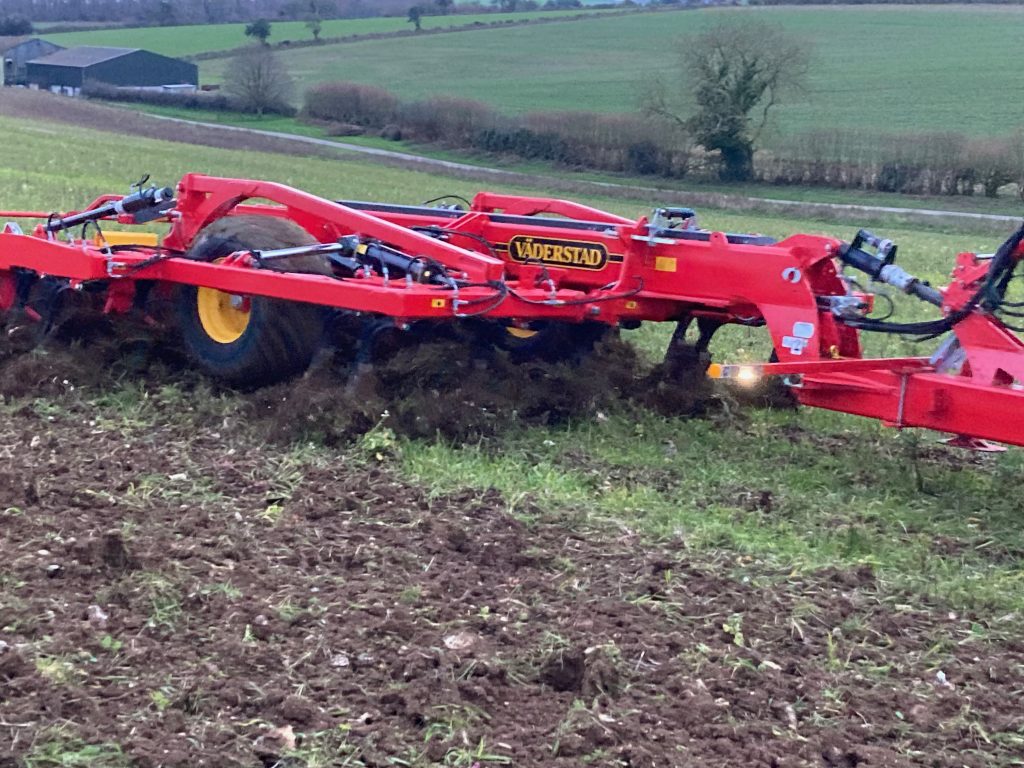
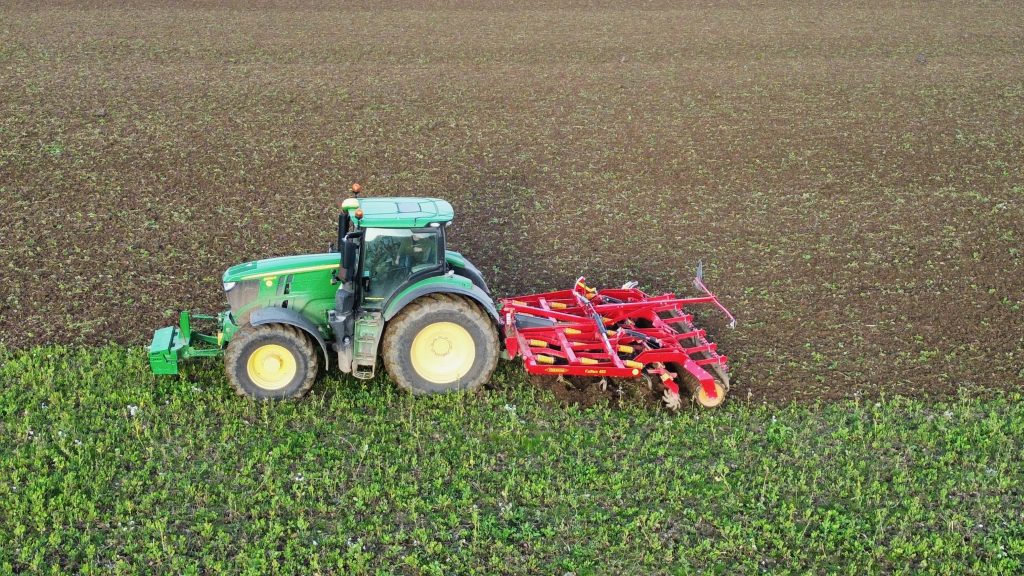
A brand new 4m cultivator of this kind doesn’t seem to come in at less than £40,000 these days, eye-watering. Maybe we will have to scour the second hand market. How the manufacturers think they will sell many in the current climate I have no idea.
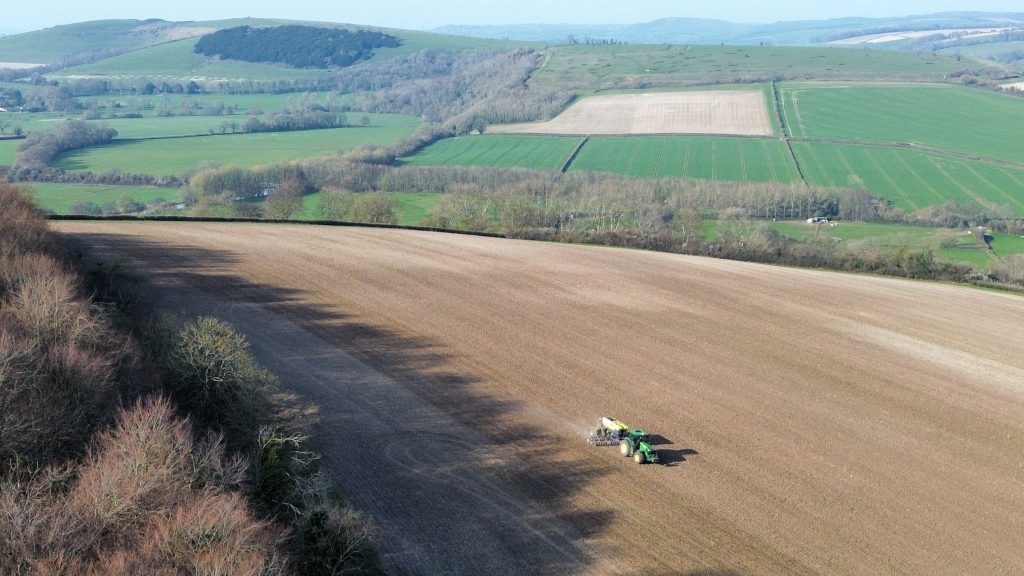
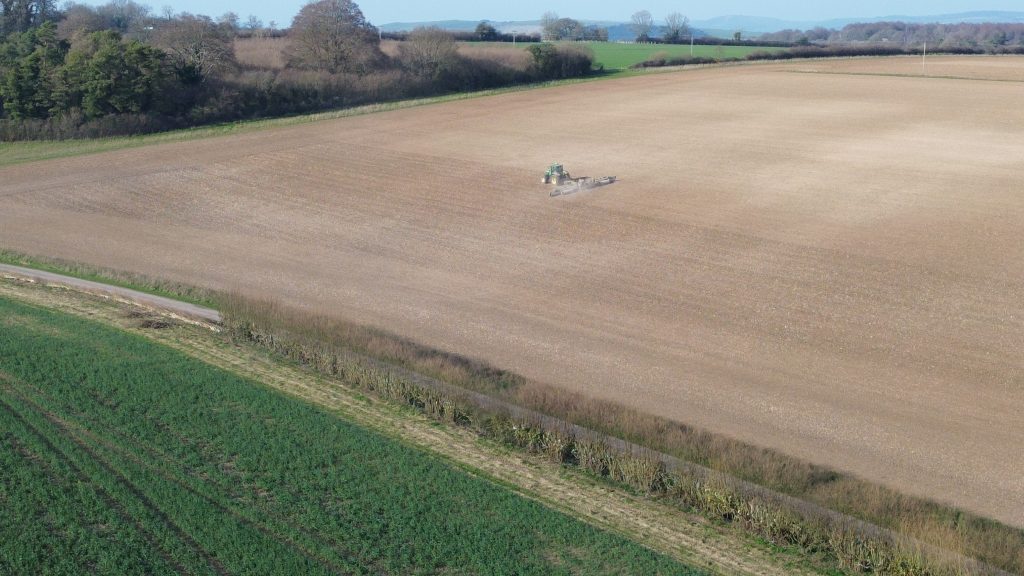
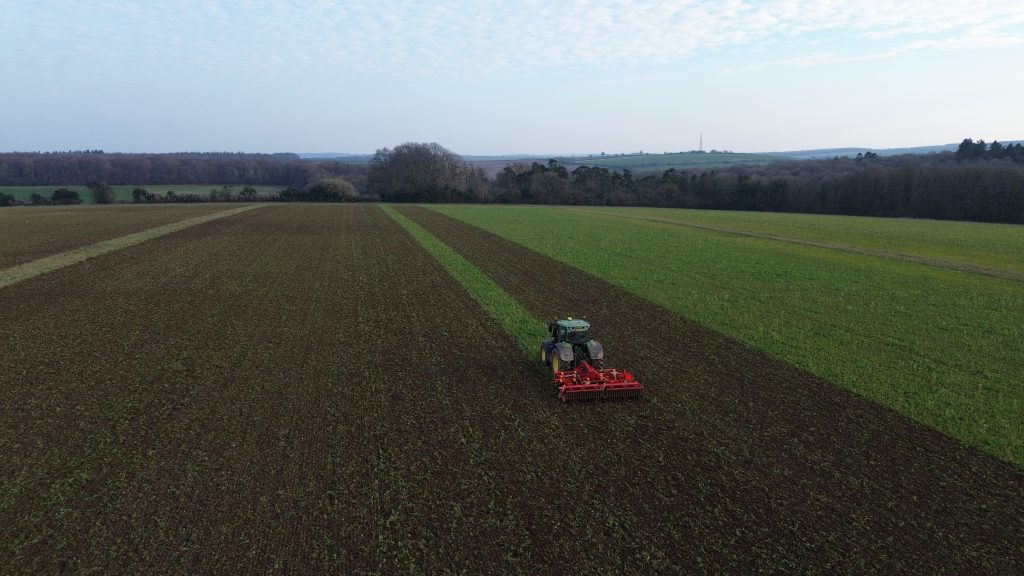
Doug rolling —————————–Will sowing —————————Fred cultivating
There were 3 tractors out in the fields for much of the last two weeks, and here we can see them at work last Friday (March 20th) in different fields, pulling rollers, drill and cultivator respectively. All of our spring beans, wheat and barley are now safely tucked into good seedbeds, awaiting a little moisture and some warmth, then the fields will steadily turn green again. All these crops have followed over-winter cover crops, most of which have been grazed by the cattle. We will wait for much warmer conditions before sowing millet, winter bird food, and cover crop seeds.
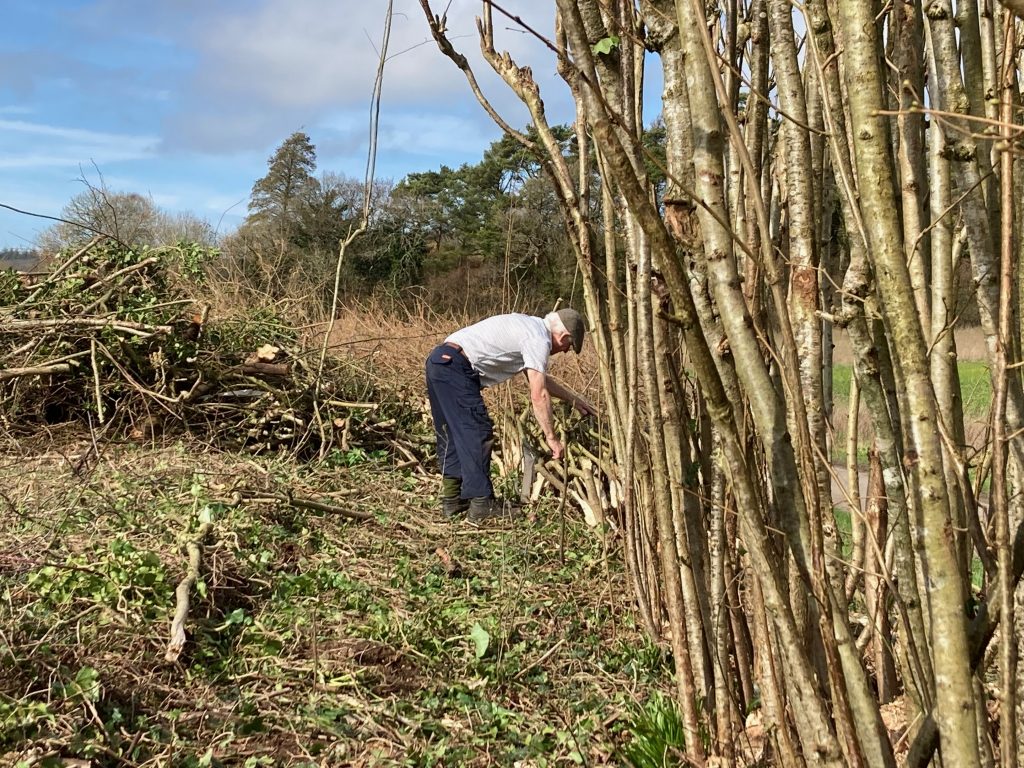
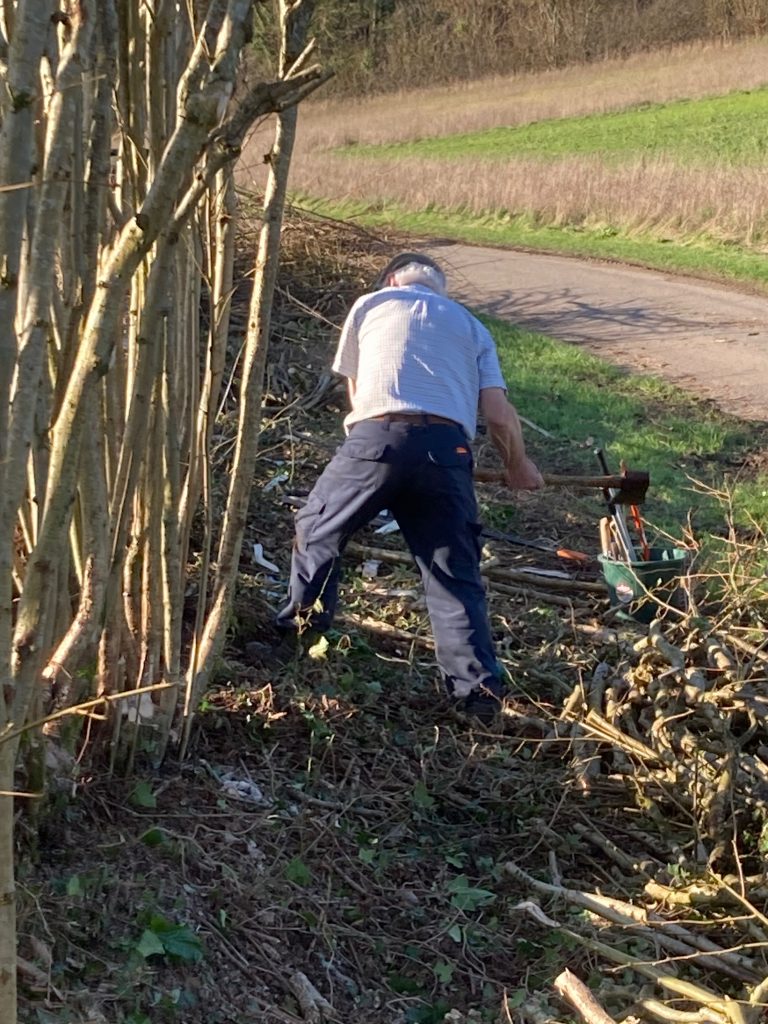
Our good friend George has been steadily working his way along this overgrown hazel hedge alongside Lime Kiln field along the road to Shepherds Corner, over the last few years, rejuvenating it by laying. He has also patiently re-acquainted me with the ancient skills required, it is a long time since my hedge laying course next to the cricket ground in Moreton village in 2002. This winter he has also branched (!) out by training some Great Big Dorset Hedge volunteers, so that they may go forth, armed with billhook, axe and saw, to set to the task of renewing some of the many miles of Dorset hedge that over the last two years they have surveyed and found in need of restoration. Over 100 farmers across the county have engaged this wonderful group to come and survey the condition of their hedgerows, the first step towards getting to grips with what in many cases, are long overdue overhauls, by laying, coppicing and gapping up, or simply by incremental trimming with a flail trimmer.
The latest edition of the Sustainable Farming Incentive, SFI26, announced by DEFRA secretary of state Emma Reynolds in February, has for some inexplicable reason, dropped the option of Hedgerow Condition Assessment (CHRW1).
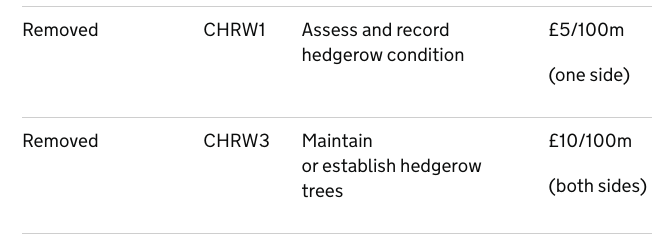
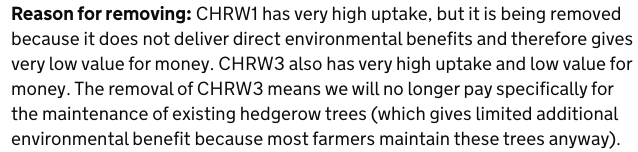
This was a very simple and relatively inexpensive payment to land occupiers to begin the process of hedge improvement. John Calder, leader of the GBDH, spotted an opportunity for non-farmers to engage in this important process, since then many miles of Dorset hedge have been surveyed, gaps have been planted up, and potential hedge layers have dipped a toe in. There is a huge band of around 400 volunteers willing and able to get stuck into the project , but without the assessment incentive, the whole project suddenly looks very vulnerable.
This is what we are all too often up against, the constant moving of goalposts.
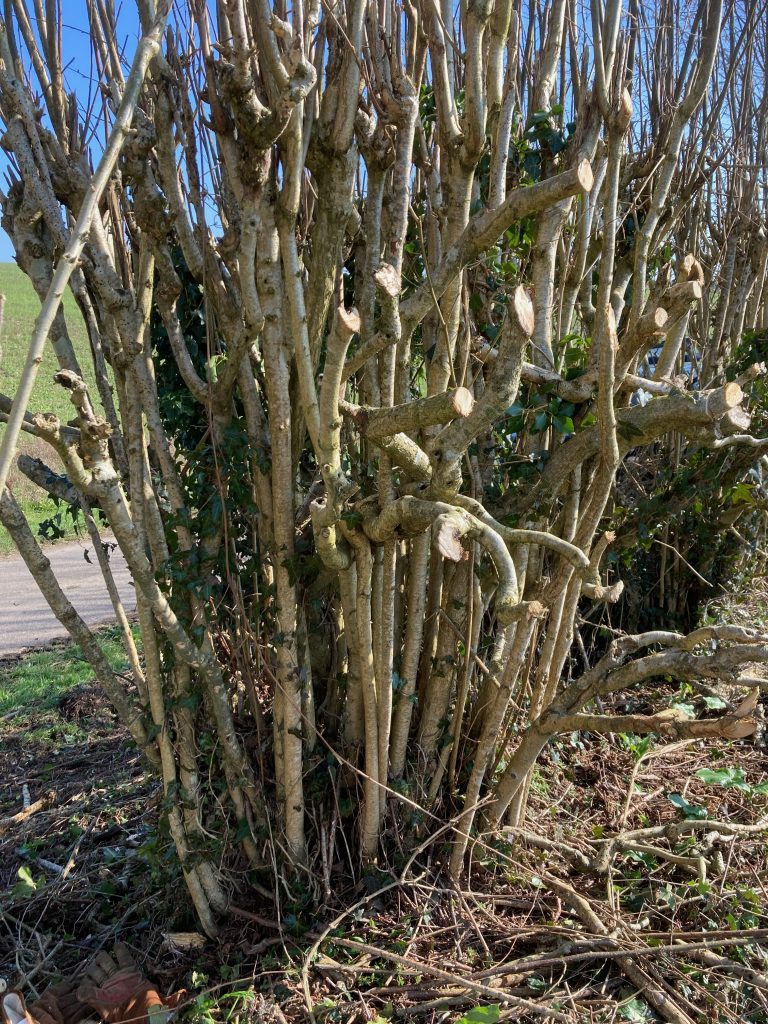
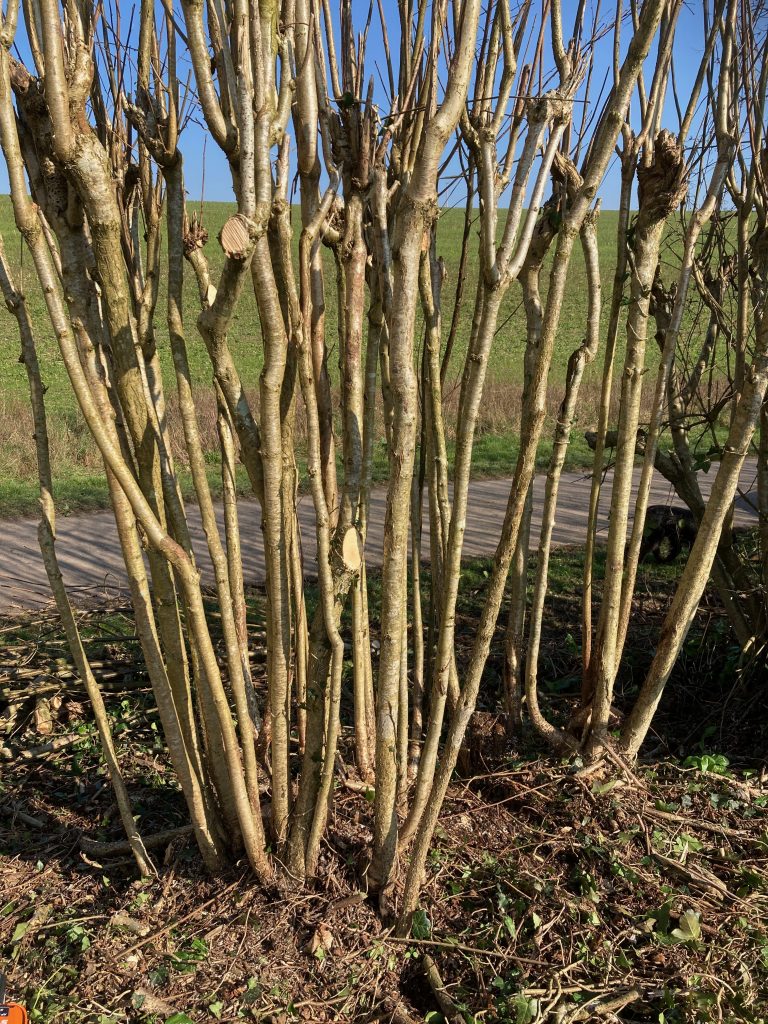
The process of laying itself is very satisfying, if slow and hard work. First one has to clear out dead wood and unsuitably shaped branches, before you can start laying the best straight uprights. A well sharpened billhook is best for this, you chop into the stem for around half its width, and then split downwards leaving a thickness of wood and bark sufficient to sustain life, and yet thin enough to allow the wood to bend and lay over horizontally. You are then left with a heel, the remains of the stem that the main branch was split away from, which needs angled cutting off close to the base of the split, to prevent the forming of a gap for water to enter the base of the trunk. A good toothy one-handed saw like a Silky is ideal for this.
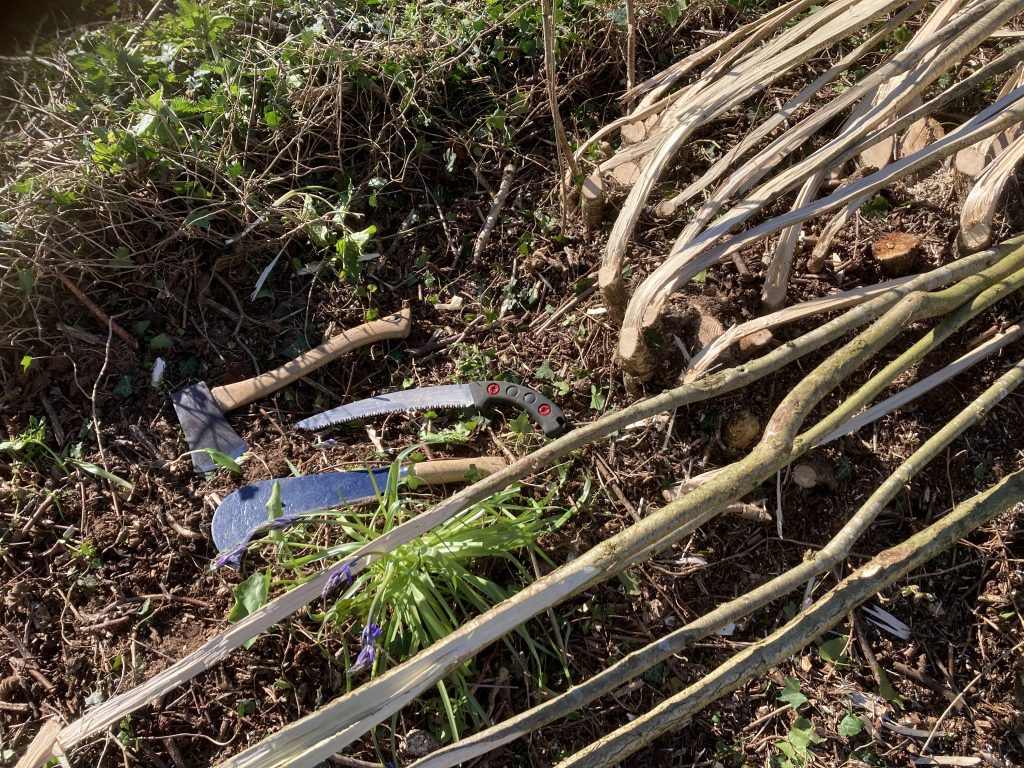
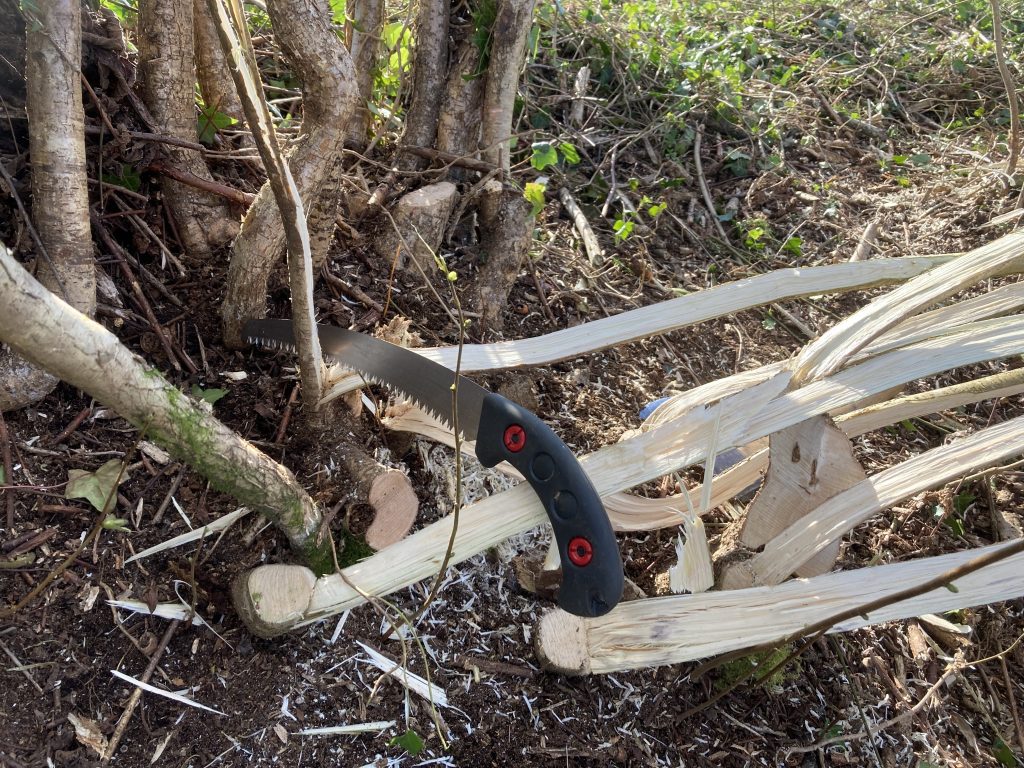
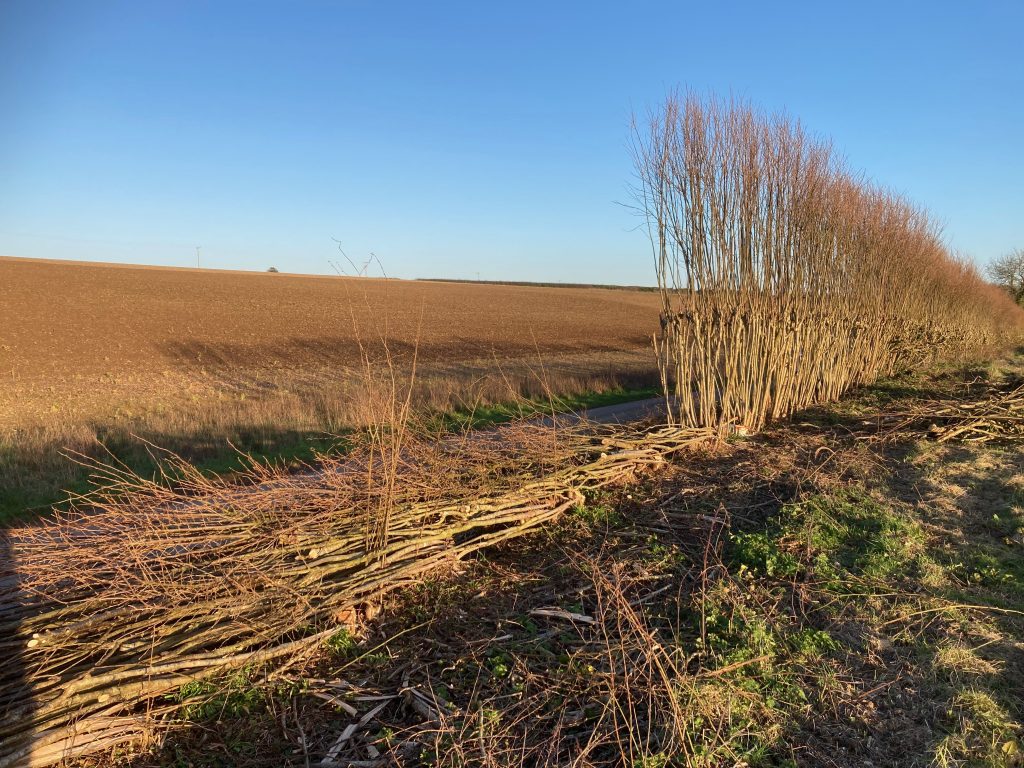
An experienced hedge layer might sniff somewhat; hazel is by far the easiest tree to lay, it grows lovely straight stems, which split readily, both reasons which lend it so well to use for hurdle making, spars for thatchers (they fix thatch to the roof), and other uses. A real challenge to lay is a mixed species hedge, with plenty of gnarly thorn in, it is far more difficult to split and lay down as the wood is often twisted and much harder than hazel.
George is a passionate fan of hazel hedge farming, preferably on a 7 year cycle of cutting. Once laid, he favours returning after 7 years to lay again, without any mechanical trimming in between, which would create knuckles in the stems which render them useless for the uses mentioned above. The uninterrupted growth will produce a good yield of straight and strong sticks, very suitable for spars and hurdles. Will we find someone willing to harvest and market them in 7 years’ time though? We have many many miles of hedge on the farm, a great proportion of which desperately need laying, so the big question is should we create an in-cycle hedge along Lime Kiln, or incrementally trim it with the flail next year and every other year hence, rendering the timber largely valueless, in order to put off the day when it next needs laying for as long as possible.
George believes that hazel hedges are capable of producing a higher amount of better quality usable timber than a traditional hazel coppice, he says this is because there is more exposure to sunlight, and less competition between stools for nutrient and space than in a coppice. I find it hard to accept this admittedly persuasive logic, having been brought up to believe that hazel coppice is the ultimate in farmed woodland, a unique habitat that not only produces spars, hurdles, pea sticks and fuel for charcoal production, but is an ecosystem all of its own, the 7 year cycle allows countless other species to thrive and decline, thrive and decline, on a long cycle, as the hazel grows up and up, and is then cut down, to rise again every 7 years. However, as we have only a few hundred yards of almost pure hazel hedge (we have no idea why or when it was planted), why not manage it to suit the hazel rather than the farmer?
After a couple of weeks of laying, I am convinced that a hazel hedge is not particularly valuable as wildlife habitat, the long straight smooth stems, with few branches unless it has been flailed, offer very little purchase for birds’ nests for example, and there is no ‘bottom’ to it at all, all stems reach for the sky from day one.
When planting new hedge I would never intentionally plant Hazel, it would outgrow all other species, and when flailed leaves unseemly split ends on every stem. Another no for a hedge mix would be Elder, poisonous to many animals, too fast growing, and seems to possess allelopathic properties (suppresses neighbouring plants), also on the no list would be any bramble, or wild clematis (Old Man’s Beard), which can ruin a young or re-growing hedge.
Another trouble maker can be Ivy, which will appear from nowhere, and needs repeated knocking back, I have to admit it is quite satisfying to cut a ring around an ivy clad tree, and then watch over the following months as the ivy leaves shrivel and fall, and finally the stems decay and fall away. There is little sadder a sight than a tree that is clearly losing its battle with marauding ivy, which when it reaches the crown, declares a pyrrhic victory, only to crash to the ground with the defeated tree once it has been suffocated. Don’t get me wrong, Ivy has a beauty all of its own, and it supports a wide variety of other species, especially when flowering in late summer, it truly hums. But there’s a time and a place.
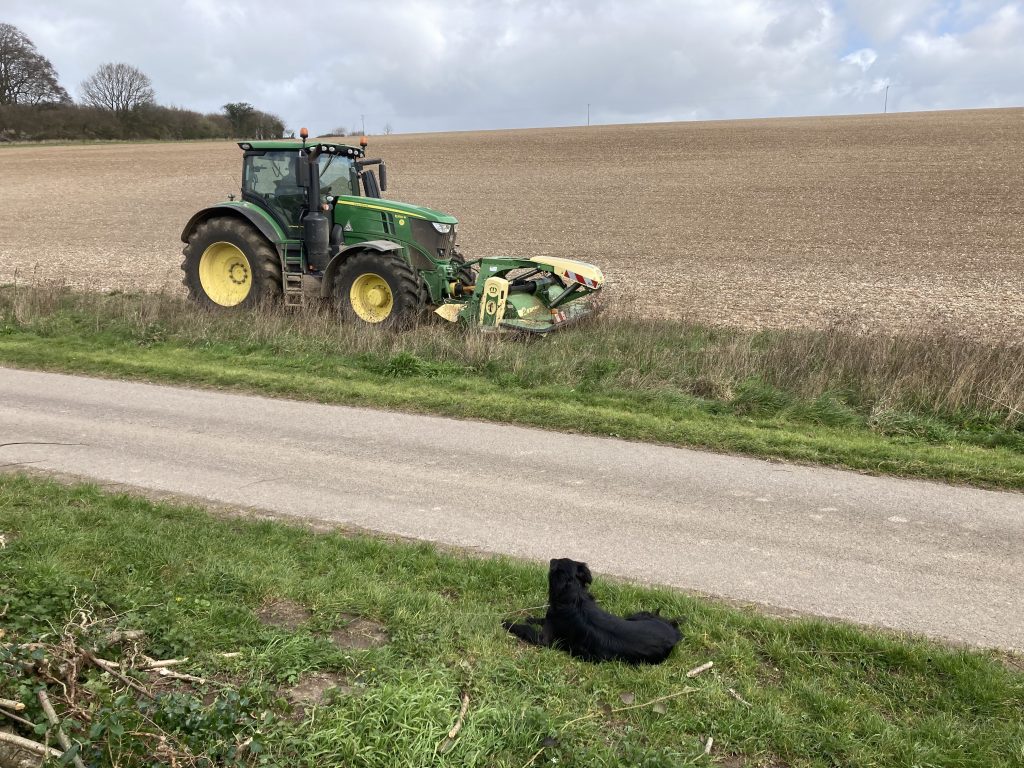
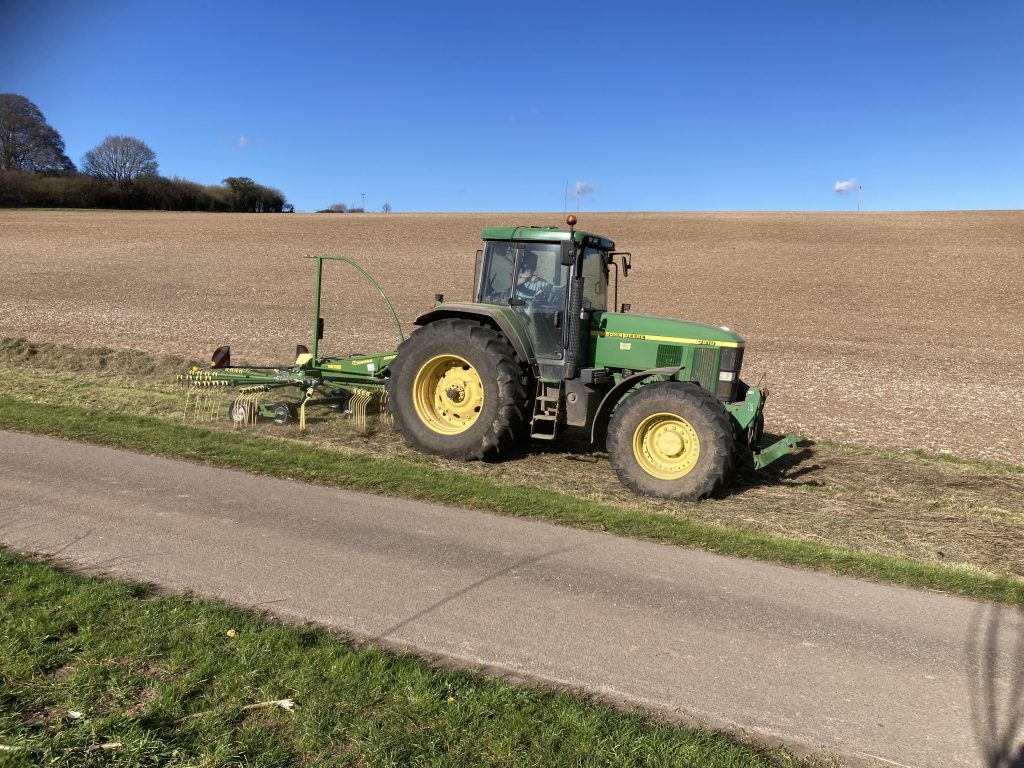
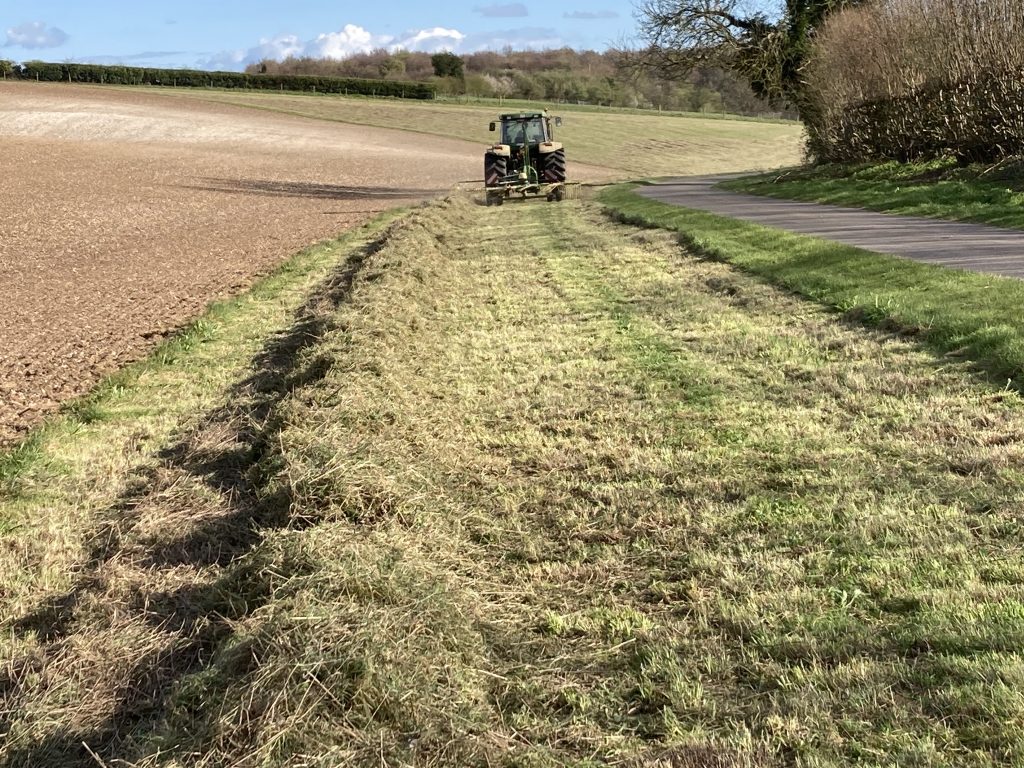
Gary mowing headland margins, followed by Fred with the rake, prior to picking up to add to compost lines. Clearing the remains of last year’s flower stalks and grass mat will make way for hew season flowers.
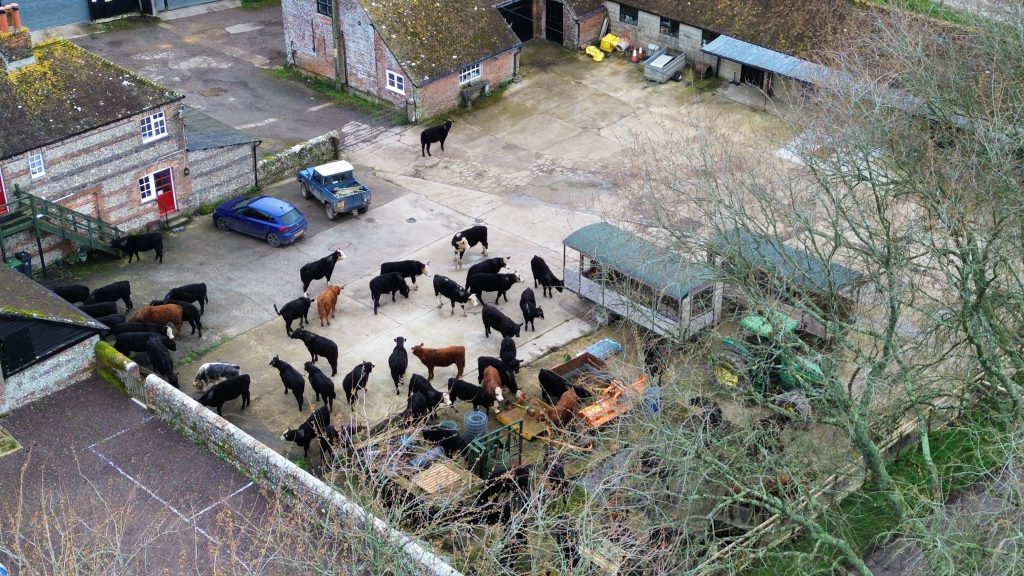
Cattle loitering where they should not. They had to be corralled in the ‘tidy’ yard whilst their mates had to be cajoled into passing the scary tractor shed, they were supposed to have meekly walked straight past and up the track to the next grazing field.
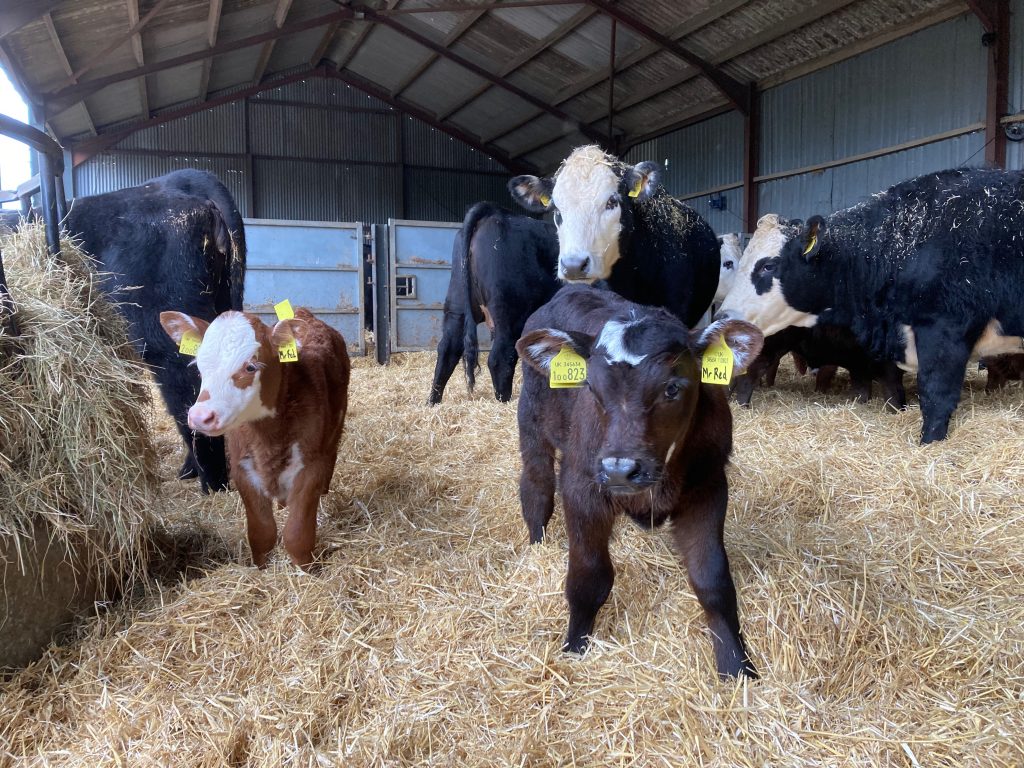
First calves
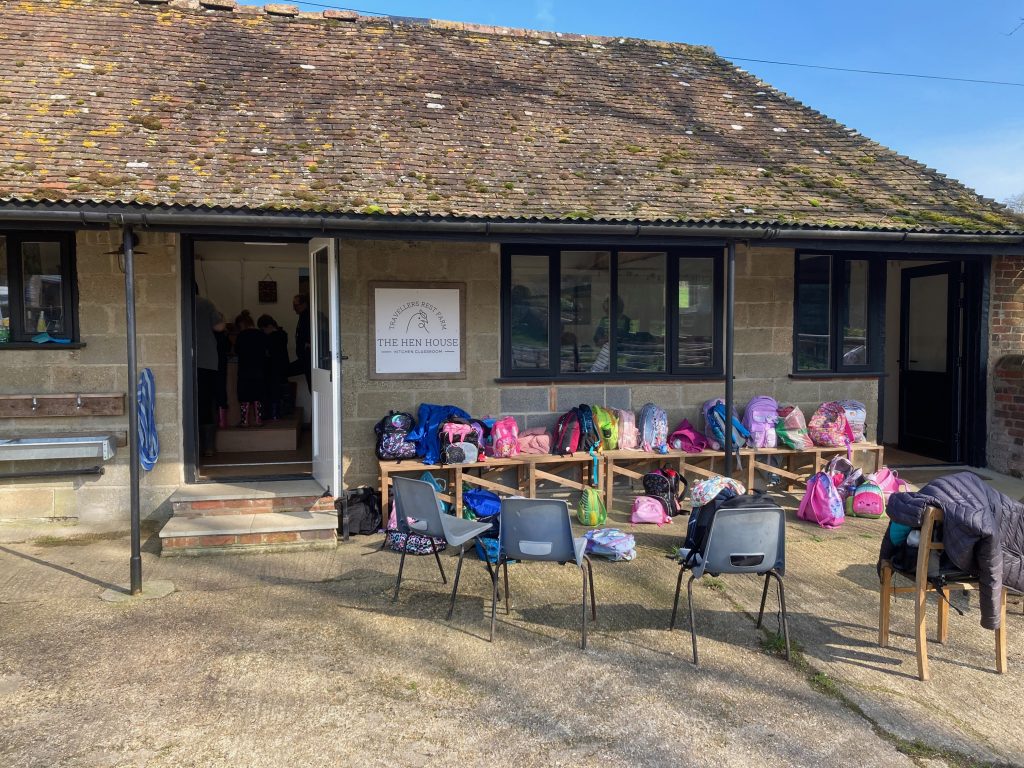
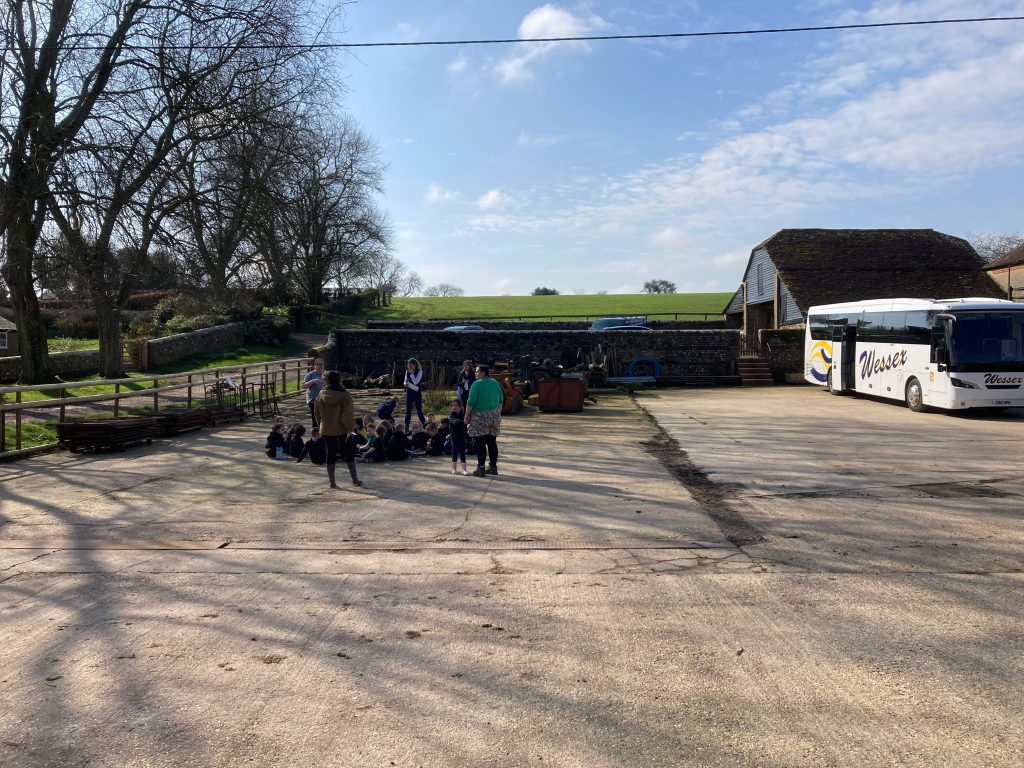
Looks like there’s a school visit in the Henhouse…… Taking a break while the bread bakes.
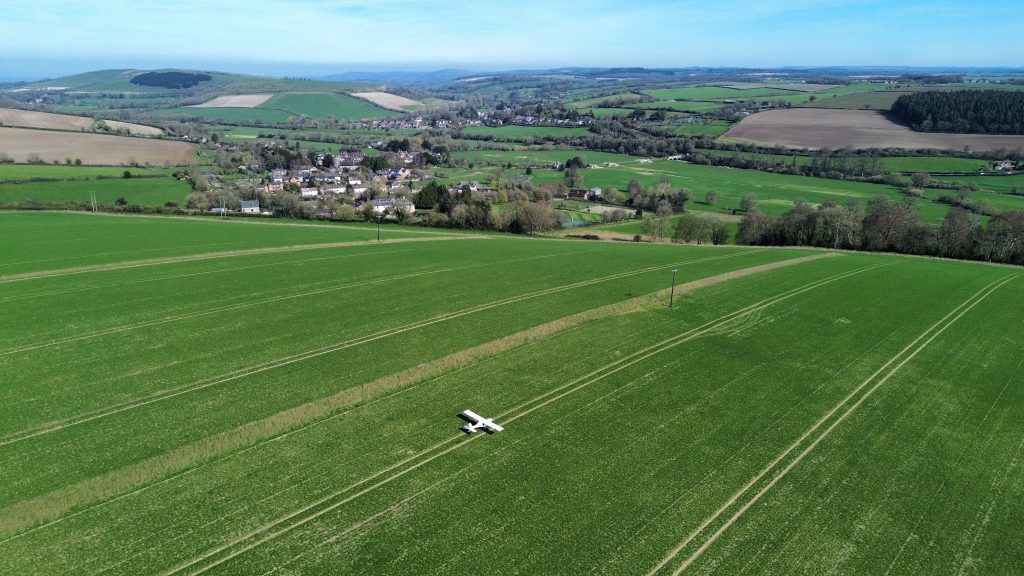
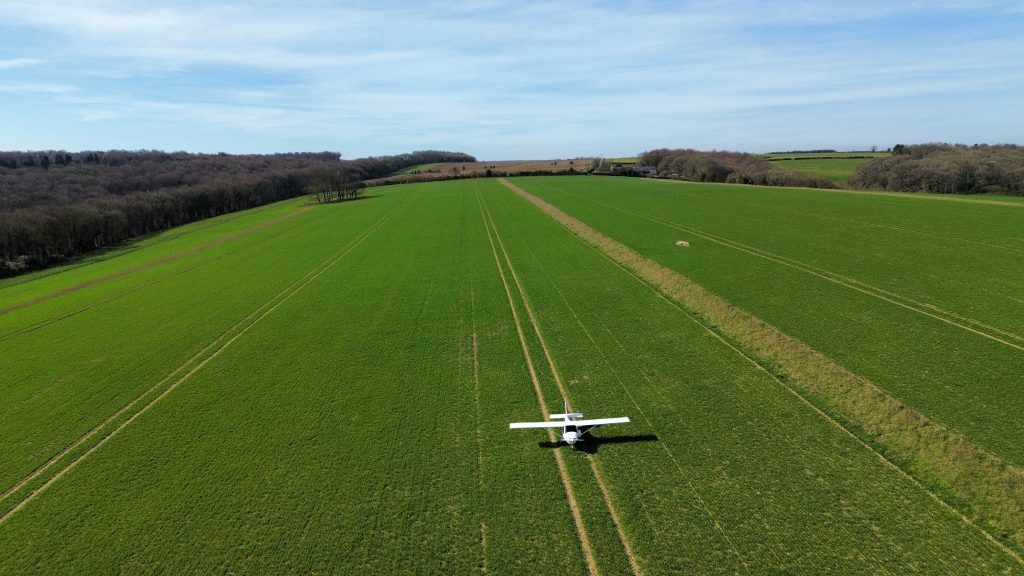
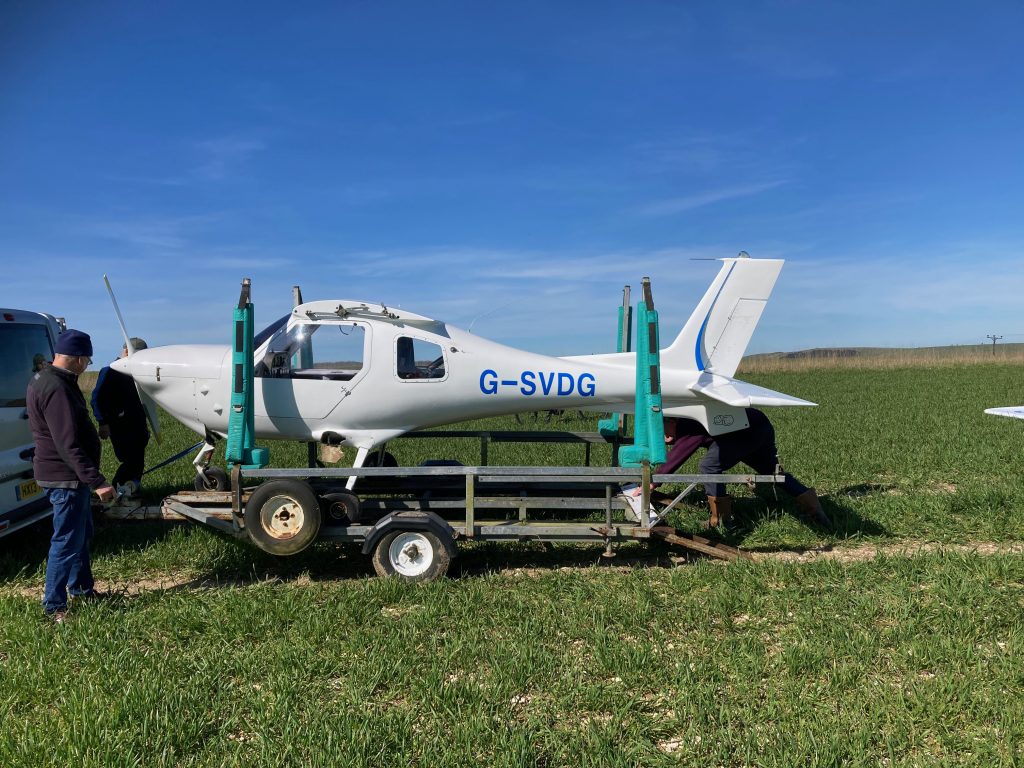
A surprise visitor one Friday evening in March. The pilot had to make a bit of a hurried landing when the engine faltered, luckily for him the winter wheat crop on the Knoll presented itself, with room to land before the wires. Excellent unpowered landing and neat parking in a tramline. Exactly a year ago this field had just been sown with oats, the soft soil would have caused the plane to sink in and the landing might not have been so comfortable. Attempts to restart the engine were not rewarded with smooth running, so she had to be loaded up and driven home.
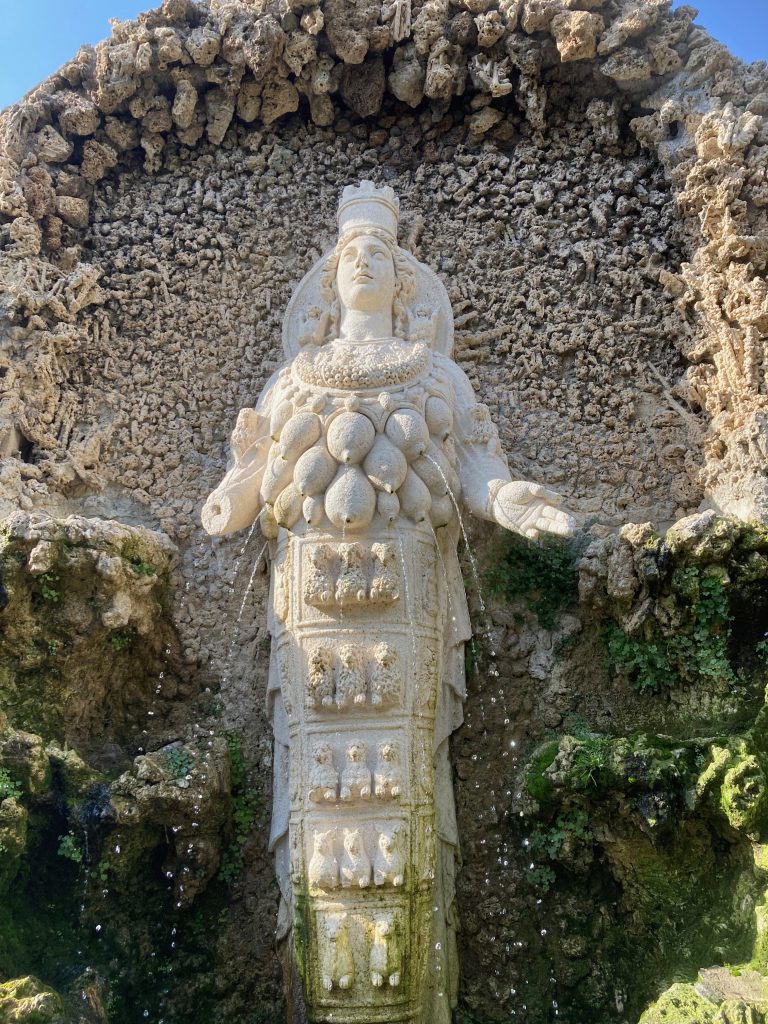
The goddess Diana, clearly well equipped for multiple births. As discovered recently in the garden of the Villa D’Este in Tivoli, Italy. A gorgeous garden providing much needed relief following English rugby’s defeat at the hands of the Italians. This fountain was built in 1568 and symbolises the unstoppable flow of life. Diana is the universal mother, providing substance to all.
The tyre inflator is very good and miles cheaper than one of those fancy cultivators – time to look in the bushes for another out of fashion cultivator like a spring tine or pigtail perhaps?
Very enjoyable as ever. Hazel also a pleasure here, it’s tiny female flowers are exquisite…
A “just for fun” quiz question for your readers – how much could an experienced hedge-layer complete in one day? Answers here, or on a postcard!
George,
Thank you so much. You give such a full and informative account of what goes on. You should send a copy to the puppets in Whitehall… Can’t wait for the next one
I wonder in cultivation where has the super flow gone?
To the scrap man, many years ago! Thanks Kevin
Hedge laying answers in chains please I guess 2
Jim